



Domestic Technology Development for Key Green Vehicle Components Launches in Full Scale
 Published2020.02.07 15:25
385.6 Billion Won Support Through 2025 to Lead Future Vehicle Market
The Ministry of Trade, Industry and Energy announced the "Market-Autonomous 3rd Generation xEV Industry Fostering Project" that supports the development of key eco-friendly vehicle components.

▲ The Ministry of Trade, Industry and Energy announced the market-autonomous 3rd generation xEV industry fostering project
The xEV (electrically driven vehicle) project was promoted to enhance market competitiveness through the development of consumer-focused, safe, and convenient key component technologies for the early opening of the eco-friendly vehicle popularization era, including electric vehicles (BEV), fuel cell vehicles (FCEV), and plug-in hybrid vehicles (PHEV).
Over six years from this year through 2025, a total of 385.6 billion won (274 billion won in government funding) will be provided to domestic small and mid-sized automotive parts companies.
This year, 24 designated projects (39 billion won) will be prioritized, and from 2021 onwards, 47 projects will be sequentially supported. Support targets include ▲energy storage and charging ▲driving and power conversion ▲air conditioning and thermal management ▲hydrogen fuel cell field key component development, etc.
In line with the recent trend of changing automobile paradigms, the project supports domestic automotive parts companies to transition into future vehicle companies capable of competing with global corporations.
The primary focus is on achieving competitiveness at levels equivalent to internal combustion engines from a consumer acceptance standpoint, including expanding driving range, shortening charging time, and improving safety and convenience for eco-friendly vehicles. Major objectives include ▲expanding driving range per charge by 50% or more ▲improving driving efficiency by 20% or more ▲reducing charging time to 1/3 or less.
Priority support areas are ▲energy storage and charging (battery pack miniaturization and weight reduction, etc.) ▲driving and power conversion (motor efficiency improvement, etc.) ▲air conditioning and thermal management (thermal management system optimization, etc.) ▲hydrogen fuel cells (durability, etc.), which are core to eco-friendly vehicle competitiveness.
An official from the Ministry stated, "The project was designed to facilitate cooperation between demand and supply companies through demand-linked business operations," and added, "Through this project, we will provide a breakthrough for the automotive industry and support structural improvements in the domestic automotive parts industry to secure opportunities to capture the future vehicle market."
Comments
Related news
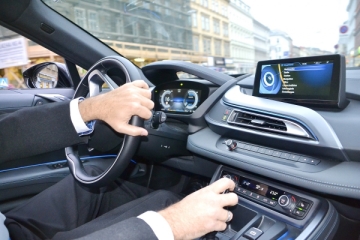
South Korea aims to have Level 4 autonomous driving infrastructure in place by 2027.
The automotive market is undergoing changes toward eco-friendliness, intelligence, and service-oriented business models due to the Fourth Industrial Revolution and strengthened environmental regulations. The government held a declaration ceremony for a national vision on future automobiles and announced the 2030 Future Vehicle Industry Development Strategy in coordination with related ministries. After holding a total of 21 discussion sessions with automobile OEMs and parts suppliers, telecommunications, software, and semiconductor companies, automotive-related labor unions, and academic societies, the government established the 2030 Future Automobile Industry Development Strategy.
2019.10.30by 이수민 기자
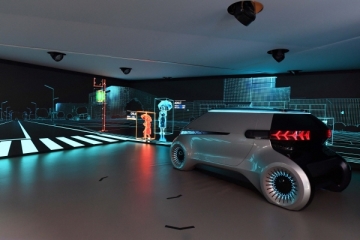
Hyundai Mobis Unveils Core Autonomous Driving Technology at CES 2020
Hyundai Mobis presents core technologies for the future mobility industry, compressed into autonomous driving, connectivity, and electrification, through CES 2020. Along with the exhibition of the M.Vision S concept car, which consolidates key elements for autonomous driving implementation such as LiDAR, radar, and communication lighting, Hyundai Mobis showcases eco-friendly mobility solutions including boats and drones equipped with hydrogen fuel cell systems, revealing its vision for the era of fully autonomous driving.
2019.12.18by 최인영 기자

2020 Consumer Goods Industry Outlook: "Eco-friendliness and transparency are more important than low prices."
Today, 7 out of 10 consumers enjoy micro-moment shopping, where they make immediate purchases of desired items via smartphone. As consumers can now select various brands and products anytime and anywhere, corporate values have become more important than product price and convenience. Regardless of age and income level, consumers are shown to be willing to pay significantly higher prices for products that align with their personal beliefs.
2020.01.20by 이수민 기자
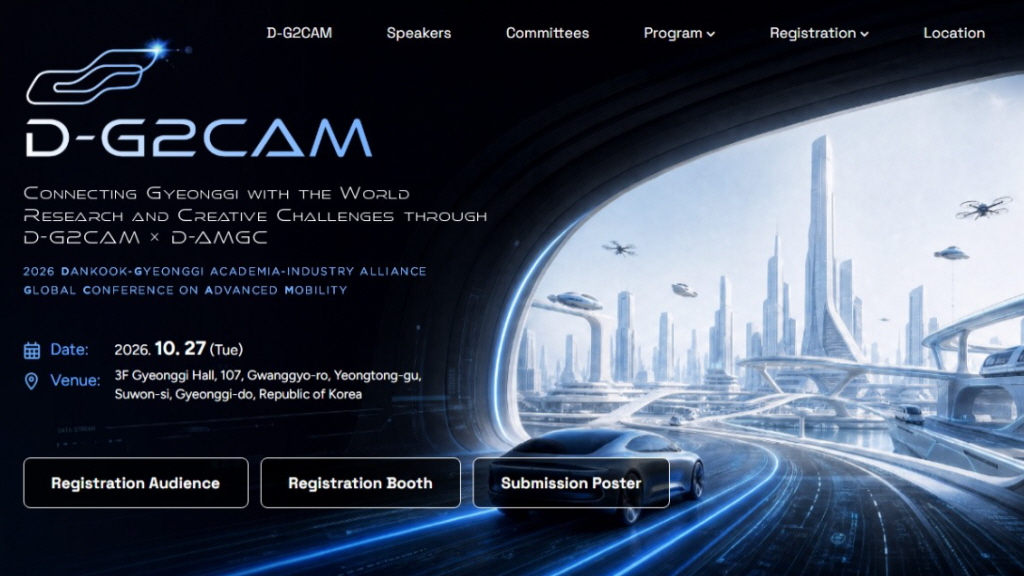
GAIA-Festa 2026, Autonomous Driving, AI, and Aerospace Experts Gather…Discussing Global Cooperation in the 'Silicon Intelligence Era'
GAIA-Festa 2026, which will be held in Suwon on October 27, is an industry-academia-research exchange event that explores the present and future of future mobility and AI technology through the global conference D-G2CAM 2026 and the international contest D-AMGC 2026. Domestic and international experts will share the latest research in autonomous driving, 5G/6G mobility, space technology, and data protection fields, while university students will showcase robots and physical AI prototypes that they have independently developed. Additionally, through poster presentations, corporate exhibitions, international cooperation meetings, and signing ceremonies, a platform will be established to connect the research capabilities and industrial needs of the Gyeonggi region with a global cooperation network.
2026.10.13by 배종인 기자
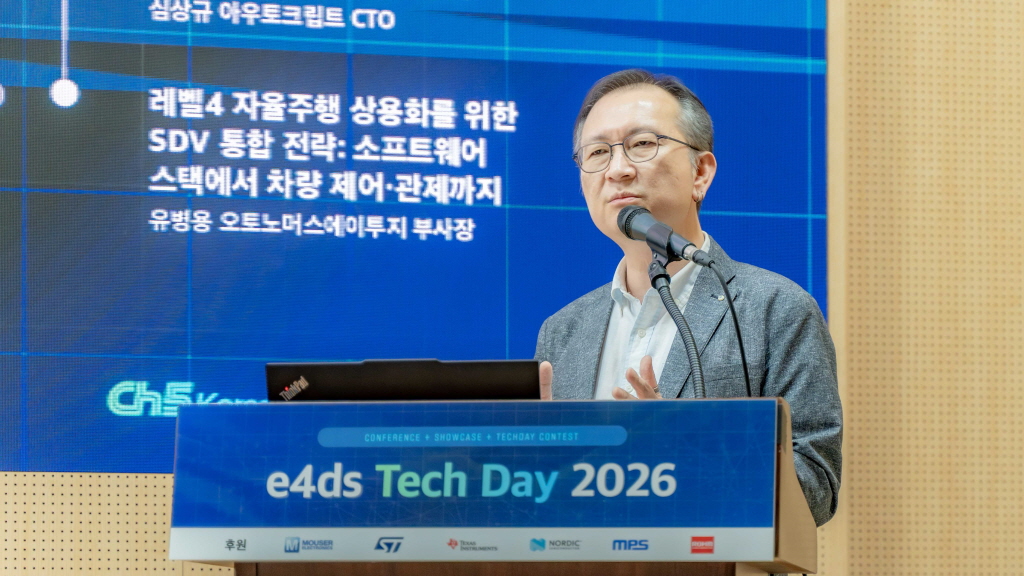
[e4ds Tech Day 2026 ⑨] Sim Sang-gyu, Autocrypt CTO: "In the Physical AI Era, Automotive Security Must Extend Beyond the Vehicle"
At e4ds Tech Day 2026, Sim Sang-gyu, CTO of Autocrypt, explained automotive cybersecurity strategies in the era of Physical AI and SDV (Software-Defined Vehicle). Automobiles are evolving as part of an ecosystem connected to AI, cloud, chargers, IoT, and robots, and he emphasized that the scope of security must expand beyond the vehicle interior to the entire connected environment. In particular, AI model tampering, adversarial attacks, OTA updates, and EV charger hacking were identified as major threats. He explained that response measures require zero trust, AI model integrity protection, intrusion detection, Security by Design and Default, and full lifecycle security management, and that proactive security system establishment beyond regulatory compliance is critical for securing future mobility competitiveness.
2026.10.12by 배종인 기자











