



Pressure display developed to show object surface information
 Published2020.02.13 14:45
새로운 센서 물질로 지문도 3D 실시간 표시
생체인증 웨어러블 디바이스로 응용 전망
미세한 압력 변화도 알아낼 수 있는 기술을 국내 연구진이 개발했다. 이 기술은 압력의 강도와 위치뿐 아니라 압력을 가한 물체의 3차원 표면 정보도 알 수 있어 생체인증, 웨어러블 기기, 의료용 보조기기 등 분야에 적합하다.
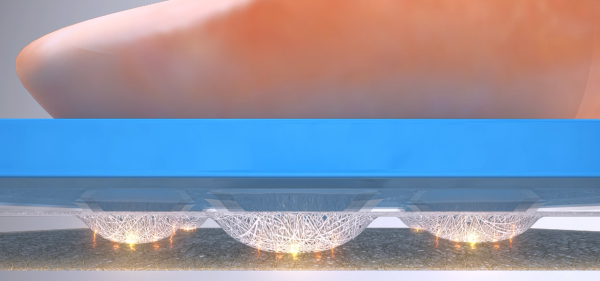
형상을 파악해 발광하는 압력 센서 (CG=ETRI)
한국전자통신연구원(ETRI)은 13일, 서울대 연구팀(홍용택 교수, 이병문 연구원)과 함께 나노 복합소재를 이용해 기존보다 민감도가 최대 20배 높은 초고감도 투명 압력 센서를 개발했다고 밝혔다. 이번 연구 성과는 지난달 31일, ‘네이처 커뮤니케이션즈(Nature Communications)’ 온라인에 게재되었다.
기존 압력 센서는 전극으로 십자 패턴을 만들고 맞닿는 부분의 압력에 따라 전도도가 달라지는 센서 물질을 넣어 만들었다. 이러한 구조는 감도가 떨어져 미세한 압력 변화를 감지하기 힘들고, 압력 신호 데이터를 추가 처리해야만 관련 정보를 볼 수 있다는 한계가 있었다.
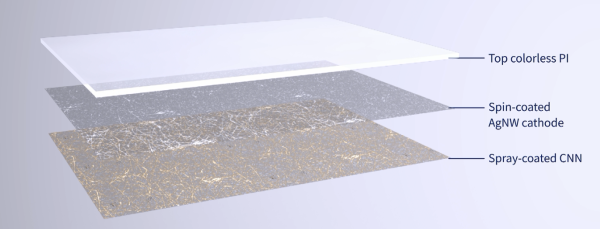

ETRI는 새로운 센서 물질로 나노 소재를 이용하고 이를 양자점(Quantum dot) 발광 소자의 적층 구조에 응용해 감도를 높이면서도 압력분포를 바로 볼 수 있게 개발했다. 압력에 의해 접촉된 부분만 발광하는 형태다.
연구진은 전도성 고분자 나노 와이어와 나노 셀룰로스를 섞은 복합소재를 센서 물질로 썼다. 나노 와이어끼리 접촉이 많아지면 전도도가 높아진다는 특성을 이용했다.
접촉량을 늘릴 수 있도록 머리카락 두께의 1/100 굵기인 1㎛(마이크로미터) 두께의 초박형 투명 고감도 센서로 복합소재로 만들었다. 1㎛ 센서 층에는 약 100개 층을 쌓을 수 있다.
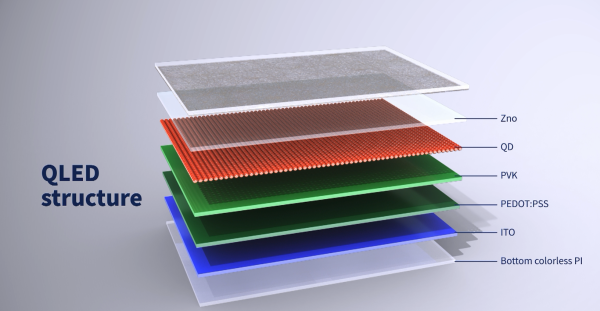
또한, 센서 물질을 적용한 양자점 소자도 만들었다. 전기를 가하면 발광하는 퀀텀닷 구성층 맨 위에 연구진이 개발한 나노 물질을 올려 압력이 가해질 때만 전류가 흘러 빛을 내게 만든 것이다.
연구진이 개발한 센서는 투명하고 두께가 2㎛이고, 100×100mm 크기이며 압력이 가해지면 압력분포 부분이 실시간으로 빨갛게 표시된다. RGB 표현도 가능하다.
센서 민감도는 사람 맥박 표시가 가능할 정도이며 압력 범위는 손바닥 전체를 누르면 표시할 정도다. 바늘 수준의 압력도 감지할 수 있다.
전극을 복잡하게 배열할 필요가 없어 1㎛ 두께로도 감도가 높은 소자를 만들 수 있다. 나노 복합소재 색이 투명하기에 소자도 투명하게 만들 수 있어 다양한 기판에 올려 활용하기 쉽다.
센서 소재가 유연하고 용액 공정으로 적용하기도 쉬워 넓은 면적의 기판이나 웨어러블 기기를 제작할 때도 유리하다. 소재가 저렴하고 친환경적이기에 신체에 해가 없으며, 습기 등 생활 오염이 발생하는 환경에서 장기간 사용해도 성능이 안정적으로 지속되는 결과도 확인했다.
연구진이 개발한 센서의 초고감도 성능을 활용하면 물체의 하중 및 물체의 표면이 어떤 모습인지도 구별할 수 있다. 연구진은 나뭇잎의 잎맥 형상, 손가락의 지문 모양 및 지문의 깊이 등 작고 세밀한 패턴이 있는 물체의 표면들을 실시간으로 표시하고 데이터 처리를 통해 3D로 표시했다.

정확한 감도로 물건을 집는 예시 (CG=ETRI)
향후 연구진은 센서를 얇은 박막으로 만들어 피부에 직접 붙이게 되면 맥박이 뛰는 대로 빛이 발생해 신체 정보 데이터를 병원 내 전송도 가능해질 것으로 보고 있다. 사람의 지문 골의 높낮이 표현도 가능해 생체인식 관련 보안에도 유용할 전망이다. 또 로봇에 센서 부착 시 로봇이 느끼는 물체의 거칠기, 매끄러운 정도까지 알 수 있다.
연구진은 센서 및 특성 안정성을 추가 검증하는 연구를 진행하면서 보안, 전자, 의료 등 압력 센서 개발 업체 및 관련 산업 분야에 기술을 이전해 나갈 계획이다.
Comments
Related news
ETRI Successfully Develops Graphene Composite Material with Excellent Electromagnetic Shielding Capabilities
With the recent surge in electronic devices around us, demand for electromagnetic shielding technology is increasing. The Electronics and Telecommunications Research Institute (ETRI) has developed lightweight electromagnetic shielding material with high electrical conductivity by adding MXene to graphene composite material. The shielding material developed this time achieved the world's highest level of electromagnetic shielding effectiveness (99.9999994%) among nanocomposite users. It can detect resistance changes due to pressure variation with high performance, and can also serve as a pressure measurement sensor. Traditionally, electromagnetic shielding material was developed primarily using metals such as copper. The research team overcame these limitations by adding titanium carbide, a type of MXene, to graphene-polymer composite material.
2019.07.26by 이수민 기자
KIST and KAIST Prove Potential of "Step-on Charging" Lithium-ion Batteries
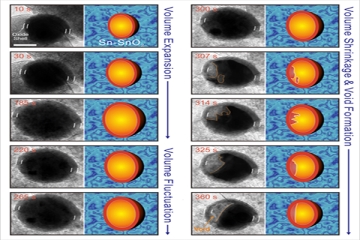
As demand for large-capacity energy storage media increases, interest in developing high-capacity lithium alloy batteries is growing. However, these batteries face the problem of severe capacity degradation and significant volume changes due to pressure generated during charging and discharging processes. In particular, since phenomena that occur when pressure is applied to lithium battery electrodes take place at the nanoscale level, there have been difficulties in creating experimental environments, making direct measurement and observation challenging. In response, Dr. Kim Sang-tae's team at KIST's Electronic Materials Research Division conducted joint research with Professor Yuk Jong-min's team at KAIST to elucidate the effects of pressure during battery charging and discharging processes, and based on this, presented the feasibility of lithium-ion batteries that can be charged under applied pressure.
2019.09.04by 이수민 기자
Honeywell Launches Stainless Steel Housing Pressure Sensor
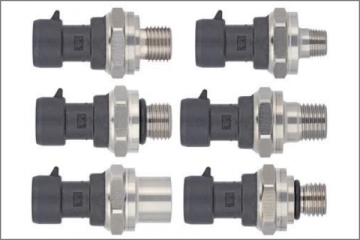
Honeywell's Sensing & IoT division has launched the MIP series, a high-precision pressure sensor with stainless steel housing. The MIP series, a platform product based on industry standards, achieves TEB accuracy of ±0.75%FSS maximum across -40~125°C, improving system operating costs, uptime, and efficiency.
2020.01.22by 이수민 기자

Intel Unveils Next-Generation 'Core Ultra Series 3' and vPro Platform for Enterprise PCs
Intel has officially unveiled the "Intel Core Ultra Series 3" for next-generation enterprise PCs and the latest vPro platform, addressing a wide range of demands from enterprise notebooks to high-performance workstations.
2026.03.26by 배종인 기자

ROHM Launches ESD Protection Diode Compatible with High-Speed Interfaces of 10Gbps or Higher
Semiconductor specialist ROHM has developed the 'RESDxVx series' of ESD (electrostatic discharge) protection diodes capable of responding to next-generation high-speed data communication environments exceeding 10Gbps, simultaneously enhancing both signal quality maintenance required in high-speed interfaces and IC protection performance.
2026.03.26by 배종인 기자











