


Ministry of Land, Infrastructure and Transport to Secure Public Safety with Drone Real-Name System
 Published2020.02.18 12:00
Drones are classified into a total of four levels based on performance and risk.
Starting in 2021, drones with a maximum takeoff weight exceeding 2kg must be reported, and prior online training must be completed to operate drones exceeding 250g.
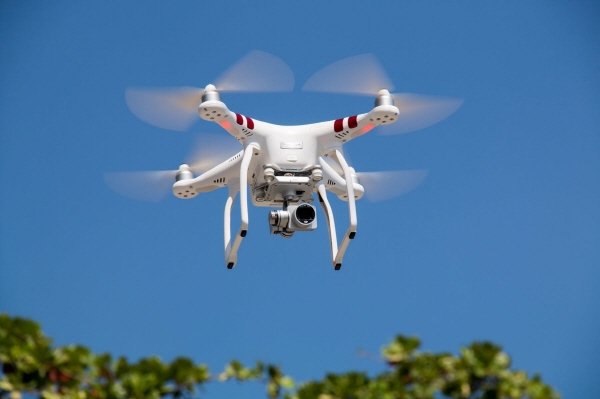
The Ministry of Land, Infrastructure and Transport will announce the legislative notice for the amendments to the Enforcement Decree and Enforcement Rules of the Aviation Safety Act on the 19th.
The Ministry of Land, Infrastructure and Transport announced on February 19 that it will issue a legislative notice for the 'Enforcement Decree of the Aviation Safety Act' and the 'Amendment to the Enforcement Rules of the Aviation Safety Act,' which classify and manage drones into a total of four levels based on their performance and risk level.
The drone management system is classified into toy model aircraft (less than 250g), low-risk unmanned aerial vehicles (250g to 7kg), medium-risk unmanned aerial vehicles (7 to 25kg), and high-risk unmanned aerial vehicles (25 to 150kg).
The key contents of this drone management system improvement plan are the application of an aircraft registration system, known as the real-name drone system, and differentiated pilot qualifications.
The drone real-name system mandates that owners of drones with a maximum takeoff weight exceeding 2kg must report their aircraft, and the Ministry of Land, Infrastructure and Transport plans to make it easily accessible to anyone through the internet or smartphone applications.
Regarding drone pilot qualifications, operators of large commercial drones in accordance with current laws, as well as small hobby drones ranging from 250g to 2kg, are required to undergo online training, and for drones exceeding 2kg, certain flight experienceIt is applied differentially in stages through ability and written and practical exams.
Operational guidelines will also be established to allow drones for educational purposes to be flown at an altitude of 20m or less under the supervision of an instructor on elementary, middle, and high school playgrounds, even if they fall under a no-fly zone.
This revised plan unifies the terms 'empty weight' and 'maximum takeoff weight,' which have previously caused confusion in the interpretation and application of drone regulations, into 'maximum takeoff weight based on drone performance.'
In addition, to increase the utilization of drones that have been promoted so far, such as supporting drone demonstration cities, designating drone parks, shortening the special flight approval period, and establishing a drone company support hub, policy discussions and industry meetings have been held with industry, academia, and research stakeholders for about a year.
Kim Sang-do, Deputy Minister for Aviation Policy at the Ministry of Land, Infrastructure and Transport, stated, “For the development of the drone industry, it is of paramount importance to dispel public anxiety regarding drones,” adding, “Starting with the drone real-name registration system, we will create a safe and convenient drone operating environment.”
Meanwhile, the Ministry of Land, Infrastructure and Transport plans to promulgate this amendment in May after going through legislative notice, inter-ministerial consultations, and review by the Ministry of Government Legislation, and plans to implement the amendments on drone registration and pilot qualifications starting January 1, 2021.
Comments 1
1 Comments:
Related news
Domestic development of high-performance turbofan engines for unmanned aerial vehicles
The Ministry of Trade, Industry and Energy and the Defense Acquisition Program Administration will leverage their core capabilities to develop high-performance turbofan engines for future defense unmanned aircraft. On January 30th, the two agencies concluded a memorandum of understanding with key contents including the establishment of an inter-ministerial coordination body and intellectual property protection. They announced plans to invest approximately 88 billion won through 2025.
2020.01.30by 최인영 기자
PAVs to be commercialized sooner than fully autonomous vehicles
Personal aerial vehicles, or PAVs, are being presented as a future transportation mode to enhance mobility efficiency in congested urban areas. PAVs generated greater attention at CES 2020 than autonomous vehicles. As partial autonomous driving functions became commercialized, automotive industry interest in autonomous vehicles somewhat cooled, and Level 5 autonomous vehicle development encountered several technical challenges. These challenges are lowering the commercialization potential of fully autonomous vehicles compared to PAVs.
2020.02.18by 이수민 기자
What are the key issues that determine success and failure for PAV (Personal Air Vehicle), the future transportation means taking to the skies?
Drones utilizing ICT technologies such as artificial intelligence, embedded sensors, software, hardware, 5G communication, and cloud have recently garnered attention for their growth potential in the personal aircraft market. Mobility Foresignts predicted that the PAV market value will grow to approximately 400 million dollars by 2025, while Morgan Stanley forecasted growth to 2.9 trillion dollars by 2040.
2020.02.18by 최인영 기자

[e4ds Tech Day 2026 ⑨] Sim Sang-gyu, Autocrypt CTO: "In the Physical AI Era, Automotive Security Must Extend Beyond the Vehicle"
At e4ds Tech Day 2026, Sim Sang-gyu, CTO of Autocrypt, explained automotive cybersecurity strategies in the era of Physical AI and SDV (Software-Defined Vehicle). Automobiles are evolving as part of an ecosystem connected to AI, cloud, chargers, IoT, and robots, and he emphasized that the scope of security must expand beyond the vehicle interior to the entire connected environment. In particular, AI model tampering, adversarial attacks, OTA updates, and EV charger hacking were identified as major threats. He explained that response measures require zero trust, AI model integrity protection, intrusion detection, Security by Design and Default, and full lifecycle security management, and that proactive security system establishment beyond regulatory compliance is critical for securing future mobility competitiveness.
2026.10.12by 배종인 기자

Practical HIL Construction Strategy for Automotive and Off-Highway Controller Validation
As vehicle E/E architecture transitions to zonal structures and shifts to software-defined vehicles (SDV), the number of controllers (ECUs) requiring validation and software complexity are surging dramatically. Meanwhile, real vehicle testing cannot provide repeated verification under identical conditions and entails lead time and safety concerns. This white paper explains the principles of HIL (Hardware-in-the-Loop) validation and the structure of the NI platform composed of PXI, SLSC, and VeriStand, and through two actual implementation cases—Camera Record & Replay HIL for In-Cabin Monitoring Controller (ICMU) and Forklift Controller (VCU) HILS—describes how controller-level regression testing becomes possible. Additionally, it explicitly states application boundaries and limitations, such as lack of A2B support.
2026.10.12by 편집부












안전한 드론 이착륙장 격납고 제안 https://www.youtube.com/watch?v=ufpidPF8ImQ https://www.youtube.com/watch?v=tyg81_V4rto https://www.youtube.com/watch?v=6hJiJApBE1A https://www.youtube.com/watch?v=QT1ZrsAqvNc