



3 Car Maintenance Habits to Prevent COVID-19 Infection
 Published2020.03.02 14:14
Koreans spend about five years of their lives in cars. Considering the average commute and driving distance, we cannot ignore pollutants such as ultrafine dust and bacteria.
The Citizens' Coalition for 10 Years of Automobile Driving recently released three automobile maintenance methods to prevent bacterial infections related to the COVID-19 virus that is spreading worldwide.
If you stay in a car for a long time without ventilation, the car interior environment can threaten the driver's health, so we introduce ▲ car interior management methods such as ▲ steering wheel and gear knob ▲ car mask and air conditioner filter ▲ seats and floor mats.

▲ The Citizens' Coalition for 10 Years of Automobile Driving has revealed three methods for maintaining the interior of a vehicle.
The areas with the most contamination are the steering wheel and gear knob.
The COVID-19 infection prevention guidelines emphasize washing your hands under running water for at least 30 seconds.
In general, drivers tend to think that their car steering wheel is clean as long as it is not touched by other people, so they rarely make up their mind to maintain hygiene.
You can enjoy excellent cleaning effects by wiping the finger-touching parts of the handle that are heavily contaminated with disposable tissues or hand sanitizer. The gear knob and dashboard are also places that are touched the most by hands and can cause secondary contamination, so they should be kept clean in the same way.
Car masks and air conditioner filters linked to breathing
To protect our bodies from car germs, it is necessary to keep the air conditioning system, air conditioner filter, and vents that make up the internal air environment clean.
Car filters, such as air conditioner filters that filter outside air, must be regularly maintained.
The car filter is where bacteria are concentrated, with 850 types of bacteria per 1㎠ of filter size. If you directly inhale the heater wind coming out of a contaminated filter, you may suffer from various viruses and allergic diseases.
Filters are usually replaced periodically every 6 months or 10,000 km of driving, but they should be checked every season and replaced without delay if contaminated. For filters that function as masks for people, certified products, manufacturer parts, and antibacterial filters should be used.
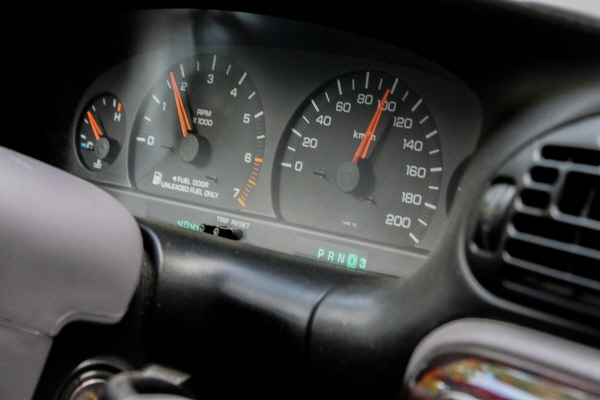
▲ It is important to keep the handle, gear knob, air conditioner filter, floor mats, etc. clean.
Sheets and floor mats that are easy for bacteria to breed on
Leather and fabric seats can easily become contaminated with mold and bacteria due to human sweat, dead skin cells, and moisture. Various types of dust and bacteria stuck on the driver's seat floor mat can circulate as a source of contamination inside the car.
Before getting in the car, shake off the dirt and dust from your shoes once or twice, and if the fine dust level is good, ventilate the car every hour.
In addition, once a month, clean the areas that come into contact with a lot of things while driving with a professional cleaning product, and also carefully manage the non-contact areas. In the case of floor mats, care must be taken to prevent contaminants and fine dust that get caught in the soles of shoes from accumulating.
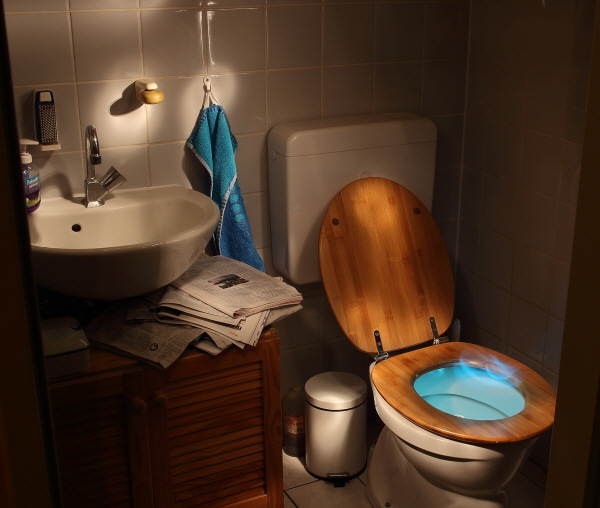
▲ In cases of severe contamination inside a vehicle, 26 times more bacteria can be detected than in a toilet.
According to data released in the UK, the level of contamination on car steering wheels is nine times that of a household toilet, and the Korea Transportation Safety Authority announced that in vehicle interior bacteria tests released, if the vehicle is poorly managed or heavily contaminated, levels up to 26 times that of a toilet can be detected.
An official from the Citizens' Movement Coalition for 10-Year Automobile Driving said, "You can reduce bacterial contamination by just wiping the steering wheel, gear lever, and air vents with a wet tissue before driving," adding, "Drivers think their car is clean and feel good just by having the automatic car wash vacuum when they go to the gas station, but they should not overlook the fact that the inside of the car can become a hotbed of bacteria."
Comments
Related news
"Now, carry an air purifier with you" LG Electronics launches portable air purifier 'PuriCare Mini'
LG Electronics is launching the LG PuriCare Mini portable air purifier on the 22nd. The PuriCare Mini is equipped with a portable PM1.0 sensor, dual inverter motor, and tornado dual clean fan. The portable PM1.0 sensor detects ultra-fine particulate matter regardless of whether the product is placed upright or laid flat. The dual inverter motor rotates at 5,000 rpm per minute based on fast mode, rapidly drawing in pollutants. The tornado dual clean fan delivers clean air quickly and widely. With a single charge, it can be used for up to 8 hours, and it weighs 530g, similar to a bottle of mineral water.
2019.03.20by 이수민 기자

Novel coronavirus infection throws cold water on ICT industry as well
The WHO declared a Public Health Emergency of International Concern regarding the novel coronavirus infection outbreak that occurred in Wuhan, Hubei Province, China. The impact of this infection is also extending to the ICT industry. China, where the largest number of patients has occurred, accounts for 52.93% of the global semiconductor market. The Chinese government extended the Lunar New Year holiday, originally scheduled to end on January 30th, to February 2nd, and ordered mandatory closures in Wuhan, the epicenter of the outbreak. These measures are expected to affect the operation and construction of other semiconductor plants within China.
2020.01.31by 이수민 기자
.png)
[COVID-19] “5 IT Technologies” to Prevent Further Spread
With the recent surge in confirmed COVID-19 cases, efforts to minimize contact between people are spreading. Services utilizing advanced ICT technologies such as AI, IoT, big data, and autonomous driving are being utilized in various ways. Worldwide, the global community is actively responding to the unexpected COVID-19 crisis through algorithm-based medical AI platforms for determining infection status and autonomous mobility services that substitute for human presence.
2020.02.25by 최인영 기자

[e4ds Tech Day 2026 ⑨] Sim Sang-gyu, Autocrypt CTO: "In the Physical AI Era, Automotive Security Must Extend Beyond the Vehicle"
At e4ds Tech Day 2026, Sim Sang-gyu, CTO of Autocrypt, explained automotive cybersecurity strategies in the era of Physical AI and SDV (Software-Defined Vehicle). Automobiles are evolving as part of an ecosystem connected to AI, cloud, chargers, IoT, and robots, and he emphasized that the scope of security must expand beyond the vehicle interior to the entire connected environment. In particular, AI model tampering, adversarial attacks, OTA updates, and EV charger hacking were identified as major threats. He explained that response measures require zero trust, AI model integrity protection, intrusion detection, Security by Design and Default, and full lifecycle security management, and that proactive security system establishment beyond regulatory compliance is critical for securing future mobility competitiveness.
2026.10.12by 배종인 기자

Practical HIL Construction Strategy for Automotive and Off-Highway Controller Validation
As vehicle E/E architecture transitions to zonal structures and shifts to software-defined vehicles (SDV), the number of controllers (ECUs) requiring validation and software complexity are surging dramatically. Meanwhile, real vehicle testing cannot provide repeated verification under identical conditions and entails lead time and safety concerns. This white paper explains the principles of HIL (Hardware-in-the-Loop) validation and the structure of the NI platform composed of PXI, SLSC, and VeriStand, and through two actual implementation cases—Camera Record & Replay HIL for In-Cabin Monitoring Controller (ICMU) and Forklift Controller (VCU) HILS—describes how controller-level regression testing becomes possible. Additionally, it explicitly states application boundaries and limitations, such as lack of A2B support.
2026.10.12by 편집부











