



KITECH Develops Real-Time Dyeing Information Monitoring Technology
 Published2020.03.09 12:31
Reduce defects by monitoring the dyeing process in real time
Module mounted on dyeing machine, visualization of changes in dyeing variables
There are about 1,500 domestic companies in the dyeing and finishing industry, which is a major middle-stream of the textile and fashion industry, but most of them are small-scale and have low productivity. The 'Right first time' rate, which is the percentage of a color ordered by a customer that is reproduced in a single dyeing cycle in a dyeing machine, averages 80–85%, but drops to 60% or less when dyeing new colors.
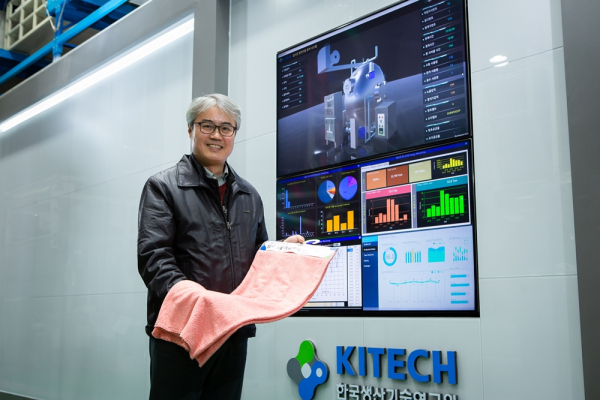
The Korea Institute of Industrial Technology (KITECH) announced on the 5th that it has developed a 'real-time integrated dyeing information monitoring technology' that can reduce the occurrence of defects by measuring and controlling key variables of the dyeing process in real time.
The research team led by Group Leader Shim Jae-yoon of the Smart Textile Group has spent the past three years measuring three major dyeing variables—dye absorption rate (the rate at which dye is applied to the fabric), pH concentration, and color change—in real time with the goal of improving the dyeing success rate, and has produced an integrated module capable of visually displaying these changes in PC-based dedicated software.
Since dyeing machines have a sealed structure, it is difficult to visually check the dyeing status during operation; however, the manufactured module is connected to the machine via a separate line, allowing for the real-time extraction and analysis of the dye solution. The extracted dye solution is measured, analyzed, and stored by an IoT dyeing controller and a database system, including dye solution measurement sensors and pH sensors installed within the module. The results are visualized in the form of graphs, enabling operators to understand them easily and quickly. In addition, it is equipped with a function to monitor energy consumption, such as steam, water, and electricity, during the dyeing process and to tally the results by period.
By utilizing the developed technology, workers can accurately determine the timing of chemical injection and dyeing completion based on module analysis values, and maintain and manage dyeing conditions consistently, thereby increasing work productivity. In addition, when performing the same dyeing work, future dyeing time can be shortened by approximately 25% and post-dyeing washing time by approximately 30% compared to the conventional method, and washing water usage can be reduced by about 20%, resulting in reduced energy consumption.
Modules developed overseas can only measure individual variables such as dye adsorption rate and pH, and are manufactured on a laboratory scale, requiring additional calibration by experts for field application. However, the developed module can measure all three variables simultaneously and requires no calibration, making it advantageous for field application.
The research team has completed a demonstration test on a 50kg class dyeing machine at a pilot plant established at the Ansan Convergence Production Technology Research Institute, and plans to install the module at the business site of S Company, a textile manufacturing specialist, in the second half of this year for a pilot operation.
Comments
Related news
KLA Launches Two IC Micro-process Measurement Systems
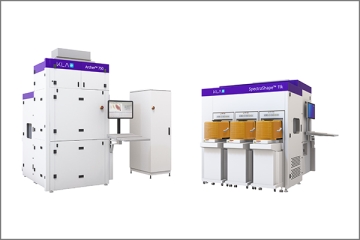
KLA has launched the Archer 750 overlay metrology system and SpectraShape 11k CD and dimensional shape metrology system. The Archer 750 overlay metrology system measures overlay error in the presence of process variation. The SpectraShape 11k CD and dimensional shape metrology system measures wafer topography, structure, and material, enabling process monitoring during production operations.
2020.02.27by 이수민 기자

Mouser Supplies Industrial Communication Solutions with ADI and TE
Mouser Electronics is stepping up to supply industrial communication solutions together with ADI and TE. To meet the real-time performance and robustness required in industrial applications, manufacturing facilities are operated through Ethernet. Compared to conventional Fieldbus, it increases processing speed and improves the efficiency of large-scale data management and factory equipment monitoring.
2020.02.27by 최인영 기자
ST Announces 'STM32CubeMonitor,' a Multi-OS Runtime Variable Monitoring and Visualization Tool
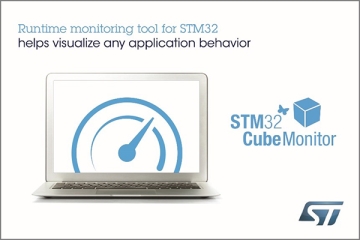
ST has launched STM32CubeMonitor, a software tool that displays runtime variables of STM32 applications in real-time while enabling customization of graphical visualization in the OS environment selected by developers. Users can implement custom dashboards by simply dragging and dropping items and functions using the STM32CubeMonitor's graphical flow editor, and can add widgets such as gauges, bar graphs, and plots without programming.
2020.03.04by 이수민 기자
Korea Instrument, KOLAS Accredited Calibration Agency First to Simultaneously Acquire ISO/IEC 27,001·27,701
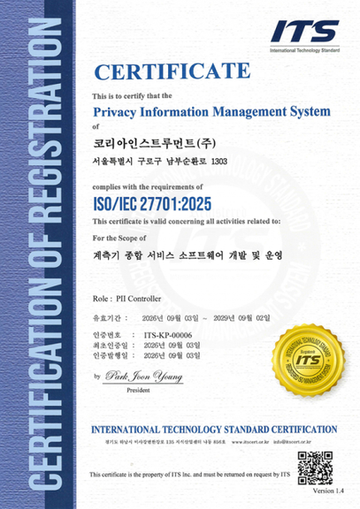
Korea Instrument has become the first among KOLAS accredited calibration agencies to simultaneously acquire ISO/IEC 27,001 and ISO/IEC 27,701 certifications. Through its proprietary platforms CWIZ Enterprise and CWIZ Partners, the company has embedded information security and personal data protection requirements across all business processes including customer information, equipment data, and calibration reports, with plans to continuously advance its management system through regular audits and security inspections.
2026.10.12by 배종인 기자

TeamViewer One, IT Incident Automation Workflow and Resolution Center Enhanced
TeamViewer has added IT incident automation capabilities and an advanced Resolution Center to its integrated digital workplace management platform 'TeamViewer ONE'. Recurrent service disruptions, configuration errors, and capacity shortages are automatically handled according to preset policies, and device status verification through script deployment can be managed in a unified interface, significantly reducing repetitive tasks for IT teams.
2026.10.12by 배종인 기자











