


Thirteen operators actively stepped forward in service-oriented mobility innovation
 Published2020.03.18 08:42
Advancing Regulatory Sandbox System and Early Startup Contribution Fee Reduction
The government and industry have joined forces to drive mobility innovation that enables users to move at their desired time, in their preferred manner, to their desired destinations.

▲ The Ministry of Land, Infrastructure and Transport and 13 companies have joined forces for mobility innovation
The Ministry of Land, Infrastructure and Transport and the mobility industry held a meeting on March 17 to discuss follow-up measures to the amended Passenger Vehicle Act, plans for prompt service launches, and related countermeasures.
Thirteen mobility companies participated in the meeting, including taxi-based operators, rental car-based operators, and operators preparing new business ventures.
Previously, on March 6, the amended Passenger Vehicle Act passed, establishing new institutional foundations for platform operators to engage not only in simple brokerage but also in direct transport operations, while providing the mobility industry—which had faced difficulties in business advancement due to legal uncertainty—with new and stable ground to pursue bold initiatives.
Through this meeting, the Ministry of Land, Infrastructure and Transport promised to support early service launches before the amended law takes effect by utilizing the regulatory sandbox system, while also providing early-stage startups with benefits such as reduced platform transport business contribution fees.
Additionally, for platform affiliated businesses, the license vehicle quota standard will be significantly relaxed from the existing 4,000 vehicles to 500 vehicles based on Seoul standards to lower barriers to entry, and implementation regulations will be amended to allow drivers to obtain their qualifications within one to two days, ensuring there are no disruptions in driver supply.

▲ Regulatory sandbox and platform transport business contribution fee reduction are being promoted
Various business models such as affiliated taxis including Kakao and Marcarong, half-and-half taxis, and demand-responsive large vans are emerging, and the industry anticipates that even more diverse and convenient mobility services will appear in the future.
Minister Kim Hyun-mee of the Ministry of Land, Infrastructure and Transport stated, "We will demonstrate a Korean-style innovation model where mobility innovation can achieve mutual prosperity with the people," and added, "As safe mobility has become more important due to the COVID-19 situation, we will continue to collaborate in developing new models for mobility safety in the hyper-connected era."
Meanwhile, the government has been continuously pursuing institutional improvements, including resolving unreasonable practices such as daily lease fees, addressing structural issues such as aging individual taxi drivers, implementing full management and monthly salary systems, and relaxing acquisition conditions for individual taxis to encourage young and middle-aged workers to enter the industry.
Comments
Related news

PAVs to be commercialized sooner than fully autonomous vehicles
Personal aerial vehicles, or PAVs, are being presented as a future transportation mode to enhance mobility efficiency in congested urban areas. PAVs generated greater attention at CES 2020 than autonomous vehicles. As partial autonomous driving functions became commercialized, automotive industry interest in autonomous vehicles somewhat cooled, and Level 5 autonomous vehicle development encountered several technical challenges. These challenges are lowering the commercialization potential of fully autonomous vehicles compared to PAVs.
2020.02.18by 이수민 기자
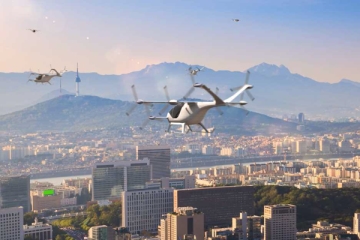
What are the key issues that determine success and failure for PAV (Personal Air Vehicle), the future transportation means taking to the skies?
Drones utilizing ICT technologies such as artificial intelligence, embedded sensors, software, hardware, 5G communication, and cloud have recently garnered attention for their growth potential in the personal aircraft market. Mobility Foresignts predicted that the PAV market value will grow to approximately 400 million dollars by 2025, while Morgan Stanley forecasted growth to 2.9 trillion dollars by 2040.
2020.02.18by 최인영 기자

The key to urban mobility is the harmony of four ICT technologies.
Major cities worldwide are collaborating with the private sector to develop intelligent transportation infrastructure, bringing about changes in urban mobility management. Frost & Sullivan anticipates that the performance of smart city mobility systems in the future will be differentiated based on how well they integrate city-wide communication networks, cloud-based data storage, intelligent command centers, and cybersecurity measures.
2020.03.06by 최인영 기자
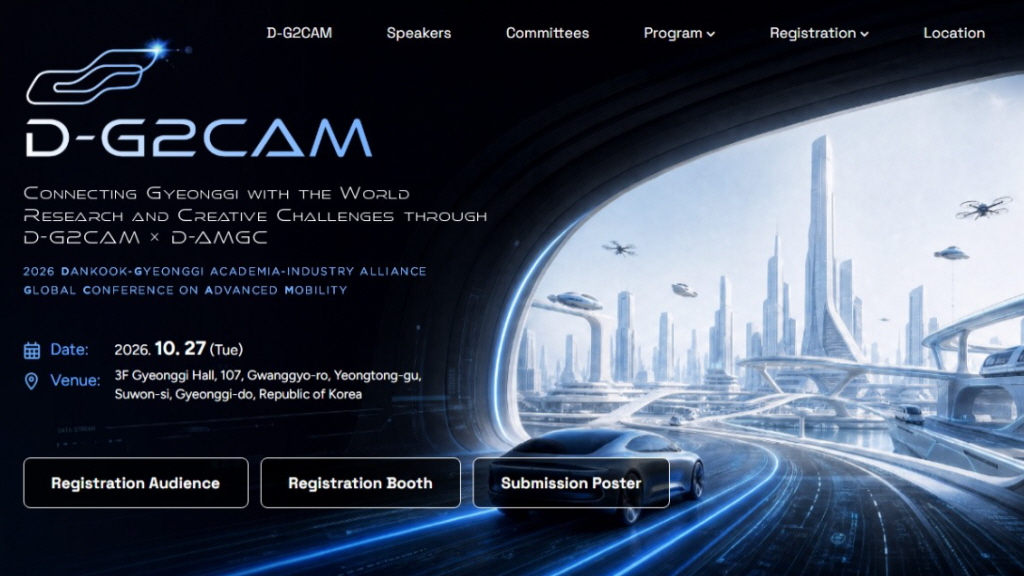
GAIA-Festa 2026, Autonomous Driving, AI, and Aerospace Experts Gather…Discussing Global Cooperation in the 'Silicon Intelligence Era'
GAIA-Festa 2026, which will be held in Suwon on October 27, is an industry-academia-research exchange event that explores the present and future of future mobility and AI technology through the global conference D-G2CAM 2026 and the international contest D-AMGC 2026. Domestic and international experts will share the latest research in autonomous driving, 5G/6G mobility, space technology, and data protection fields, while university students will showcase robots and physical AI prototypes that they have independently developed. Additionally, through poster presentations, corporate exhibitions, international cooperation meetings, and signing ceremonies, a platform will be established to connect the research capabilities and industrial needs of the Gyeonggi region with a global cooperation network.
2026.10.13by 배종인 기자

[e4ds Tech Day 2026 ⑨] Sim Sang-gyu, Autocrypt CTO: "In the Physical AI Era, Automotive Security Must Extend Beyond the Vehicle"
At e4ds Tech Day 2026, Sim Sang-gyu, CTO of Autocrypt, explained automotive cybersecurity strategies in the era of Physical AI and SDV (Software-Defined Vehicle). Automobiles are evolving as part of an ecosystem connected to AI, cloud, chargers, IoT, and robots, and he emphasized that the scope of security must expand beyond the vehicle interior to the entire connected environment. In particular, AI model tampering, adversarial attacks, OTA updates, and EV charger hacking were identified as major threats. He explained that response measures require zero trust, AI model integrity protection, intrusion detection, Security by Design and Default, and full lifecycle security management, and that proactive security system establishment beyond regulatory compliance is critical for securing future mobility competitiveness.
2026.10.12by 배종인 기자











