



National Bio Big Data Construction Pilot Project Takes First Step This Year
 Published2020.03.23 08:31
Established genomic data for over 20,000 people over two years
The Ministry of Science and ICT, the Ministry of Health and Welfare, and the Ministry of Trade, Industry and Energy announced on the 23rd that they will proceed with a pilot project to build a national bio big data system starting this year.
To this end, the Steering Committee, Steering Committee, Secretariat, Expert Committee, and five government-funded research institutes (Korea Centers for Disease Control and Prevention, Korea Research Institute of Bioscience and Biotechnology, Korea Institute of Science and Technology Information, Korea Institute of Industrial Technology Evaluation and Management, and Korea Health Industry Development Institute) form a consortium to support the operation of the pilot project.
During the pilot project for the next two years (2020–2021), 5,000 patients with rare diseases will be recruited annually, and in conjunction with leading projects such as the Korean Genome Epidemiology Project and the Ulsan 10,000 Genome Project, 5,000 patients will also be recruited annually, with plans to build clinical information and genomic data for a total of more than 20,000 people.
.jpg)
(Image = Ministry of Science and ICT)
In the case of rare diseases, 16 rare disease collaborating institutions nationwide are designated to collect clinical information and specimens from patients with rare diseases, taking into account patient accessibility and clinical experience.
For projects where clinical information or genomic data has already been secured, 'leading projectWe plan to form a 'Committee' to establish standards for linkage with the bio big data construction pilot project.
Genomic data is scheduled to be produced by genomic analysis institutions and the Korea Biomedical Information Center (KOBIC) through 'whole-genome analysis (a method of analyzing the entire genome)' and 'variant analysis (a method of identifying different nucleotide sequences by comparing with a standard genome),' respectively.
We plan to support the sharing and utilization of the collected clinical information and produced genomic data in principle among the Korea Centers for Disease Control and Prevention, KOBIC, and the Korea Institute of Science and Technology Information (KISTI).
It supports various studies by providing information to researchers in industry, academia, research institutes, and hospitals through the Clinical Interpretation Research Network (CIRN), and assists in the diagnosis and treatment of patients with rare diseases through diagnostic reference reports.
We plan to utilize this to support the localization of materials, parts, and equipment related to genomic data analysis that are currently dependent on overseas sources, as well as the development of new drugs and medical devices, and to expand related services, such as digital health devices linked to personal health information.
To address concerns regarding the leakage of personal information resulting from the collection of sensitive clinical and genomic data, we plan to ensure thorough data management by assigning individual IDs and establishing closed networks at the collection and production stages.
The plan for the pilot project was decided at the first meeting of the 'National Bio Big Data Construction Pilot Project Promotion Committee' held on March 12. The steering committee was composed of a total of 20 members, including Chairman Song Si-young (Professor at Yonsei University Severance Hospital), as well as representatives from the medical, academic, industrial, and patient groups.
Through this pilot project, the construction of bio big data is expected to begin in earnest in Korea, laying the foundation for the biohealth industry, which offers significant first-mover advantages.
Comments
Related news

SW-led 'digital treatment' to take its first step in 2020
The Software as a Medical Device (SaMD) market continues to show growth as software such as big data, cloud computing, and artificial intelligence are increasingly applied to healthcare. There is a spreading trend of utilizing ICT technology in medical image analysis, post-traumatic stress treatment, and robotic surgery. The healthcare industry represents the sector with the highest CAGR within the overall artificial intelligence market. Korea, having a 5G network infrastructure, possesses significant growth potential in the digital healthcare market.
2020.01.15by 최인영 기자
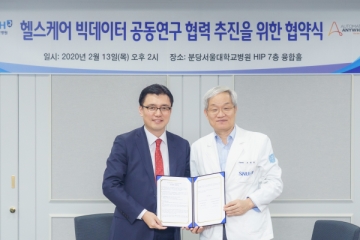
Automation Anywhere and Bundang Seoul National University Hospital Sign MOU for Joint Research on Healthcare Big Data
Automation Anywhere signed a memorandum of understanding (MOU) on joint research in healthcare big data with Bundang Seoul National University Hospital on the 13th. Through this MOU, both organizations agreed to explore and support joint research related to AI and machine learning-based technologies for healthcare big data utilization. Automation Anywhere will provide AI and machine learning-based RPA technology to Bundang Seoul National University Hospital to support the establishment of business processes capable of analyzing medical big data.
2020.02.14by 이수민 기자

2021 Budget Announcement for Small Business and Big 3 Sectors, Focusing Investment on Semiconductors and New Materials
The Ministry of Science and ICT deliberated and approved five agendas, including the government's research and development investment direction for the materials, parts, and equipment (MPE) sector in 2021, which contains field-specific support priorities for semiconductors and displays, as well as investment directions for the BIG3 sectors including system semiconductors, future vehicle core components, and biohealth materials. Medium to long-term customized support and the establishment of industry-academic-research collaboration systems will be promoted.
2020.03.17by 최인영 기자

Nvidia invests $5 billion in Intel
NVIDIA and Intel, leaders in global AI computing technology, are now forging ahead in providing cutting-edge solutions through NVLink-based architecture integration. NVIDIA and Intel have officially announced a strategic partnership and stated that they will jointly develop customized data center and personal computing products to accelerate diverse applications and workloads ranging from hyperscale to enterprise and consumer markets, thereby laying the foundation for the next generation computing era.
2025.09.22by 배종인 기자
.jpg)
Applied Materials Launches Environmental Protection Campaign to Mark World Cleanup Day
Applied Materials Korea (CEO Park Kwang-seon) is carrying out environmental cleanup activities with employees and their families around the Dongtan Sinricheon area on the occasion of World Cleanup Day, evolving into a company that engages with the local community beyond technological innovation.
2025.09.22by 명세환 기자











