



Teledyne Unveils LWIR Camera for Non-Contact Fever Diagnosis
 Published2020.04.21 10:08
For areas such as skin temperature rise detection
Provides accurate and reproducible results
Teledyne DALSA today announced a new longwave infrared (LWIR) camera, the Calibir™ GXM.
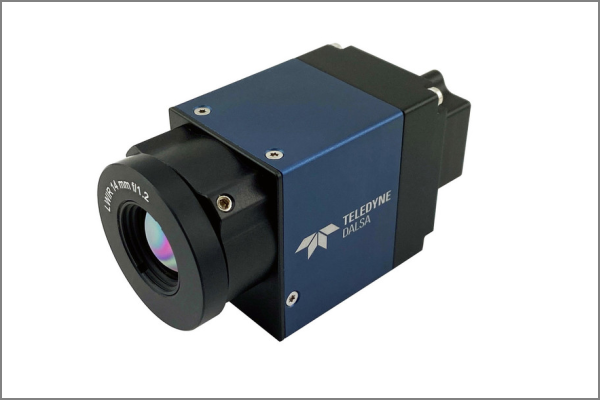
The Caliber GXM series features microbolometer sensors with a 17 µm pixel size manufactured in Teledyne DALSA’s in-house foundry, providing high sensitivity in the longwave infrared range (8-12 µm).
It provides instantaneous shutter and shutterless operation and rapid image output upon power-up, making it ideal for non-contact thermal imaging applications that require continuous image acquisition.
Teledyne DALSA’s microbolometer sensors feature a 21-bit ADC design that delivers improved Noise Equivalent Temperature Difference (NETD) of ≤50mK, while a calibration update improves image performance and response uniformity with individualized gain correction per lens.
Comments
Related news
IBM Offers Free AI-Based App to Track COVID-19 Information
As the COVID-19 pandemic heightened the importance of accessing relevant information, IBM provides a free app that delivers the latest COVID-19 information based on AI Watson and analytical tools. IBM offers the latest COVID-19 information through the Weather Channel app, Weather.com website, and an online dashboard. Enterprises and general users can access the information via smartphones or computers.
2020.03.30by 이수민 기자
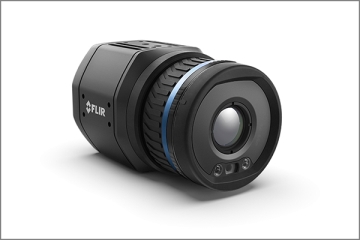
FLIR Launches Two Thermal Cameras for COVID-19 Response Systems
FLIR Systems has launched the A400/A700 series of fixed thermal imaging cameras suitable for process control and monitoring, quality assurance, condition monitoring, and early fire detection. The new products will be supplied first to companies developing COVID-19 response systems.
2020.04.03by 이수민 기자

Apple and Google Collaborate on 'Contact Tracking' to Stop COVID-19
Public health experts recognize contact tracing as a tool that can help contain the spread of COVID-19, given that the virus can be transmitted through close contact with infected individuals. In response, Google and Apple have decided to jointly support government and health authorities in preventing virus transmission by placing user privacy and security at the center of their development efforts and utilizing Bluetooth technology.
2020.04.13by 이수민 기자
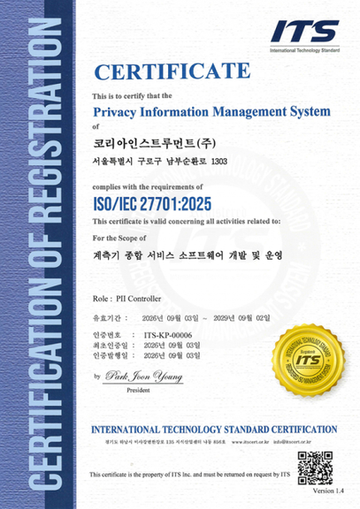
Korea Instrument, KOLAS Accredited Calibration Agency First to Simultaneously Acquire ISO/IEC 27,001·27,701
Korea Instrument has become the first among KOLAS accredited calibration agencies to simultaneously acquire ISO/IEC 27,001 and ISO/IEC 27,701 certifications. Through its proprietary platforms CWIZ Enterprise and CWIZ Partners, the company has embedded information security and personal data protection requirements across all business processes including customer information, equipment data, and calibration reports, with plans to continuously advance its management system through regular audits and security inspections.
2026.10.12by 배종인 기자
TeamViewer One, IT Incident Automation Workflow and Resolution Center Enhanced
TeamViewer has added IT incident automation capabilities and an advanced Resolution Center to its integrated digital workplace management platform 'TeamViewer ONE'. Recurrent service disruptions, configuration errors, and capacity shortages are automatically handled according to preset policies, and device status verification through script deployment can be managed in a unified interface, significantly reducing repetitive tasks for IT teams.
2026.10.12by 배종인 기자











