



Activating 5G V2X infrastructure hinges on mobile relay technology.
 Published2020.05.26 12:12
Increase efficiency by performing handover only on relays
Adding data sharing and remote driving capabilities to 5G V2X
A year has passed since the launch of 5G commercial services in Korea. On May 20th, researchers Noh Go-san and Jeong Hee-sang of the Electronics and Telecommunications Research Institute (ETRI) published an article titled "5G Relay Technology Trends" in the ICT Planning Series, a weekly technology trend published by the Institute for Information & Communications Technology Planning and Evaluation (IITP). They argued that 5G must now go beyond simply providing services and meet the needs of diverse use cases in diverse environments.
Relay is a technology that expands the range of mobile communications and enables the construction of low-cost communications networks without the need for infrastructure such as backhaul.
3GPP has already standardized the architecture, protocols, and signaling for relay construction at the time of LTE commercialization. In 5G, the standardization of IAB (Integration of Access and Backhaul) is being carried out for the integrated operation of access links (links between relays and terminals) and backhaul links (links between base stations and relays) using relays.
◇ Types and distinctions of relays
The types of relays are divided into Amplify-and-Forward (AF) and Decode-and-Forward (DF).
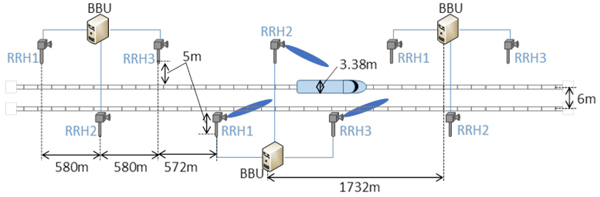
Amplify-and-forward relays, also known as repeaters, function by amplifying and retransmitting received signals. Because relays omit modulation and demodulation, they operate regardless of standard specifications and are simple to implement. However, the relay amplification process amplifies both signal components and noise, resulting in a lower signal-to-noise ratio (SNR) at the final receiver.
In a code-and-forward relay, the relay demodulates and decodes the received signal, then encodes and modulates it before transmitting it. Therefore, the relay suppresses noise and prevents signal-to-noise (SNR) loss at the final receiver. However, if an error occurs during the decoding process in the relay, the error propagation effect occurs, causing the error to be transmitted as is to the final receiver. Furthermore, time delays occur due to modulation and demodulation operations in the relay.
When the backhaul link between the base station and the relay and the access link between the relay and the terminal use the same frequency, it is called inband relay. When different frequencies are used, it is called outband relay. Inband relay enables efficient frequency use, but can experience link quality degradation due to interference. Conversely, outband relay is immune to interference, but can suffer from reduced frequency utilization efficiency.
Relays can also be categorized into fixed relays and mobile relays, depending on their mobility. Fixed relays are installed in a fixed location and act as relays between base stations and terminals, operating close to the base station. Mobile relays operate while the relay is in motion, such as on a vehicle. They operate close to the terminal, requiring link design and handover support that take mobility into account.
Considering the above relay characteristics, the two researchers reviewed relay technology trends, especially mobile relay technology development trends, through their manuscript.
◇ Mobile relay suitable for providing wireless services for mobile devices
Mobile relays can be installed on vehicles like trains and buses to provide wireless services to passengers inside. They are connected to ground-based base stations via wireless backhaul. The two researchers cited two advantages of providing wireless services in this structure compared to providing direct access to in-vehicle passengers from a base station without going through a mobile relay.
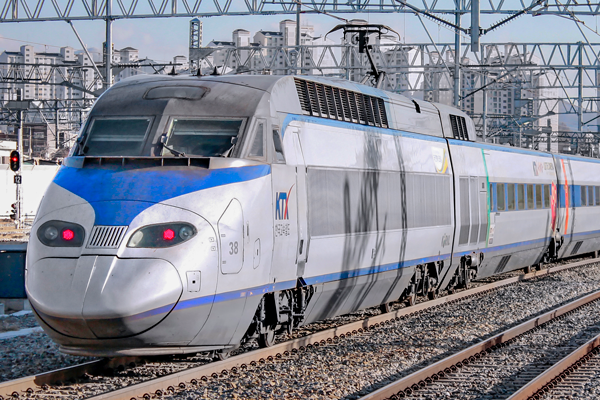
First, it is possible to overcome path loss caused by the vehicle body. In the case of direct access, the steel body causes signal attenuation of approximately 20-35 dB. However, in the case of mobile relay, this signal attenuation can be avoided by utilizing onboard terminals.
Next, there's the improved handover efficiency. While direct access suffers from inefficiencies due to a large number of terminals simultaneously performing handovers in cell boundary areas, mobile relay enables efficient handovers because only relays need to perform handovers.
◇ Mobile relay in V2X
3GPP has defined various use cases and deployment scenarios since the initial scenario definition stage of 5G NR. The main use case is V2X (Vehicle-to-Everything) applied to vehicle communication.
Use cases for 5G V2X include vehicle platooning for vehicle safety, sensor data sharing, remote driving, and information sharing for autonomous driving.
A use case for mobile relay in V2X is tethering via vehicles, where a vehicle is connected to a base station via a backhaul link and wireless services are provided to terminals within or near the vehicle. This can achieve improvements in terminal power efficiency, such as by reducing the communication distance between terminals.
The two researchers stated that mobile relay technology's utility is maximized when applied to transportation. They also advised that since a single mobile relay supports multiple users, a high-capacity wireless backhaul link is required, making the use of the millimeter wave (mmWave) band, which offers wideband frequency coverage, appropriate.
Last year, ETRI developed and tested a Mobile Hotspot Network (MHN) system to support millimeter wave-based mobile backhaul. As a result, it achieved a data transmission rate of 1.25 Gbps at 500 MHz bandwidth in a tunnel environment on Seoul Subway Line 8. Furthermore, it achieved a peak data transmission rate of 5 Gbps and an average data transmission rate of 2-4 Gbps using a 1 GHz bandwidth in an urban environment on Gangneung city buses.
The two researchers said these results suggest that mobile relay could significantly contribute to improving coverage, increasing resource efficiency, and reducing power consumption in 5G.
Last April, Tesla Korea reported to the Ministry of Science and ICT that it would operate a basic telecommunications business. This is to provide connectivity services such as real-time traffic information, music and video streaming services by embedding LTE modems in electric vehicles sold domestically.

Other automakers, including Hyundai, Kia, Ssangyong, Renault Samsung, BMW, Mercedes-Benz, Audi Volkswagen, and Porsche, are providing services through registration as special telecommunications businesses prior to the entry regulation relaxation law.
Additionally, the government announced in January that it would invest 578 billion won over three years to expand public Wi-Fi to a total of 53,000 locations, including 17,000 elementary, middle, and high schools and transportation facilities nationwide this year and 36,000 locations from 2021 to 2022.
The increasing provision of connectivity services by vehicle manufacturers, the growing demand for public Wi-Fi, and the introduction of autonomous driving services in the future all presuppose the development of V2X technology, and mobile relay technology could be the answer.
Comments
Related news
Self-driving shuttles will be operational in Sejong City within the first half of this year.
LG Uplus and Chemtronics have signed a memorandum of understanding and are launching a proof-of-concept project for autonomous shuttle services in Sejong City. Under the agreement, Uplus will provide 5G communication networks, dynamic precision maps, and high-precision positioning solutions for Sejong City's autonomous driving services. Chemtronics will focus on technical support for V2X-related stacks, hardware, and applications.
2020.03.26by 이수민 기자

"Strengthening the security of battlefield equipment starts with selecting a vehicle MCU"
As technologies such as ADAS, IVI, ECU, V2X, and autonomous driving continue to advance, the proportion of electrical and electronic components in automotive parts is steadily increasing. Electrical and electronic components must guarantee security functions in accordance with international functional safety standards for automobiles to ensure passenger safety. In order for engineers to implement security functions in electrical and electronic components, they must first select an appropriate MCU.
2020.06.04by 이수민 기자
u-blox Launches VERA-P3 Module, Increasing Accessibility of V2X Technology
u-blox announced a new V2X module product, VERA-P3. VERA-P3 packages the UBX-P3 chip into an easy-to-use module form, enabling automotive OEMs, Tier 1 suppliers, and traffic management infrastructure manufacturers to integrate and commercially deploy V2X technology into their platforms and solutions.
2020.05.20by 이수민 기자
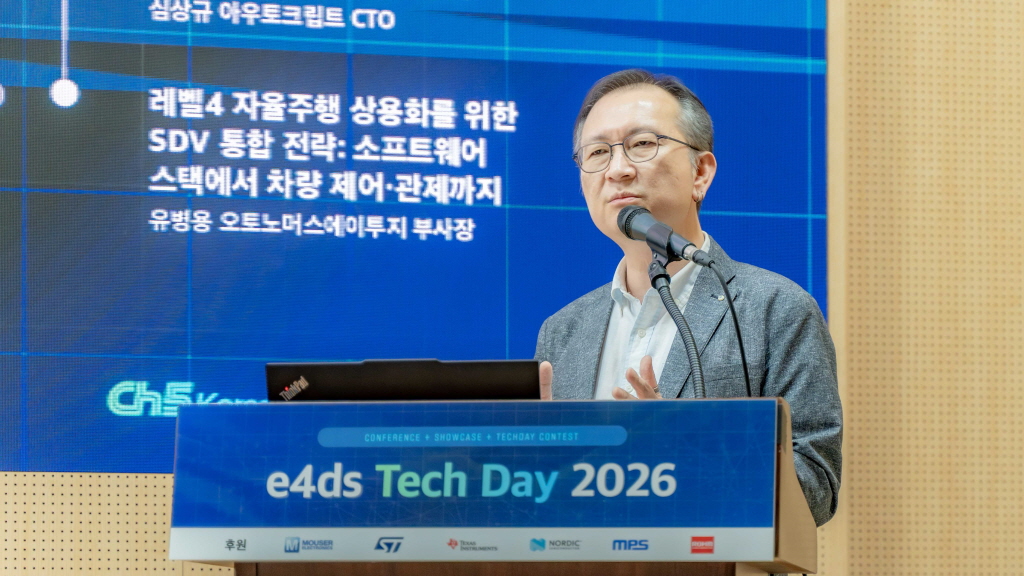
[e4ds Tech Day 2026 ⑨] Sim Sang-gyu, Autocrypt CTO: "In the Physical AI Era, Automotive Security Must Extend Beyond the Vehicle"
At e4ds Tech Day 2026, Sim Sang-gyu, CTO of Autocrypt, explained automotive cybersecurity strategies in the era of Physical AI and SDV (Software-Defined Vehicle). Automobiles are evolving as part of an ecosystem connected to AI, cloud, chargers, IoT, and robots, and he emphasized that the scope of security must expand beyond the vehicle interior to the entire connected environment. In particular, AI model tampering, adversarial attacks, OTA updates, and EV charger hacking were identified as major threats. He explained that response measures require zero trust, AI model integrity protection, intrusion detection, Security by Design and Default, and full lifecycle security management, and that proactive security system establishment beyond regulatory compliance is critical for securing future mobility competitiveness.
2026.10.12by 배종인 기자

Practical HIL Construction Strategy for Automotive and Off-Highway Controller Validation
As vehicle E/E architecture transitions to zonal structures and shifts to software-defined vehicles (SDV), the number of controllers (ECUs) requiring validation and software complexity are surging dramatically. Meanwhile, real vehicle testing cannot provide repeated verification under identical conditions and entails lead time and safety concerns. This white paper explains the principles of HIL (Hardware-in-the-Loop) validation and the structure of the NI platform composed of PXI, SLSC, and VeriStand, and through two actual implementation cases—Camera Record & Replay HIL for In-Cabin Monitoring Controller (ICMU) and Forklift Controller (VCU) HILS—describes how controller-level regression testing becomes possible. Additionally, it explicitly states application boundaries and limitations, such as lack of A2B support.
2026.10.12by 편집부











