



Nokia Unveils New Portfolio Strengthening 400G Ethernet
 Published2020.06.01 10:48
5th Generation PSE DSP Optimized for 400G Optical Transmission
Over the past decade, the increasing demand for video and mobile bandwidth has been met thanks to the continuous advancement of optical and silicon technologies. However, as transmission capacity and processing capabilities reach fundamental limits, telecommunications operators are seeking new ways to continue expanding the scale of their networks while reducing costs.
Accordingly, on the 1st, Nokia announced the 'WaveFabric Elements portfolio,' consisting of photonic chips, devices, and subsystems, including the 'Photonic Service Engine-V (PSE-V),' a family of 5th generation coherent digital signal processing units (DSPs).
400G Ethernet is a network interface currently widely used in IP, optical, and data center networks. Nokia's WaveFabric Elements portfolio combines digital signal processing devices and optical technology focused on new end-to-end 400G applications. High-level vertical technology integration can meet the unique technical requirements and costs demanded by data centers, railways, and long-distance and submarine networks.
Nokia's 5th generation coherent DSP family, consisting of Nokia's PSE-Vs (Super coherent) and low-power PSE-Vc (Compact), is a multi-DSP optimized for various optical networking applications, form factors, and platforms.
PSE-V, supporting up to 90 Gbaud, utilizes Nokia Bell Labs' second-generation PCS (Probabilistic Constellation Shaping) products. By combining optimized algorithms with the enhanced capabilities of next-generation silicon, it enables transmission up to 800 G and provides a transmission distance 60% wider, power consumption per bit 40% lower, and 15% greater spectral efficiency compared to existing DSPs.
The PSE-Vc supports programmable transmission speeds from 100G to 400G in metro and long-distance networks. Because it consumes only ultra-low power, it can be integrated with various pluggable transceiver modules.
The new DSP is supported by the CSTAR optical engine family from Elenion Technologies, which Nokia recently acquired. The CSTAR optical engine family utilizes the latest silicon photonics and packaging technologies to support applications including data centers, Metro DCI, and long-distance optical transmission. The PSE-V DSP can be integrated into a pluggable transceiver module and used independently.
The Nokia 400G pluggable coherent transceiver module is optimized for a wide range of platforms and applications, including Nokia's extensive solutions such as optical transmission, IP, wired access, and mobile solutions. This portfolio includes 400G ZR/ZR+ capabilities in the QSFP-DD form factor and high-performance, multi-functional short- and medium-long-range 400G (400G Multi-haul variant) in the CFP2-DCO form factor.
Scott Wilkinson, Senior Research Analyst at Signal AI, explained, “Nokia is one of the few companies with experience building 5th generation DSPs,” adding, “Nokia’s strategy focusing on PSE-V-based 400G transmission will align well with market demands.”
Comments
Related news

"Financial Data Products" Converging Telecom and Finance to Launch; SKT Signs MOU with Financial Security Institute
SK Telecom has signed an MOU with the Financial Security Institute, operator of the Financial Data Exchange, to facilitate mutual cooperation between telecommunications and financial data integration. SK Telecom plans to develop new data products for financial services by combining telecommunications data with financial sector data, and intends to provide these to the Financial Data Exchange.
2020.05.12by 이수민 기자
Development and demonstration of 5G-based construction site safety solutions will be carried out.
LG Uplus and GS Engineering & Construction have signed a memorandum of understanding regarding verification and commercialization of wireless communication-based smart construction technology. The two companies will collaborate on establishing AI video analysis-based safety management systems, building construction site-specialized wireless communication infrastructure, and verification and commercialization of construction safety solutions.
2020.05.28by 이수민 기자
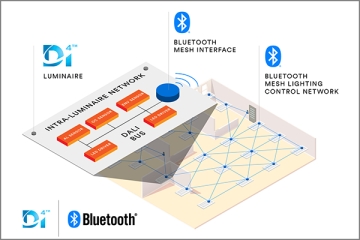
Development of a lighting system combining Bluetooth and DALI-2 becomes possible.
The Bluetooth SIG, which oversees the development of Bluetooth, an international standard for short-range wireless communication, has resolved to collaborate with the Digital Illumination Interface Alliance (DiiA) to expand the commercial lighting market. Through this integration, partners of both organizations are expected to be able to implement various IoT functions by integrating the two IoT standards into their commercial lighting products.
2020.05.28by 이수민 기자
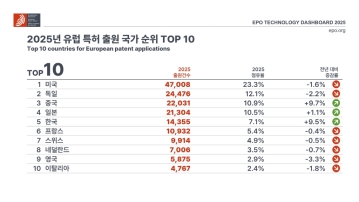
European Patent Applications Surpass 200,000 for the First Time… South Korea Maintains 5th Place, Led by Batteries and Telecommunications
According to the European Patent Office (EPO)'s 'Technology Dashboard 2025', European patent applications last year reached 201,974, surpassing 200,000 for the first time. Korean companies and inventors filed 14,355 applications, representing a 9.5% increase from the previous year and maintaining 5th place by country. Battery, digital communication, and semiconductor technologies led the growth, with Samsung ranking as the top EPO applicant for the second consecutive year and LG reaching 3rd place. The presence of major domestic cities such as Seoul, Suwon, and Yongin was also confirmed. It was also revealed that Korea's European patent strategy is expanding beyond individual technologies to span the entire industry.
2026.03.24by 명세환 기자

SK Telecom First Applies AI-Based Network Operations at Gwanghwamun K-Pop Concert
SK Telecom announced that it applied an AI-based network operation system for the first time at a large-scale K-pop concert held in the Gwanghwamun area of Seoul on March 21st, managing communication quality throughout the event. Mobile data usage during the three hours before and after the concert reached 12.15TB, approximately doubling compared to the same time slot the previous weekend. SK Telecom monitored traffic using the AI system 'A-One' in five-minute and 50-meter units to respond to potential overload situations, while also operating temporary communication facilities and on-site personnel in parallel. This case is interpreted as confirmation of the practical applicability of AI-based autonomous network operation in an environment where demand from dense events and foreign users increases simultaneously.
2026.03.23by 명세환 기자











