



KETI, "Overcoming the Challenge of Commercializing Flexible Battery" by Developing Electrode Structure Integrated with Fiber
 Published2020.06.08 11:15
Development of a novel Sn@Ni fiber electrode structure
Improving the structural stability of flexible batteries
As the IoT and wearable device markets grow, the demand for flexible batteries that perform stably even under conditions of mechanical deformation is increasing.
The Electronics and Telecommunications Technology Institute (KETI) announced on the 3rd that it has developed a new electrode structure that integrates electrode materials and fiber materials.
.png)
Flexible secondary battery applied as electrode [Image = KETI]
Existing flexible secondary battery electrodes have been studied primarily through technologies that change ‘metal foil’, which is vulnerable to mechanical deformation, to ‘carbon-based substrates’ or ‘polymer fabrics’ coated with conductive materials.
For carbon-based substrates, complex manufacturing processes and high costs are obstacles to commercialization, and for polymer fabrics, there are limitations in that cracks occur when mechanically deformed, electrode components are easily separated, and the capacity is low.
The Sn@Ni fiber electrode, developed by the team of Director Yoo Ji-sang and Dr. Woo Sang-gil of the Next-Generation Battery Research Center at KETI, together with the team of Professor Kim Jae-heon of Kookmin University and the team of Professor Lee Sang-young of UNIST, secured structural stability against mechanical deformation by integrating a layer of nickel (Ni), a conductive metal, with PET polymer fabric.
By applying the galvanic replacement method, some of the nickel can be used to store lithium.The principle is to have a higher energy density than existing ones by replacing it with capable tin (Sn).
The joint research team said that this Sn@Ni fiber electrode “has excellent mechanical durability, maintaining more than 96% of its capacity even after being bent 2,000 times to half the size of the battery,” and “its electrical conductivity has improved 600 times compared to existing electrodes.”
KETI is conducting follow-up research on a flexible secondary battery based on a polymer electrolyte with Sn@Ni fiber electrodes. Dr. Woo Sang-gil predicted, “In the future, a secondary battery system that combines these element technologies will contribute to the early commercialization of flexible secondary batteries and the advent of the next-generation wearable market.”
Meanwhile, this technology was selected as the cover paper for the April issue of 'Advanced Functional Materials,' which ranks in the top 10% of international academic journals in the field of materials science.
Comments
Related news
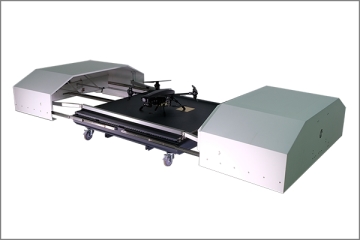
Drone stations to charge drone batteries to be built nationwide
Dedicated drone battery charging stations are expected to be established nationwide, and drones will be able to travel anywhere with free battery charging just like electric vehicles. LG Uplus, Japan's KDDI, and Taiwan's CIRC have signed an MOU to expand their smart drone business. Through this collaboration, the three companies will expand their smart drone platform.
2020.04.12by 이수민 기자
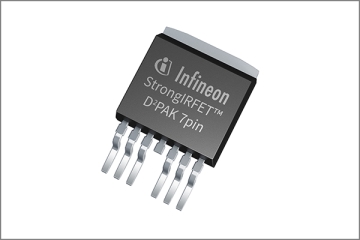
Infineon Launches StrongIRFET MOSFETs in D2PAK 7pin+ Package for Battery-Powered Applications
Infineon has launched three StrongIRFET power MOSFETs with the D2PAK 7pin+ package. Compared to D2PAK 7pin package products, the D2PAK 7pin+ package products offer up to 13% lower RDS(on) and up to 50% higher current handling capacity.
2020.05.19by 이수민 기자
ROHM to Supply SiC Components for Vitesco's Electric Vehicle Battery Inverters
Vitesco Technologies, a subsidiary of the Continental Group, has selected Rohm as its preferred supplier of SiC power components. The company has also established a power product development partnership for electric vehicles. SiC power components enable more efficient utilization of electric energy from EV batteries compared to conventional components. Anticipating a significant increase in demand for SiC solutions, Vitesco plans to begin production of inverters equipped with SiC power components by 2025.
2020.06.05by 이수민 기자
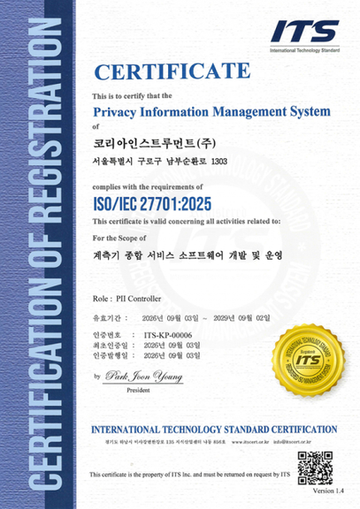
Korea Instrument, KOLAS Accredited Calibration Agency First to Simultaneously Acquire ISO/IEC 27,001·27,701
Korea Instrument has become the first among KOLAS accredited calibration agencies to simultaneously acquire ISO/IEC 27,001 and ISO/IEC 27,701 certifications. Through its proprietary platforms CWIZ Enterprise and CWIZ Partners, the company has embedded information security and personal data protection requirements across all business processes including customer information, equipment data, and calibration reports, with plans to continuously advance its management system through regular audits and security inspections.
2026.10.12by 배종인 기자

TeamViewer One, IT Incident Automation Workflow and Resolution Center Enhanced
TeamViewer has added IT incident automation capabilities and an advanced Resolution Center to its integrated digital workplace management platform 'TeamViewer ONE'. Recurrent service disruptions, configuration errors, and capacity shortages are automatically handled according to preset policies, and device status verification through script deployment can be managed in a unified interface, significantly reducing repetitive tasks for IT teams.
2026.10.12by 배종인 기자











