



ROHM Develops Cyan LED Suitable for Color Universal Design
 Published2020.06.09 11:38
Colorblind people who have difficulty distinguishing between red (Type P) and green (Type D)
Color combinations of turquoise, yellow, and orange make it easier to distinguish color differences
Most electronic devices transmit information in red and green. If cyan, orange, or yellow is used here, it becomes easier for people with Type P or Type D color vision, who have difficulty distinguishing between red and green, to identify color differences.
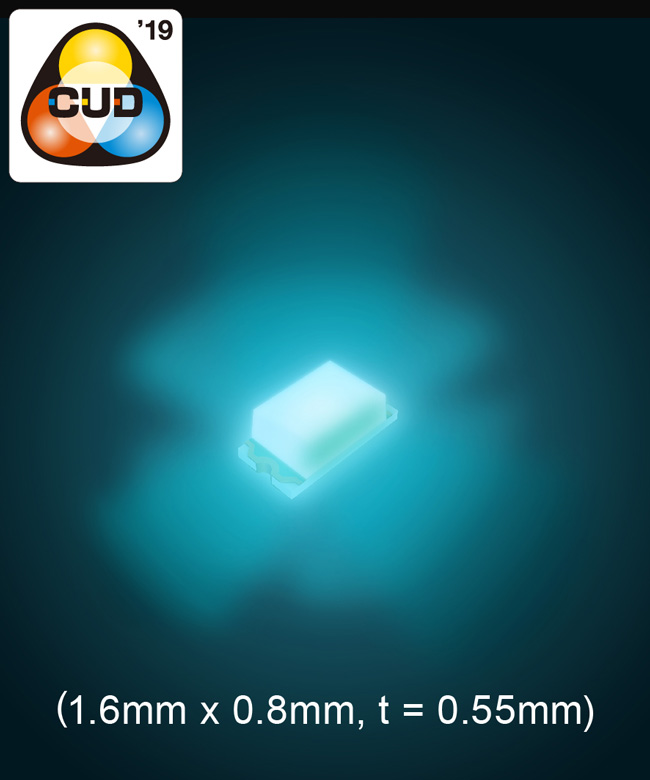
ROHM announced on the 9th that it has developed SMLD12E2N1W and SMLD12E3N1W, cyan LEDs of size 1608 (1.6×0.8mm) with special wavelengths (λD: 496nm/505nm).
SMLD12E2N1W and SMLD12E3N1W, which have obtained certification from the Color Universal Design Association (CUDO) of Japan, can be combined with ROHM’s blue LED SMLD12BN1WT86 (λD: 470nm), yellow LED SML-D15YW (λD: 590nm), and orange LED SML-D15DW (λD: 605nm).
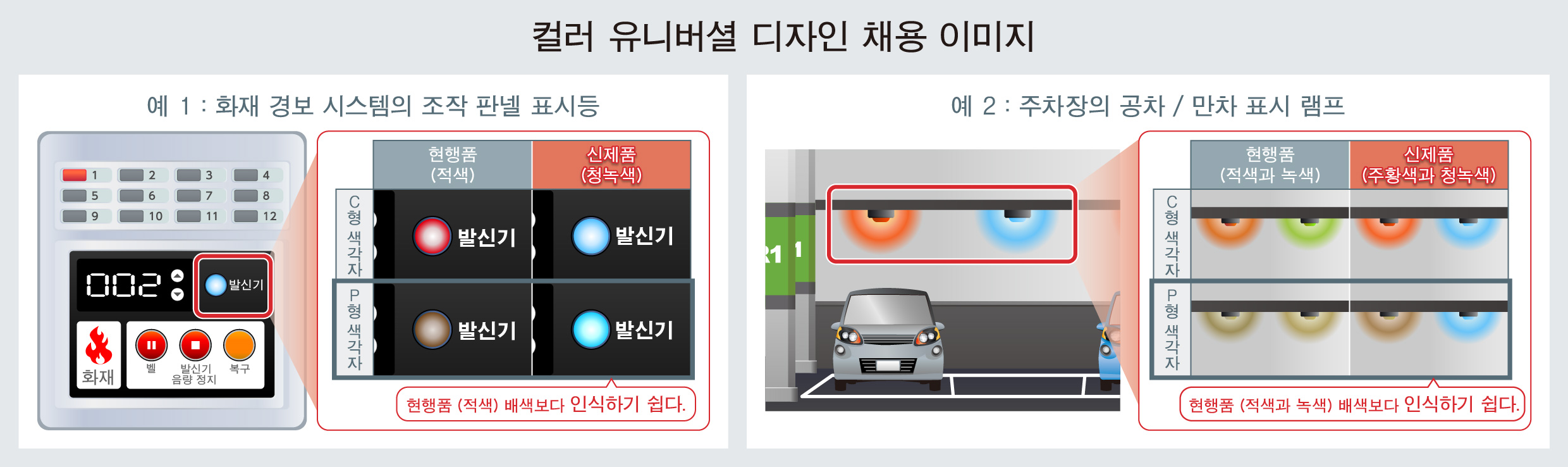
Color Universal Design is a method of using color that takes into consideration various color visions to ensure that information is accurately conveyed to as many people as possible.
The SMLD12 series, including SMLD12E2N1W and SMLD12E3N1W, employs a new resin and undergoes a current conduction test (25℃, IF=2It can maintain luminous intensity even when energized at 0mA for 1000 hours. It has a lifespan approximately 20 times longer than conventional epoxy resin products and has approximately 25 times stronger mold strength than silicone resin products. In addition, a lineup compliant with AEC-Q102 is also available.
The two products established a mass production system of 1 million units per month starting in April of this year and began shipping samples at 60 yen per unit (excluding tax).
Comments
Related news
ON Semi Unveils Connected Lighting Platform with Ultra-Low Power PoE Capabilities
ON Semiconductor has unveiled the RSL10 SIP connected lighting platform, based on AC/DC and DC/DC power conversion designs including PoE and ultra-low-power Bluetooth Low Energy connectivity. The high-efficiency modular platform provides two independent channels capable of supplying and controlling up to 90W of output power and up to 16 LEDs.
2020.03.10by 최인영 기자
ROHM Launches Ultra-small Driver IC for Socket-Type LEDs
Rohm has developed the BD18336NUF-M, an ultra-compact high-power linear LED driver IC that enables safe lighting of a single chip when automotive battery voltage drops. The BD18336NUF-M is suitable for driving socket-type LED lamps for automotive DRL and position lamps, rear lamps, and the like.
2020.04.01by 이수민 기자
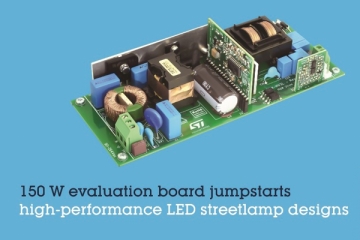
ST Unveils Driver Evaluation Board for High-Power LED Lighting
ST has launched the EVL150W-HVSL LED driver evaluation board and reference design to accelerate the development of LED street lights and medium to high-power lighting applications. The new evaluation board and reference design operates as a 150W and 1A mains input driver, achieving over 91% efficiency at maximum load, thereby reducing utility costs associated with street light operation.
2020.06.03by 이수민 기자

Intel Unveils Next-Generation 'Core Ultra Series 3' and vPro Platform for Enterprise PCs
Intel has officially unveiled the "Intel Core Ultra Series 3" for next-generation enterprise PCs and the latest vPro platform, addressing a wide range of demands from enterprise notebooks to high-performance workstations.
2026.03.26by 배종인 기자

ROHM Launches ESD Protection Diode Compatible with High-Speed Interfaces of 10Gbps or Higher
Semiconductor specialist ROHM has developed the 'RESDxVx series' of ESD (electrostatic discharge) protection diodes capable of responding to next-generation high-speed data communication environments exceeding 10Gbps, simultaneously enhancing both signal quality maintenance required in high-speed interfaces and IC protection performance.
2026.03.26by 배종인 기자











