



The once ambiguous smartwatch has found its true role thanks to COVID-19.
 Published2020.09.08 16:51
Amazon Enters Healthcare Market with 'Halo'
Government eases regulations on blood pressure and electrocardiogram services
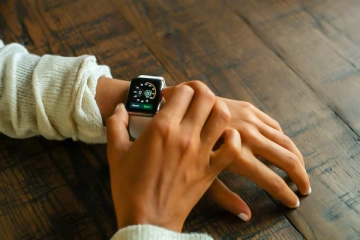
Since their emergence in earnest in the early 2010s, smartwatches have been perceived as a nice-to-have but otherwise unnecessary device. Recently, however, demand has been increasing due to heightened interest in health amid the COVID-19 pandemic. Accordingly, the Technology Policy Division of the National IT Industry Promotion Agency (NIPA) analyzed the present and future of the smartwatch market on the 4th.
Smartwatches are expanding their range of "fitness" functions, including heart rate, electrocardiogram, and blood pressure measurement, by incorporating various sensors. They are also expanding their scope beyond health records to include health prediction and management capabilities. Furthermore, with the growing need for remote medical care due to COVID-19, "healthcare" functions, such as electrocardiogram monitoring, are receiving more attention than ever before.
Counterpoint Research reported on August 20th that the global smartwatch market grew 20% year-over-year in the first half of 2020, with Apple dominating the market with a 51.4% share. This represents an 8.2 percentage point increase compared to the 43.2% share in the first half of 2019. Garmin (9.4%), Huawei (8.3%), Samsung Electronics (7.2%), iMo (5.1%), Amazfit (2.4%), Fitbit (2.4%), and Fossil (2.1%) followed.
The top five best-selling models in the first half of 2020 were, in order, 'Apple Watch Series 5', 'Apple Watch Series 3', 'Huawei Watch GT2', 'Samsung Galaxy Watch Active 2', and 'iMobile Z3 4G'.
Amid intensifying competition among existing players, Amazon has also entered the market. On August 27th, Amazon released the "Halo" smartwatch, which allows users to track and manage their body fat, heart rate, activity level, and sleep status through an app. This marks Amazon's first foray into the health and wellness market.
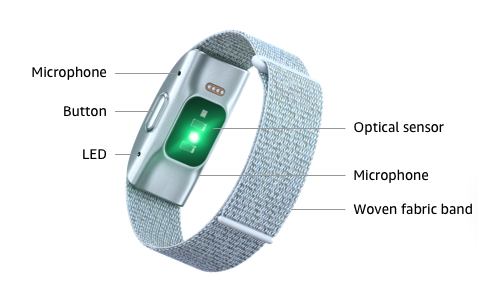
Halo consists of a wrist-worn Halo band with a display-less design, LED indicators, a microphone, sensors, and buttons, and the supporting Halo app. It offers features that analyze the user's physical condition, including weight, body fat percentage, heart rate, exercise level, sleep stages, and skin temperature during sleep, as well as their emotional state, setting it apart from existing smartwatches.
By wearing the Halo Band and taking a full-body photo through the app, the user's weight and body fat percentage are measured and provided as a 3D rendering of the body. Additionally, by utilizing a small microphone and AI machine learning, the user's voice can be analyzed to determine the user's current emotional state, and the strength, speed, and rhythm of the voice can be analyzed to manage the user's state in the form of a timestamp.
In addition, it offers exercise and activity suggestions to effectively reduce body fat, and analyzes sleep habits to promote more efficient and deep sleep and relaxation. It also supports a body temperature measurement function, making it useful for detecting COVID-19 infection.
It also has enhanced user privacy protection features compared to other companies, such as encrypting user health data, body scan images, and voice samples, storing them in the cloud, analyzing them, and then automatically deleting them.
Market leader Apple plans to release a budget model.
As Amazon enters the smartwatch market, established players like Apple, Fitbit (acquired by Google), and Samsung Electronics are also accelerating the release of new products.
Last August, Apple registered eight model numbers believed to be Apple Watch Series 6 models in the Eurasian Economic Union (EEC) database. The fact that the model numbers were received by the EEC indicates an imminent launch.
At the WWDC (Apple Worldwide Developers Conference) 2020, held online last June, Apple unveiled 'watchOS 7', a new operating system (OS) exclusively for the Apple Watch. Based on the new features added to watchOS 7, various media outlets have given a sneak peek at what the Apple Watch Series 6 will look like when it launches.
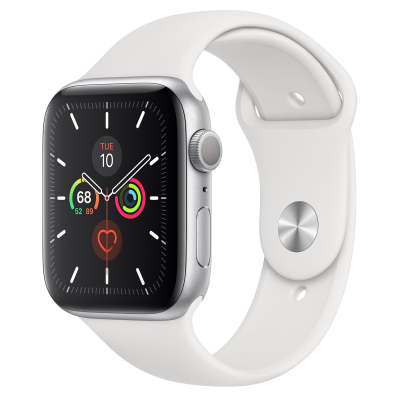
The Apple Watch Series 6 offers a variety of watch face configurations and layouts, and offers quick access to specific functions based on added complications (beyond the hour and minute hands). It also tracks whether and how long a user sleeps, and based on visualized sleep records, suggests personalized bedtimes and sleep goals.
Using motion sensors and microphones, the device detects handwashing movements and sounds, prompting users to wash their hands more briefly. It also provides a handwashing alarm when they return home. The blood pressure monitoring feature is not yet accurate, so it is unlikely to be included in the Apple Watch Series 6.
Apple is reportedly planning to release a budget Apple Watch. According to IT tipster Komiya (@komiya_kj) on Twitter, Apple is expected to release the 'Apple Watch SE' next year, which is expected to have a similar design to the Apple Watch Series 3 and be equipped with the new S6 processor and W4 wireless chip.
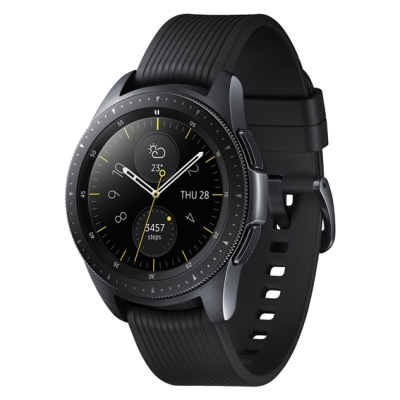
Samsung Electronics began selling the Galaxy Watch 3, which can measure blood pressure, electrocardiograms, and blood oxygen saturation, on August 6th. Approximately 60,000 units of the Galaxy Watch 3 were sold between August 6th and 25th. This represents a threefold increase compared to sales of its predecessor (the Galaxy Watch Active 2) during the same period.
The Galaxy Watch 3 is the first smartwatch to support blood oxygen saturation measurement, and is equipped with various sensors including an electrocardiogram (ECG) function and an accelerometer to recognize various gestures.
In April, the Ministry of Food and Drug Safety (MFDS) approved the blood pressure measurement function of the 'Samsung Health Monitor App', and in May, it also received approval as a Software as a Medical Device (SMD) for the electrocardiogram measurement function.
It also has a fall detection function. This feature sends a notification to pre-designated contacts (up to 4) and connects a call to one of them when it determines that the user has fallen and is unable to get up.
Fitbit will release the Fitbit Sense, featuring ECG and electrodermal activity (EDA) capabilities, in Korea on September 26th. The new product detects subtle electrical changes in skin moisture, helping to understand the body's responses to stressors and manage them.
It also features personalized heart health management features based on PurePulse 2.0 technology, which alerts users to high or low heart rates. Wearers can monitor conditions like atrial fibrillation through Fitbit Sense, enabling early detection of health signs.
◇ The Ministry of Food and Drug Safety is institutionally supporting the growth of the smartwatch market.
The government is also supporting the growth of the smartwatch market by easing regulations on blood pressure and electrocardiogram services. As mentioned earlier, the Ministry of Food and Drug Safety approved Samsung Electronics' blood pressure and electrocardiogram measurement application services in April and May of this year. This allows smartwatch users to measure their blood pressure and electrocardiograms.
For example, a hypertensive patient can utilize a blood pressure measurement app to monitor their blood pressure 24 hours a day, without the hassle of wearing a cuff blood pressure monitor (a device worn on the arm). Furthermore, an electrocardiogram measurement app can detect sinus rhythm and atrial fibrillation.
Apple also received Good Manufacturing Practice (GMP) certification for its “biological phenomenon measurement devices” product group from the Ministry of Food and Drug Safety in June. Apple's 'irregular heartbeat notification function', which received approval from the Ministry of Food and Drug Safety as an electrocardiogram, measures and analyzes the pulse using the photoplethysmography (PPG) sensor installed in the Apple Watch.
In Korea, the use of electrocardiogram (ECG) functions in smartwatches has been restricted due to medical device certification issues. However, regulatory easing is accelerating, with the Ministry of Science and ICT (MSIT) allowing a heart management service utilizing a wristwatch-type ECG device (Huino, Korea University Anam Hospital) (the first project under the ICT Regulatory Sandbox).
The rise of smartwatches is expected to influence the development of other healthcare devices. In September 2019, Google acquired Fitbit for $2.1 billion. Industry sources speculated that the acquisition was motivated by Google's need for Fitbit's extensive user health data to strengthen its healthcare business.
In the future, not only Google but also all manufacturers that manufacture and sell smartwatches are expected to introduce unique types of wearable devices based on the accumulated user health information.
Comments
Related news
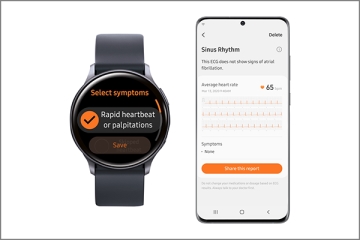
The Ministry of Food and Drug Safety (MFDS) has approved Samsung Electronics' electrocardiogram (ECG) measurement app, accelerating the development of SaMD.
Samsung Electronics has received approval from the Ministry of Food and Drug Safety for an electrocardiogram (ECG) measurement app. With this approval, users can now measure and manage both blood pressure and electrocardiogram through Samsung Health Monitor app, which received approval for blood pressure measurement in April. The electrocardiogram measurement app analyzes the electrical activity of the heart to measure, analyze, and display normal sinus rhythm and atrial fibrillation.
2020.05.25by 이수민 기자
Next-generation wearable devices made with graphene
Graphene is a material composed of a single layer of carbon atoms bonded in a hexagonal honeycomb structure on a two-dimensional plane. It has a thin thickness, high transparency, flexibility, stretchability, and high electrical and thermal conductivity. If materials and components utilizing these characteristics of graphene are commercialized, the wearability of wearable devices will be significantly improved compared to current standards.
2020.08.13by 이수민 기자
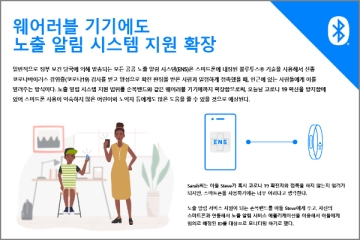
Disaster alert text messages will be sent to wearable devices, with specifications under development.
Bluetooth SIG announced that it is developing a specification that can apply the existing smartphone-based exposure notification system to wearable devices. More than 130 Bluetooth SIG exposure notification working group member companies are currently defining the standard specification, and the initial version is expected to be released within several months.
2020.08.20by 이수민 기자
ESP32 Development Environment Selection and GPS Application Implementation
The ESP32 is a microcontroller that integrates Wi-Fi, Bluetooth, 12-bit ADC, capacitive touch, PWM, DAC, and UART in a single SoC. However, the abundance of features does not by itself solve the designer's problems. The real challenges lie in selecting the appropriate development environment, determining which pins can be used and which must be avoided, and converting raw data from modules into usable information. This document addresses ESP32 peripheral constraints (ADC2 and Wi-Fi coexistence limitation, UART1 occupancy, ADC non-linear regions), the trade-offs between Arduino IDE and ESP-IDF, and the process from connecting NEO-6M/NEO-M8N GPS modules to UART2, parsing NMEA sentences, and visualizing routes in Google Earth, all organized based on documented references.
2026.10.12by 편집부
MIPI CSI-2, DSI-2, C-PHY, D-PHY Test Solution Technical White Paper
The MIPI interface adopts a burst mode that transitions between low-power (LP) and high-speed (HS) states for low-power consumption, and in return, strict timing rules are imposed on state transitions. Additionally, the high-speed section operates as a packet-based protocol with headers, ECC, and CRC, so verification engineers must handle waveforms and protocols simultaneously. Traditional configurations combining general-purpose oscilloscopes and AWGs reveal limitations in setup complexity, measurement uncertainty, and lack of reproducibility when faced with these requirements. This white paper, based on webinar materials, organizes the structure of this problem and describes how the SV5C-DPTXCPTX generator for receiver testing and SV5C-DPRXCPRX analyzer for transmitter testing integrate state transition testing, stressed eye testing, and protocol analysis into a single bench, along with their application boundaries.
2026.10.12by 편집부











