



Preventing the spread of infectious diseases depends on the proper use of thermal imaging cameras.
 Published2020.09.23 15:21
Social distancing must be observed even indoors.
Thermal imaging cameras and people counting solutions are needed.
The spread of COVID-19 shows no signs of slowing down. Quarantine measures must continue until a fully tested vaccine is available. Crowded or confined spaces are prime locations for the virus to spread. Therefore, contactless screening for those with fever must be conducted as quickly and accurately as possible.
When using a thermal imaging camera, the body temperature of the subject is measured from a distance and displayed in an easily understandable image, so there is no need to make contact with or get close to the subject.
FLIR's existing ▲Exx-Series ▲T-Series ▲A-Series thermal imaging cameras detect temperature differences on the skin surface, helping determine whether or not someone with a fever should seek additional medical evaluation. Additionally, dedicated fever screening products, the ▲Axxx-EST Series ▲T5xx-EST Series ▲Exx-EST Series thermal imaging cameras, have been released.
However, purchasing a camera and activating its inspection mode doesn't mean you can immediately begin testing. The most important factors in fever screening are the installation method and configuration of the inspection window. Only by utilizing the correct products, inspection locations, and inspection procedures can we accurately identify each inspection target.
Preparation, process, and procedures for conducting fever screening
Each business and building has unique functions and needs, so it's important to tailor inspections to them, but all inspection windows adhere to the same basic principles.
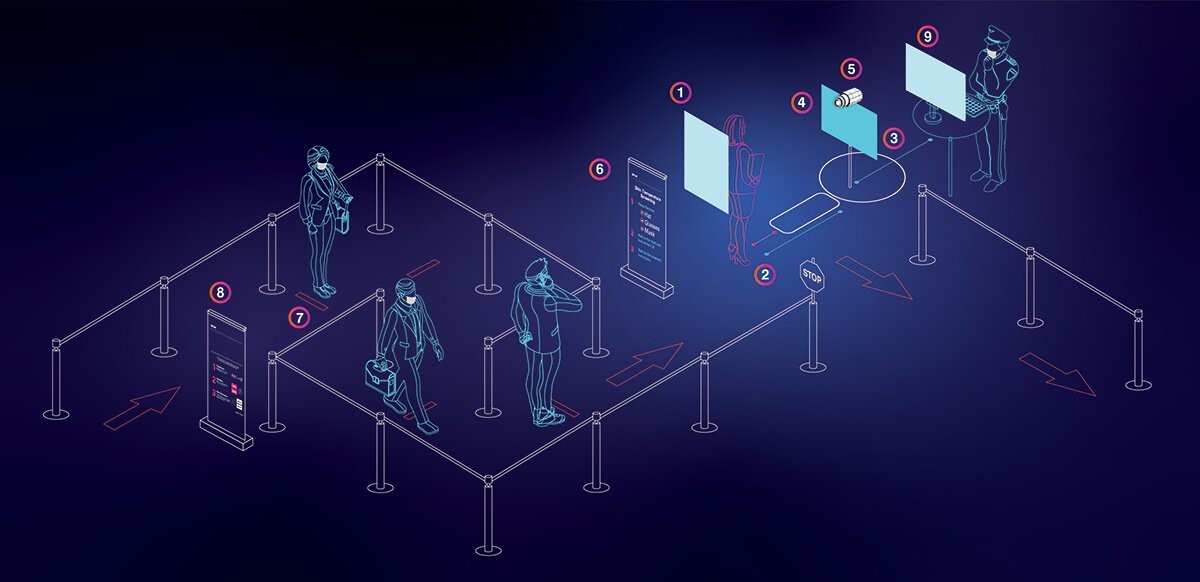
③ Prepare a table for installing the camera ④ Install the monitor facing the user
⑤ Prepare the infrared camera ⑥ Check the inspection instructions ⑦ Display the queue
⑧Sharing inspection-related information ⑨Monitoring of personnel [Image = Flier]
△Guidance signs △Direction arrows △Queue signs are essential to ensure that people waiting for temperature screening can practice social distancing.
The screening background is also important. When conducting temperature screening, a non-reflective, brightly colored partition or curtain must be installed as the background. FLIR offers these temperature screening window backgrounds and floor stickers as a set or as individual accessories.
The location of the inspection window also affects the accuracy of the test. Ideally, the inspection window should be installed in a location where the indoor temperature is maintained at 20-24°C and the relative humidity is between 10-50%. Avoid locations with strong airflow, such as HVAC vents, direct sunlight, or heat sources. It is also best to avoid places with reflective backgrounds, such as windows and metal surfaces.
People in the queue should maintain an appropriate distance from each other, and the person being screened should maintain an appropriate distance from the camera, as well as from the camera and the screening staff. If testing must be conducted outdoors, tents or shielding structures should be used to minimize the environmental impact on the individual being screened.
Guidance from regulatory agencies on fever screening procedures includes recommendations such as screening one person at a time, allowing ample time for people with elevated body temperatures due to strenuous physical activity to regain their composure, and instructing people wearing glasses or masks to remove them before screening.
In addition, it includes: △Place the subject of the examination at a set distance from the camera and adjust the position so that the imaging area can include the entire face of the subject; △If a person is found to have a skin temperature higher than the standard, conduct an accurate secondary body temperature measurement using a medical device.
Comply with indoor social distancing and people counting solutions.
Even if fever-stricken individuals are screened at the entrance, asymptomatic carriers cannot currently be identified. This is where the person counting solution comes into play. The solution automatically tracks how many people are in a space, supporting social distancing in stores and other places and preventing overcrowding.
Real-time customer-facing displays inform people of permitted entry limits and report when a facility's capacity is reached, saving staff time and alleviating customer concerns about infection.
FLIR's Brickstream 3D Gen2 people tracking camera, a facility occupancy management solution, uses stereo vision to noninvasively track individual people.
Cameras are installed on the ceiling of each entrance, and a master camera collects the number of people entering and exiting from all cameras in that location, calculating the occupancy level in real time. Furthermore, since each individual cannot be identified, it protects customer privacy.
Comments
Related news
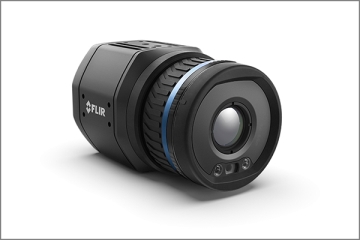
FLIR Launches Two Thermal Cameras for COVID-19 Response Systems
FLIR Systems has launched the A400/A700 series of fixed thermal imaging cameras suitable for process control and monitoring, quality assurance, condition monitoring, and early fire detection. The new products will be supplied first to companies developing COVID-19 response systems.
2020.04.03by 이수민 기자
Technology developed to predict the number of confirmed COVID-19 cases imported from overseas has been developed.
A research team led by Professor Lee Jae-gil from the Department of Industrial and Systems Engineering at KAIST has developed a technology that can predict the number of COVID-19 confirmed cases from overseas over the next two weeks. This technology applies AI technology to big data including the number of confirmed cases in various countries, the number of deaths, the frequency of COVID-19 related keyword searches, the number of daily flights to Korea, and the number of roaming customers entering Korea to forecast the number of confirmed cases imported from overseas.
2020.08.24by 이수민 기자
The once ambiguous smartwatch has found its true role thanks to COVID-19.
In the first half of 2020, the global smartwatch market size expanded by 20% compared to the same period in the previous year. This is interpreted as resulting from increased interest in health due to the COVID-19 pandemic. Accordingly, smartwatch manufacturers are equipping various sensors and further strengthening the healthcare functions of smartwatches.
2020.09.08by 이수민 기자
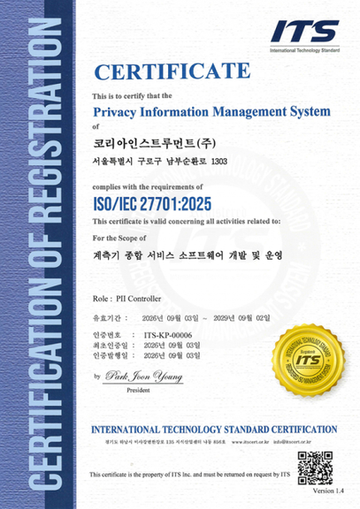
Korea Instrument, KOLAS Accredited Calibration Agency First to Simultaneously Acquire ISO/IEC 27,001·27,701
Korea Instrument has become the first among KOLAS accredited calibration agencies to simultaneously acquire ISO/IEC 27,001 and ISO/IEC 27,701 certifications. Through its proprietary platforms CWIZ Enterprise and CWIZ Partners, the company has embedded information security and personal data protection requirements across all business processes including customer information, equipment data, and calibration reports, with plans to continuously advance its management system through regular audits and security inspections.
2026.10.12by 배종인 기자
TeamViewer One, IT Incident Automation Workflow and Resolution Center Enhanced
TeamViewer has added IT incident automation capabilities and an advanced Resolution Center to its integrated digital workplace management platform 'TeamViewer ONE'. Recurrent service disruptions, configuration errors, and capacity shortages are automatically handled according to preset policies, and device status verification through script deployment can be managed in a unified interface, significantly reducing repetitive tasks for IT teams.
2026.10.12by 배종인 기자











