


Will a collaborative robot capable of pack-in-hole work with three fingers be commercialized?
 Published2020.09.25 15:42
No need for expensive force-torque sensors, making it affordable
Today, industrial collaborative robots are widely used for 'peg-in-hole' operations, where one part is inserted into another. This is an assembly method in which a robotic arm moves along a pre-set path, grasps the part, and fits it in a single step.
However, if the assembly position differs from the set value or errors occur between parts, it disrupts the production process. Accordingly, robotic hand manipulation technology capable of responding with the precision and flexibility of a human hand is attracting attention.
The Korea Institute of Industrial Technology (KITECH) announced on the 24th that it has developed the world's first assembly technology capable of performing fast and precise pack-in-hole operations by grasping objects with only three robot fingers, mimicking human hand movements.
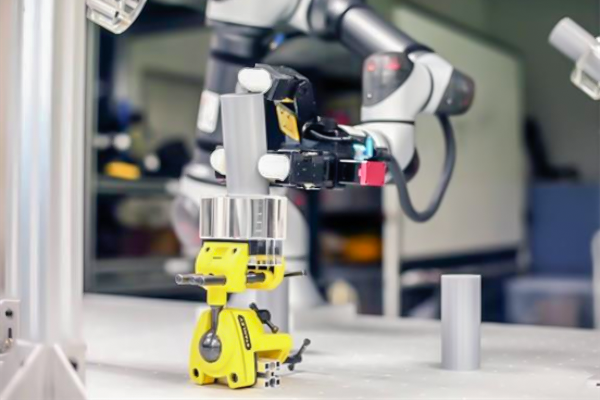
In conventional robot arms used in industrial settings, a pincer-shaped gripper acts as a substitute for the hand. However, this has the disadvantage that the size and shape of the gripper must vary depending on the component's configuration, and error correction is difficult because the gripper becomes fixed once it grasps an object.
Academics are primarily researching technology that assembles objects using 'force-torque sensors' attached to robot hands. Although it can handle errors in component positioning, it has the disadvantage of being expensive, with the sensor costing about 10 million won per unit, making commercialization difficult.
A research team led by Dr. Bae Ji-hoon of the Robot Application Research Division at the Korea Institute of Industrial Technology (KITECH) developed a new collaborative robot by advancing the dual-arm robot technology they had independently developed in 2016 to create a robot hand with three fingers, each having three to four joints, and attaching it to a commercial robot arm.
This robot uses two fingers to grasp an object and the remaining fingers to slightly tilt it, then drag it to the assembly position and shake it. It utilizes the principle that a resultant force is generated in the direction of the hole where the part will go, causing it to be pulled in.
In addition, the robot is equipped with an 'AI Map' that can independently determine the work location and situation, allowing it to self-correct even if errors occur. It performs assembly primarily by moving its finger joints while minimizing unnecessary arm movements.
The developed collaborative robot can perform pack-in-hole operations with a gap of only 0.1 mm in about 3 seconds, making it as fast and precise as a human hand.
It features a proprietary drive mechanism that does not require expensive force-torque sensors, and uses commercially available robot arm components, making manufacturing costs low. By minimizing the number of fingers to three compared to the research team's dual-arm robot, which used four fingers, it lowered specifications and increased usability in small and medium-sized manufacturing sites.
Dr. Bae Ji-hoon of the Korea Institute of Science and Technology stated, “The ultimate goal is to match the speed and accuracy of a human hand so that it can move freely and error-free, just like a real hand,” adding, “We plan to continue follow-up research to lower production costs to a practical level by applying this technology to existing dual-arm robot hands.”
Meanwhile, the dual-arm robot developed by Dr. Bae Ji-hoon was featured in the electronics and electrical engineering publication 'IEEE Spectrum' in 2016.
Comments
Related news
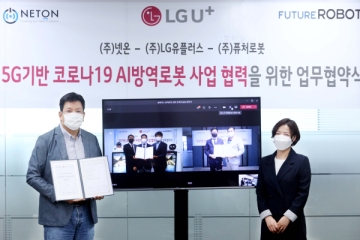
Demonstration of a 5G AI quarantine robot capable of detecting coronaviruses, including those with nasal congestion and those with nasal congestion, has begun.
LG Uplus, Future Robot, and NetOn have signed an MOU to develop a 5G-based AI quarantine robot business. The 5G quarantine robot developed by the three companies autonomously moves through buildings and verifies mask-wearing status and body temperature through facial recognition and temperature measurement. Multi-face recognition technology is applied to simultaneously recognize up to 10 faces, and results can be analyzed within 0.3 seconds. Through deep learning-based analysis, it can also distinguish chin masks and mouth masks.
2020.09.04by 명세환 기자
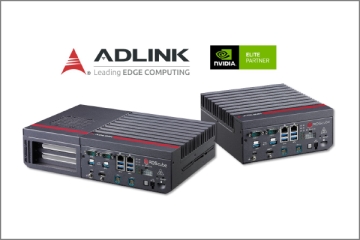
ADLINK Launches ROS 2 Controller Suitable for Autonomous Mobile Robots
ADLink has launched the ROScube-X series, a real-time ROS 2 robot controller for advanced robotic applications. The ROScube-X series is powered by the NVIDIA Jetson AGX Xavier module. The module integrates multiple interfaces including the NVIDIA Volta GPU, dual deep learning accelerators suitable for advanced robotic systems, and GMSL2 camera connectors.
2020.06.16by 이수민 기자
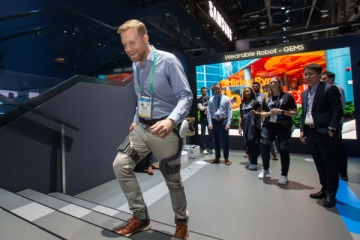
"Wearable robots are coming," Samsung Electronics proves the safety of its wearable robots.
Personal service robots, unlike industrial robots, are used together with people in daily life, making safety a paramount requirement. Samsung Electronics announced that its in-house developed wearable walking assistance robot, GEMS Hip, has obtained ISO 13482 certification, an international standard, from the Korea Robot Industry Promotion Agency.
2020.09.21by 명세환 기자
Korea Instrument, KOLAS Accredited Calibration Agency First to Simultaneously Acquire ISO/IEC 27,001·27,701
Korea Instrument has become the first among KOLAS accredited calibration agencies to simultaneously acquire ISO/IEC 27,001 and ISO/IEC 27,701 certifications. Through its proprietary platforms CWIZ Enterprise and CWIZ Partners, the company has embedded information security and personal data protection requirements across all business processes including customer information, equipment data, and calibration reports, with plans to continuously advance its management system through regular audits and security inspections.
2026.10.12by 배종인 기자

TeamViewer One, IT Incident Automation Workflow and Resolution Center Enhanced
TeamViewer has added IT incident automation capabilities and an advanced Resolution Center to its integrated digital workplace management platform 'TeamViewer ONE'. Recurrent service disruptions, configuration errors, and capacity shortages are automatically handled according to preset policies, and device status verification through script deployment can be managed in a unified interface, significantly reducing repetitive tasks for IT teams.
2026.10.12by 배종인 기자











