



5G-based industries are expected to reach $8 trillion over the next decade.
 Published2020.10.12 10:08
Projected to contribute $8 trillion to global GDP
47% of Korean companies accelerate 5G adoption despite COVID-19.
It is projected that 5G-based industries will add approximately $8 trillion, or approximately 9,187 trillion won in Korean currency, to global GDP by 2030.
Nokia announced this on the 12th through the '5G Business Readiness' report, which was prepared based on a survey of 1,628 decision makers from six industries in eight countries, including Korea, in collaboration with Nokia Bell Labs.

According to the report, 30% of domestic companies have currently deployed 5G, and 10% are already expanding. However, based on the 5G Maturity Index, 48%, or roughly half of the total, remain in the intermediate stage, while 13% remain in the basic stage.
There was some variation in understanding of 5G among domestic companies. Only 21% of domestic companies are currently investing in 5G. However, when asked about their 5G investment plans within the next ten years, 94% of respondents said they planned to invest. The report cited fierce market competition as the reason for this. Forty-six percent of domestic decision-makers who responded to the survey said they would fall behind in the competition if they did not invest in 5G.
Domestic companies' interest in 5G was evident even within their own organizations. Thirty-six percent of domestic technology decision-makers said they had a dedicated 5G planning team within their companies. When asked about 5G strategy, 48% of technology decision-makers said they already had a long-term 5G strategy in place, while only 8% said they had no 5G-related strategy in place.
Lee Jun-seong, CTO of Nokia Korea, said, “The results of this survey show that 47% of domestic companies are actually increasing their investment in technology, such as promoting digital transformation, in response to the era of contactless communication brought about by COVID-19.”
He said, “Although there are differences of opinion among domestic companies about the potential and benefits that the 5G era will bring, expectations and outlook for 5G technology are generally positive,” and “Even considering the premium of being the first in the world to commercialize 5G, domestic companies’ understanding of and investment in 5G far exceeds the global average.”
◇ 5G Maturity Index
The 5G Maturity Index is divided into five stages: ▲ Stage 1: Passive. This stage involves no formal consideration of 5G deployment, and even senior-level organizations do not recognize the need for 5G. ▲ Stage 2: Discovery. This stage involves exploring the benefits of 5G and gathering relevant data to determine if deployment cases exist. ▲The 3rd phase of the plan (Planning) is the phase where senior level agreements are made to establish 5G or lay the foundation for the future, and actual construction work is currently underway.
▲Stage 4: Implementation (Implementation) refers to the process of physically building 5G hardware and software, which has begun or is complete, and 5G is already in use or will be launched within the next six months. ▲Stage 5: Expansion (Expansion) refers to the stage where companies, after successfully deploying 5G, aim to expand operations more broadly based on positive results. Among domestic companies, 2% are in Stage 1: Passive, 11% in Stage 2: Discovery, 48% in Stage 3: Planning, 30% in Stage 4: Implementation, and 10% in Stage 5: Expansion.
Comments
Related news

Broadband Network Industry at a Crossroads Due to COVID-19
According to Nokia's post-COVID-19 global network usage survey, global network traffic increased by approximately 30-40% following lockdown measures. This is attributed to increased remote work, online education, and entertainment usage. Telecom operators must now actively consider transitioning to NG-PON FTTH technology to address the surge in upstream bandwidth, as well as thoroughly evaluate 100G aggregation links and terabit switching capacity.
2020.06.23by 이수민 기자
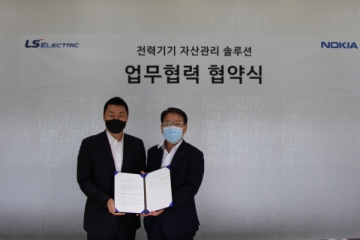
Nokia and LS Electric to collaborate in APM
LS Electric has signed a memorandum of understanding with Nokia to jointly develop power equipment asset management solutions. The two companies plan to conduct proof-of-concept testing of Nokia's SpaceTime asset lifecycle optimization platform and launch a customized solution exclusively for LS Electric's customers.
2020.08.28by 이수민 기자
Intel Announces Four Expanded 5G Network Infrastructure Solutions
Intel announced on the 6th that it will expand its offerings of hardware, software, and solution products for network infrastructure to leverage the proliferation of 5G, edge, and artificial intelligence. As the mobile telecommunications industry undergoes full-scale evolution to 5G, the silicon market size related to network transformation is projected to reach approximately $25 billion by 2023. Accordingly, Intel supports rapid adoption and implementation of semiconductors, software and tools, and expertise that enable related functionality across core, access, and edge infrastructure.
2020.10.06by 김동우 기자
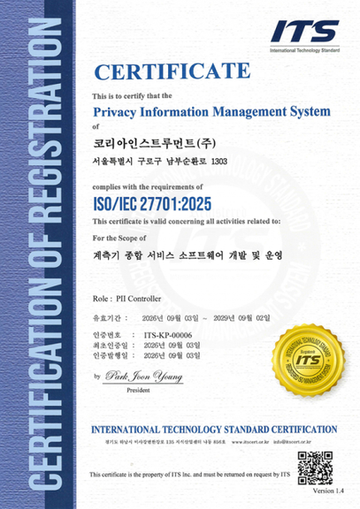
Korea Instrument, KOLAS Accredited Calibration Agency First to Simultaneously Acquire ISO/IEC 27,001·27,701
Korea Instrument has become the first among KOLAS accredited calibration agencies to simultaneously acquire ISO/IEC 27,001 and ISO/IEC 27,701 certifications. Through its proprietary platforms CWIZ Enterprise and CWIZ Partners, the company has embedded information security and personal data protection requirements across all business processes including customer information, equipment data, and calibration reports, with plans to continuously advance its management system through regular audits and security inspections.
2026.10.12by 배종인 기자
TeamViewer One, IT Incident Automation Workflow and Resolution Center Enhanced
TeamViewer has added IT incident automation capabilities and an advanced Resolution Center to its integrated digital workplace management platform 'TeamViewer ONE'. Recurrent service disruptions, configuration errors, and capacity shortages are automatically handled according to preset policies, and device status verification through script deployment can be managed in a unified interface, significantly reducing repetitive tasks for IT teams.
2026.10.12by 배종인 기자











