


SKT to Fully Push Forward Advancement of 5G Capillaries, "Fronthaul"
 Published2020.10.16 09:25
Stable even in bad weather thanks to automatic wireless modulation technology
SK Telecom announced on the 15th that it is introducing 5G wireless fronthaul equipment to provide 5G services even in areas where it is difficult to lay fiber optic cables.
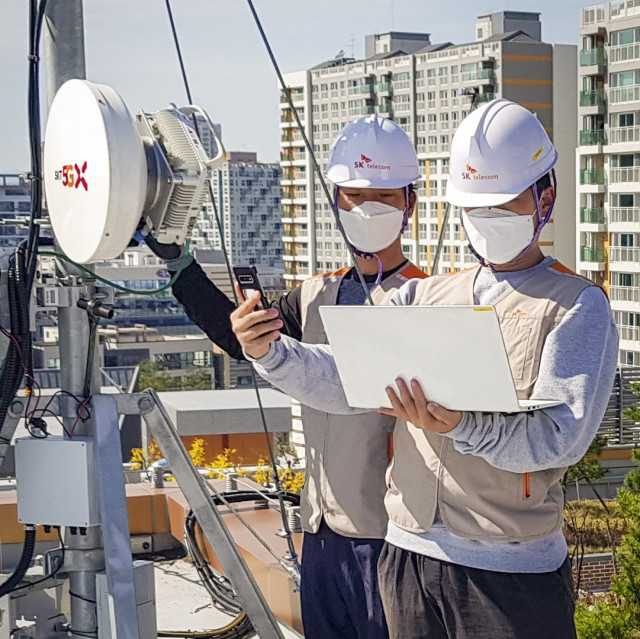
In early October, SKT installed 5G wireless fronthaul equipment on the domestic 5G commercial network in Jinju, Gyeongnam, for the first time. Since then, starting with Jinju, installations have been prioritized in older urban areas where fiber optic line construction is difficult, and are currently being expanded to island regions and inland mountainous areas.
'Fronthaul' refers to the fiber-optic cable-based wired section that transmits data signals collected from base station antennas to distribution units; however, equipment installation was restricted in old urban areas or island and mountainous regions because it is difficult to bury fiber-optic cables underground.
However, the newly introduced '5G wireless fronthaul equipment' is equipment that enables the provision of seamless 5G services by connecting wirelessly without connecting optical cables.
SKT expects to be able to build 5G networks more precisely even in areas where it is difficult to construct fiber optic cables, such as old downtown areas where water and gas pipes are intricately intertwined like a spiderweb, islands without roads connecting to the mainland, and deep in the mountains.
SKT has adopted automatic wireless modulation technology to minimize the impact of the wireless environment even in severe weather conditions such as heavy snow or rain, thereby enabling the provision of stable quality.
In addition, this equipment adopts eCPRI (Ethernet-based Common Public Radio Interface), a 5G fronthole interface standard, which can increase traffic capacity by more than four times compared to existing equipment, thereby maximizing network operation efficiency.
SKT Infra Engineering Group Leader Heo Geun-man stated, “We will strive to provide SKT’s unique and differentiated highest level of mobile communication quality through the advancement of our 5G network.”
Comments
Related news
5G-based industries are expected to reach $8 trillion over the next decade.
A 5G-based industry is projected to add approximately 8 trillion dollars, or around 9,187 trillion Korean won, to global GDP by 2030. Nokia revealed this through its "5G Business Readiness" report, which was prepared based on a survey conducted in collaboration with Nokia Bell Labs targeting 1,628 decision-makers across 6 industries in 8 countries including South Korea.
2020.10.12by 이수민 기자
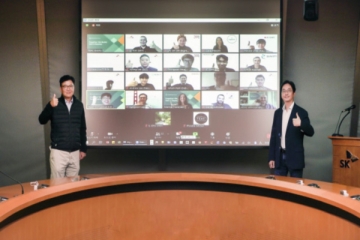
SKT to Promote 5G and MEC Business with Global Untact Startups
SK Telecom announced that it has selected five startups with promising technologies and businesses in the post-Corona era and will explore joint business opportunities with these companies through 2021. SKT conducted an open recruitment through TEAC (TIP Ecosystem Acceleration Center), a global partner discovery and collaboration program in June, to identify promising companies in North America and Asia to jointly develop non-face-to-face services. A total of 63 companies from 19 countries participated in the recruitment.
2020.10.12by 김동우 기자
Ericsson to introduce '3D Experience', a platform for 5G, across the company.
Dassault Systèmes is implementing the '3D Experience Platform' across Swedish telecommunications equipment manufacturer Ericsson. The 3D Experience is a platform that enables multiple users to work effectively on 3D projects using customized package applications tailored to different job roles.
2020.10.14by 김동우 기자
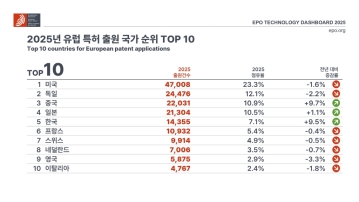
European Patent Applications Surpass 200,000 for the First Time… South Korea Maintains 5th Place, Led by Batteries and Telecommunications
According to the European Patent Office (EPO)'s 'Technology Dashboard 2025', European patent applications last year reached 201,974, surpassing 200,000 for the first time. Korean companies and inventors filed 14,355 applications, representing a 9.5% increase from the previous year and maintaining 5th place by country. Battery, digital communication, and semiconductor technologies led the growth, with Samsung ranking as the top EPO applicant for the second consecutive year and LG reaching 3rd place. The presence of major domestic cities such as Seoul, Suwon, and Yongin was also confirmed. It was also revealed that Korea's European patent strategy is expanding beyond individual technologies to span the entire industry.
2026.03.24by 명세환 기자

SK Telecom First Applies AI-Based Network Operations at Gwanghwamun K-Pop Concert
SK Telecom announced that it applied an AI-based network operation system for the first time at a large-scale K-pop concert held in the Gwanghwamun area of Seoul on March 21st, managing communication quality throughout the event. Mobile data usage during the three hours before and after the concert reached 12.15TB, approximately doubling compared to the same time slot the previous weekend. SK Telecom monitored traffic using the AI system 'A-One' in five-minute and 50-meter units to respond to potential overload situations, while also operating temporary communication facilities and on-site personnel in parallel. This case is interpreted as confirmation of the practical applicability of AI-based autonomous network operation in an environment where demand from dense events and foreign users increases simultaneously.
2026.03.23by 명세환 기자











