



To improve the energy efficiency of industrial equipment, CbM technology must be introduced.
 Published2020.10.26 11:31
ADI AutoSense platform, a condition-based monitoring technology,
Desalination systems increase power efficiency and reduce carbon emissions.
Seawater accounts for approximately 97% of the Earth's total water volume. Freshwater accounts for only about 3%. If seawater could be freely utilized as drinking water, efficient water resource management would be possible. This could lead to significant advancements in agriculture and the quality of life for people around the world.

However, seawater desalination technology requires a lot of energy, as well as significant time, money, and resources. Analog Devices' (ADI) OtoSense™ platform offers an opportunity to improve the efficiency of this technology.
OtoSense is a condition-based monitoring (CbM) technology that continuously and accurately measures and monitors the health of machinery and other critical equipment. ADI claims that it can collect equipment condition data faster and more accurately than other sensing platforms.
This data can be fed into AI software to derive useful insights, enabling the detection of machine anomalies and prevention of problems. This can maximize uptime and reduce maintenance and downtime costs. AutoSense technology is also designed to be used in a variety of applications.
◇ State-based monitoring reduces overall system energy consumption
According to an October 2019 report from the Global Water Institute, approximately 1% of the world's population relies on desalinated water for their drinking water, a figure projected to increase to 14% by 2025. As climate change causes more countries to experience extreme droughts, demand for desalination technology will only increase.
Seawater desalination technology must meet requirements such as ease of implementation, reliability, and energy efficiency. CbM technology can help meet these requirements.
Currently, AutoSense technology is being used in post-production desalination pump testing to ensure the integrity and reliability of seawater desalination systems. Using AutoSense, this energy-intensive test can be performed 23% faster, significantly reducing energy consumption. ADI predicts that this speed could be increased by up to 50% in the future.
◇ Improving energy efficiency can reduce carbon emissions by up to 15%.
Providing fresh drinking water using less energy is just one example of how CbM technology can reduce electricity consumption.
Fifty percent of global energy consumption is used to power electric motors of all types. Applying CbM technology to sectors like energy, manufacturing, agriculture, and transportation to operate equipment at peak efficiency could reduce global carbon emissions by up to 15%.
Increased productivity, improved quality, reduced maintenance, and reduced energy consumption all lead to cost savings. Asset health monitoring has made business models that were previously cost-infeasible feasible.
CbM technology can contribute to slowing and even reversing global climate change. ADI stated, "We are collaborating with leading global companies to not only develop cutting-edge technologies, but also strive to improve both the quality of life and the planet."
Comments
Related news
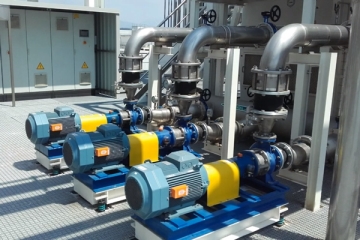
ADI Acquires Test Motors to Strengthen CbM Capabilities
ADI has acquired Test Motors. Test Motors is an electric motor predictive maintenance solution company based in Barcelona, Spain. Going forward, Test Motors will be integrated into ADI's Automation and Energy Group and will operate as a core technology group. Through this acquisition, ADI has expanded its portfolio of condition-based monitoring (CbM) solution products that identify defects before equipment failures occur. CbM is a system-level solution that requires comprehensive consideration of multiple technologies and various elements rather than a single specific technology.
2019.10.31by 이수민 기자
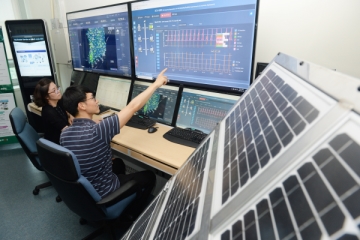
ETRI Unveils Three Infrastructure Technologies to Boost Solar Energy Utilization
ETRI has developed infrastructure-based technology for efficiently managing solar energy and utilizing it at appropriate locations, as well as commercialization platform technology to support new industries. The developed technologies consist of three types: monitoring platform technology for full-cycle management and maintenance of photovoltaic power plants, platform technology for small-scale distributed energy power brokerage business, and technology linked with energy storage systems (ESS).
2020.08.12by 이수민 기자
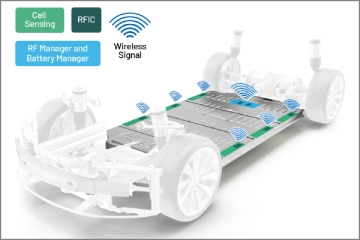
ADI's wireless battery management system will be used in GM electric vehicles.
ADI has launched the industry's first wireless battery management system (wBMS). The wBMS eliminates harnesses, reducing wiring by up to 90% and battery pack volume by up to 15%, while improving design flexibility and manufacturing ease without compromising range and accuracy throughout the battery lifecycle.
2020.09.14by 명세환 기자
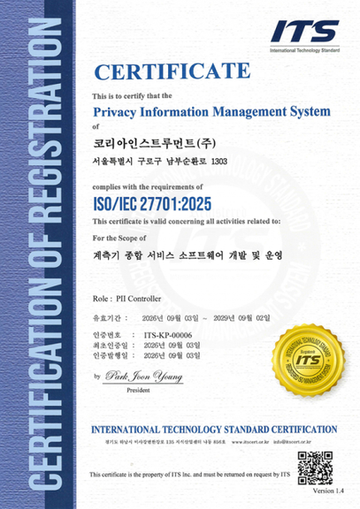
Korea Instrument, KOLAS Accredited Calibration Agency First to Simultaneously Acquire ISO/IEC 27,001·27,701
Korea Instrument has become the first among KOLAS accredited calibration agencies to simultaneously acquire ISO/IEC 27,001 and ISO/IEC 27,701 certifications. Through its proprietary platforms CWIZ Enterprise and CWIZ Partners, the company has embedded information security and personal data protection requirements across all business processes including customer information, equipment data, and calibration reports, with plans to continuously advance its management system through regular audits and security inspections.
2026.10.12by 배종인 기자

TeamViewer One, IT Incident Automation Workflow and Resolution Center Enhanced
TeamViewer has added IT incident automation capabilities and an advanced Resolution Center to its integrated digital workplace management platform 'TeamViewer ONE'. Recurrent service disruptions, configuration errors, and capacity shortages are automatically handled according to preset policies, and device status verification through script deployment can be managed in a unified interface, significantly reducing repetitive tasks for IT teams.
2026.10.12by 배종인 기자











