



Schneider Unveils Integrated Power-Process Control System Management Solution
 Published2020.11.03 12:20
Improve process energy usage by 10%
Improved connectivity, visibility, efficiency, and sustainability
Schneider Electric announced on the 2nd that it will introduce EcoStruxure Power and Process (ESPP), developed in collaboration with Aviva.
.jpg)
▲ Schneider Electric's integrated power-process control system management solution
Schneider Electric unveiled EcoStruxure Power & Process. [Photo = Schneider Electric]
This process integrates engineering design, operations, and maintenance for energy-intensive industries such as refining and chemicals, optimizing decision-making across the enterprise. In large refineries in particular, it can improve process energy usage by 10% and reduce CO2 emissions by 567,000 tons, resulting in annual savings of $210 million.
ESPP has the following benefits: ▲Up to 20% reduction in capital expenditure (CAPEX) for electrical, instrumentation, and control equipment ▲3% improvement in operating time ▲15% reduction in downtime.
Additionally, it integrates power management systems with process control systems to achieve complete visibility and connectivity. This allows companies to drive resilient operations across their sites and production facilities with complete situational awareness, while improving profitability at every level, from planning and installation to energy use and carbon emissions.
Furthermore, by introducing ESPP, you can break down the barriers between power systems and process control systems, thereby enhancing digital efficiency. Based on vendor-independent, universal automation principles, it drives digital transformation across the entire asset lifecycle and supply chain.
Power management systems provide critical information about power flow in power plants and generators, improving overall power efficiency. Process management systems enable managers to plan and monitor operational performance within industrial or business environments.
“We are committed to implementing a fully integrated architecture across all sites and the entire supply chain, and ESPP is a step in that journey, providing customers with access and insights,” said Peter Herweck, Vice President, Industrial Automation, Schneider Electric. “In our pilot project, the customer achieved a 20% reduction in capital expenditures (CAPEX) for their electrical, instrumentation and control (EI&C) equipment in just 12 months, with a payback period.”
Meanwhile, Schneider Electric's EcoStruxure Power & Process is scheduled to debut in December 2020.
Comments
Related news
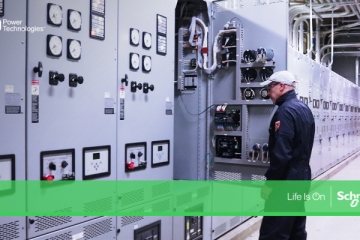
Schneider Electric Unveils ALTS, Uninterruptible Power Switching Capable
Schneider Electric has launched the Asco 7000 series as an automatic transfer switch (ATS). With the introduction of the Asco 7000 ATS, operators can manually operate the transfer button at any time to achieve seamless switching between two power sources. This enhances the stability of overall power at the customer facility.
2020.10.22by 이수민 기자
.jpg)
Schneider Electric Launches New 'EOCR'
Schneider Electric has launched two new electronic over current relay (EOCR) products: 'EOCR PFZ' and 'EOCRSS-400U'. The newly released products support real-time communication to enable Internet of Things (IoT) technology applications, and feature built-in temperature and humidity sensors as well as analog outputs, allowing for application in diverse customer requirements and enabling condition monitoring.
2020.10.28by 김동우 기자

Sustainable business starts with establishing an energy strategy.
Digitalization across all industries is accelerating due to COVID-19. Digitalization demands significant energy consumption, and the energy production and consumption processes are emitting massive amounts of carbon dioxide. Schneider Electric has announced that it will realize carbon neutrality and implement net-zero supply chains by 2050.
2020.10.29by 이수민 기자
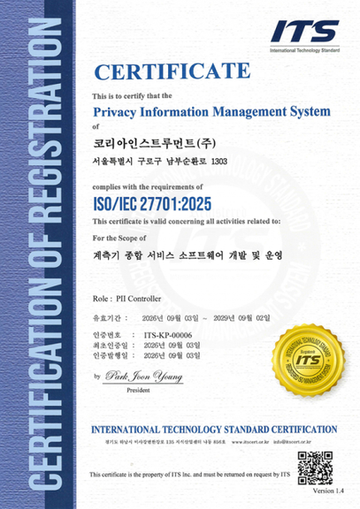
Korea Instrument, KOLAS Accredited Calibration Agency First to Simultaneously Acquire ISO/IEC 27,001·27,701
Korea Instrument has become the first among KOLAS accredited calibration agencies to simultaneously acquire ISO/IEC 27,001 and ISO/IEC 27,701 certifications. Through its proprietary platforms CWIZ Enterprise and CWIZ Partners, the company has embedded information security and personal data protection requirements across all business processes including customer information, equipment data, and calibration reports, with plans to continuously advance its management system through regular audits and security inspections.
2026.10.12by 배종인 기자

TeamViewer One, IT Incident Automation Workflow and Resolution Center Enhanced
TeamViewer has added IT incident automation capabilities and an advanced Resolution Center to its integrated digital workplace management platform 'TeamViewer ONE'. Recurrent service disruptions, configuration errors, and capacity shortages are automatically handled according to preset policies, and device status verification through script deployment can be managed in a unified interface, significantly reducing repetitive tasks for IT teams.
2026.10.12by 배종인 기자











