


ETRI Develops Foundation Technology for 'Affordable Cardiovascular Disease Diagnostic Device'
 Published2020.11.04 11:01
Utilization of signal amplification and high-density antibody immobilization technologies, etc.
Technology transfer in progress... Commercialization expected in 2024
Domestic researchers have developed a technology that can measure the likelihood of cardiovascular diseases such as arteriosclerosis, hyperlipidemia, and heart attack within 15 minutes, even in small public health centers, small and medium-sized hospitals, and nursing hospitals.
The Electronics and Telecommunications Research Institute (ETRI) announced on the 3rd that it has developed "automated biomarker analysis technology" for simply testing for cardiovascular disease. A biomarker refers to a substance that can detect signs of abnormalities in the body, such as indicators like DNA and proteins.
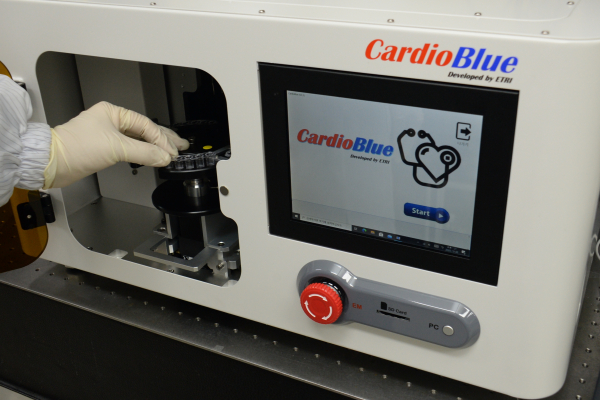
The biomarker automated analysis technology developed by the research team measures five types of markers (CRP, D-dimer, cTnI, CK-MB, NT-ProBNP) whose protein concentrations increase during cardiovascular disease, and incorporates signal amplification technology, high-density antibody immobilization technology, and rotational motion-based automation technology.
Existing diagnostic devices were manufactured for large hospitals, so they were bulky and expensive, making widespread distribution difficult. It was also difficult to assess the severity of the disease, as testing took 2 to 3 days. The automated analysis device developed by ETRI is the size of a household microwave (490×650×350mm) and solves the shortcomings of existing diagnostic devices.
As a result, it is expected that patients at risk of cardiovascular disease will be able to prevent the condition by reducing the probability of it worsening into cardiovascular disease, as they can easily and quickly receive preliminary examinations at local hospitals rather than large hospitals.
◇ Enhancing the reliability of biomarker detection with signal amplification technology
Cardiovascular diseases such as myocardial infarction and angina pectoris develop through stages of hyperlipidemia or arteriosclerosis, and are predicted by analyzing five markers, including CRP and D-dimer, which are known to increase among about 30 markers in the blood when cardiovascular disease develops.
For example, if there is a blood clot, a D-dimer marker is found in the blood, and if the concentration is high during a blood test, it is considered that there is a relatively high possibility of developing cardiovascular disease.
The research team cited a technical principle for detecting markers in which high-density antibodies immobilized on the surface of a biochip capture biomarkers within a sample (plasma) and recognize and detect them using light of a specific wavelength.
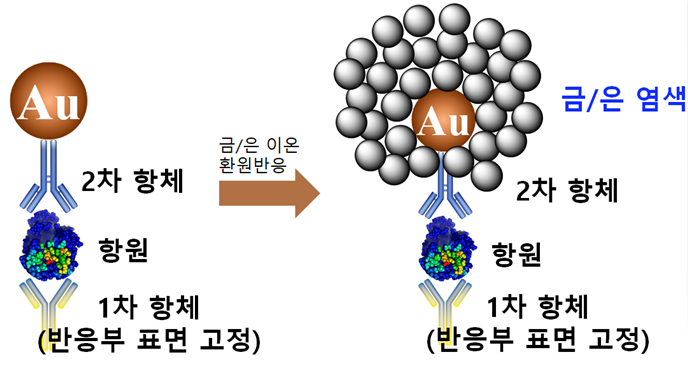
Signal amplification technology, which is the core of this analysis technique, is designed to enhance the reliability of biomarker detection. When an antibody reacts with an antigen, it emits a light signal, and this technology amplifies that signal to make it easier to observe. High-density antibody immobilization technology enables the detection of low concentrations of protein that are difficult to observe.
The research team also incorporated a centrifugation function for blood test pretreatment within the automated analysis system.
Using the research team's module, 1 mL of blood can be pre-processed within 3 minutes, enabling easy and rapid biomarker measurement. Based on rotational motion-based automation technology, the measurement time was shortened by minimizing the travel distance of the sample and various modules.
In addition, deviations and errors caused by external factors were minimized. The researchers explained that the coefficient of variation (CV), which refers to the deviation of measurement values when continuously measuring the same sample, was measured at 3.4%, a result close to the world's highest level.
◇ Commercialization expected within 3 years after project completion
The research team plans to verify the performance of the automated analysis technology through clinical trials next year and further reduce spatial constraints by optimizing the system's structural design. Furthermore, it is anticipated that by modifying the capture and detection antibodies used in the automated analysis technology, it can be applied not only to cardiovascular diseases but also to conditions related to cancer, viruses, bacteria, and food poisoning.
ETRI has filed approximately 10 domestic and international patents related to this technology and has presented it at numerous conferences, including SPIE Photonics West. In addition, the technology was introduced at the 2019 International IoT Exhibition and is scheduled to be exhibited at the 2020 Fall Conference of the Sensor Society.
The research team is pursuing technology transfer to biosensor and medical diagnostic device companies for commercialization, and expects commercialization to be possible within three years after the project ends. This research was conducted as part of the Ministry of Science and ICT's project 'Development of AI Doctor Technology for Cardiovascular Diseases,' which runs from October 2017 to December 2011.
Comments
Related news

Nordic to Supply Bluetooth 5.2/LE SoCs to Korean Healthcare Companies
Mezhu, a digital healthcare solution manufacturer, has adopted Nordic's nRF52832 Bluetooth 5.2/LE multiprotocol SoC for wireless connectivity in its 'Hycardia Wearable ECG Monitoring System'. The Nordic SoC wirelessly transmits data to users' Bluetooth 4.0 or higher smartphones, and cardiac status data can be monitored through the Hycardia app available on iOS and Android platforms.
2020.07.24by 이수민 기자

The once ambiguous smartwatch has found its true role thanks to COVID-19.
In the first half of 2020, the global smartwatch market size expanded by 20% compared to the same period in the previous year. This is interpreted as resulting from increased interest in health due to the COVID-19 pandemic. Accordingly, smartwatch manufacturers are equipping various sensors and further strengthening the healthcare functions of smartwatches.
2020.09.08by 이수민 기자
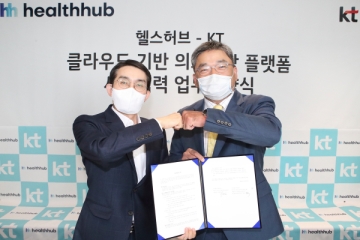
KT and Health Hub Launch AI-Based "Digital Healthcare" Business
KT is partnering with Healthhub to launch cloud and AI-based digital healthcare services. The two companies will pursue digital healthcare business by combining KT's ICT platform capabilities such as cloud, artificial intelligence, and 5G with Healthhub's telemedicine interpretation and medical AI solution capabilities. Specifically, they plan to provide medical imaging platforms safely and quickly through KT Cloud, jointly develop medical imaging services combined with AI, and pursue joint business development both domestically and internationally.
2020.10.21by 김동우 기자
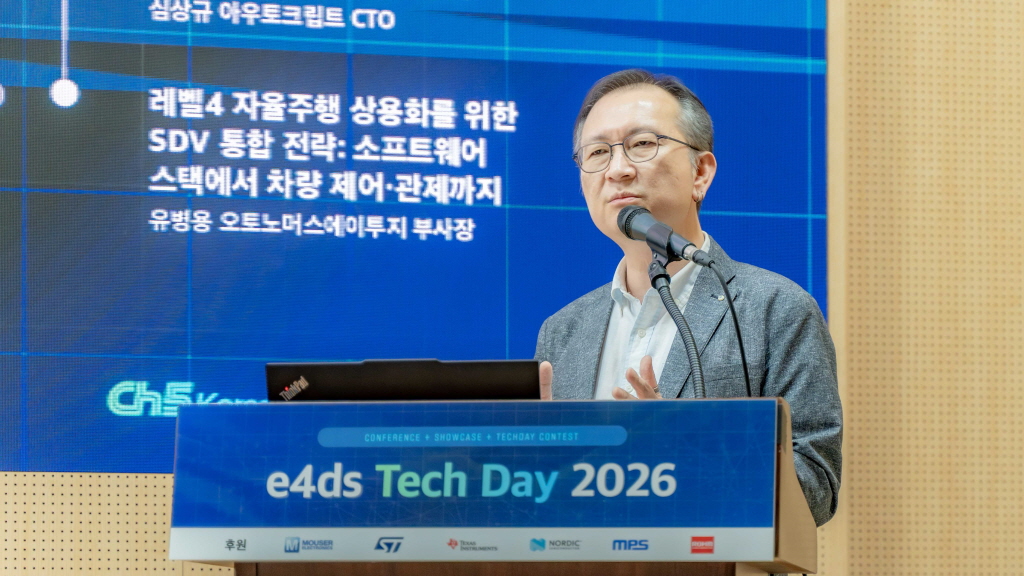
[e4ds Tech Day 2026 ⑨] Sim Sang-gyu, Autocrypt CTO: "In the Physical AI Era, Automotive Security Must Extend Beyond the Vehicle"
At e4ds Tech Day 2026, Sim Sang-gyu, CTO of Autocrypt, explained automotive cybersecurity strategies in the era of Physical AI and SDV (Software-Defined Vehicle). Automobiles are evolving as part of an ecosystem connected to AI, cloud, chargers, IoT, and robots, and he emphasized that the scope of security must expand beyond the vehicle interior to the entire connected environment. In particular, AI model tampering, adversarial attacks, OTA updates, and EV charger hacking were identified as major threats. He explained that response measures require zero trust, AI model integrity protection, intrusion detection, Security by Design and Default, and full lifecycle security management, and that proactive security system establishment beyond regulatory compliance is critical for securing future mobility competitiveness.
2026.10.12by 배종인 기자
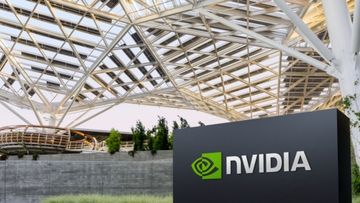
NVIDIA to Invest $1 Billion in U.S. Science Over Next Five Years
NVIDIA has announced plans to invest $1 billion over the next five years to strengthen U.S. scientific and technological competitiveness. The company will enhance cutting-edge artificial intelligence research and development capabilities in key areas including quantum computing, healthcare, and energy security, while expanding support for higher education research institutions and cloud service providers. NVIDIA is participating as a major industry partner in the White House Office of Science and Technology Policy's Genesis Mission, and is promoting supercomputer construction in collaboration with national laboratories including Argonne and Los Alamos.
2026.10.12by 배종인 기자











