



'1,019 km/h' ground transportation technology faster than passenger planes has emerged
 Published2020.11.11 12:00
Successful aerodynamic test at 1,019 km/h
Overcoming the limitations caused by conventional air resistance
Recently, as competition to develop high-speed land transportation technology capable of speeds exceeding 1,000 km/h—faster than passenger aircraft and close to the speed of sound (1,220 km/h)—accelerates worldwide, the need to introduce high-speed transportation networks to prepare for the hyper-connected era of the Fourth Industrial Revolution is increasing.
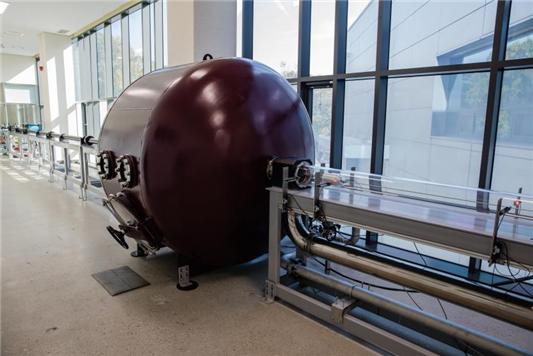
The Korea Railroad Research Institute (hereinafter KRRI) announced on the 11th that its independently developed miniature tube aerodynamic test device achieved a speed of 1,019 km/h at 0.001 atmospheres.
The Korea Railroad Research Institute recorded a speed of 714 km/h last September as it began full-scale aerodynamic driving tests in a near-vacuum state. In addition, by resolving issues such as vehicle driving difficulties caused by rapid acceleration friction in the acceleration section of this aerodynamic test device, it broke through a speed of over 1,000 km/h.
International aircraft traveling to the United States or Europe fly at a speed of 800 to 1000 km/h. However, with the success of this test, the driving characteristics of a hyperloop traveling faster than an airplane inside a near-vacuum tube were identified for the first time in the world, thereby securing the source technology for the basic design of a hyperloop.
The hyperloop aerodynamic test device was built on a 1/17 scale and consists of a hyperloop vehicle, a launch unit that drives the vehicle at ultra-high speed, a near-vacuum tube, and a braking unit.
Until now, the highest level of overseas air gun-type tube aerodynamic test devices was in Japan and China, with a speed of 600 km/h and a pressure of 1 atmosphere, while there were no tube test devices capable of operating at 0.001 atmospheres. However, this device, developed by the Korea Railroad Research Institute for the first time in the world, enables various driving tests under necessary conditions within a range of vehicle speeds of 100 to 1,000 km/h or more and a pressure inside the tube of 0.1 to 0.001 atmospheres or less.
One of the key technologies of the hyperloop, which travels at ultra-high speeds of over 1,000 km/h, is to minimize air resistance and run inside a tube that is close to a vacuum. This allows the speed limitations of existing high-speed railways caused by frictional and air resistance to be overcome.
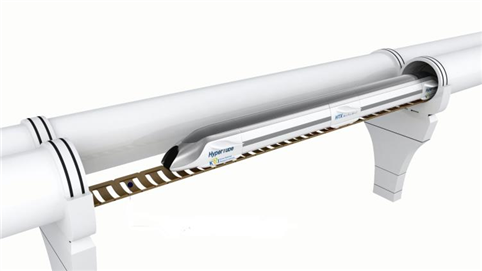
In addition, the Korea Railroad Research Institute is developing core technologies for the hyperloop, including a near-vacuum ultra-high-speed aerodynamic test facility, superconducting electromagnets and propulsion systems—key components equivalent to the engine of a hyperloop vehicle—and ultra-high-speed driving stabilization systems.
In addition, we are planning hyperloop demonstration research projects to develop prototype vehicles for future hyperloop implementation and to verify performance using testbeds.
Na Hee-seung, President of the Korea Railroad Research Institute, stated, “Hyperloop is a new high-speed land transportation technology that accelerates regional integration, and through it, we will bring about a hyper-connected future society in the era of the Fourth Industrial Revolution,” adding, “We will do our best to develop Hyperloop technology, an eco-friendly future mobility solution for the Korean New Deal, through technological innovation that is differentiated from overseas.”
Comments
Related news
What are the key issues that determine success and failure for PAV (Personal Air Vehicle), the future transportation means taking to the skies?
Drones utilizing ICT technologies such as artificial intelligence, embedded sensors, software, hardware, 5G communication, and cloud have recently garnered attention for their growth potential in the personal aircraft market. Mobility Foresignts predicted that the PAV market value will grow to approximately 400 million dollars by 2025, while Morgan Stanley forecasted growth to 2.9 trillion dollars by 2040.
2020.02.18by 최인영 기자

The key to urban mobility is the harmony of four ICT technologies.
Major cities worldwide are collaborating with the private sector to develop intelligent transportation infrastructure, bringing about changes in urban mobility management. Frost & Sullivan anticipates that the performance of smart city mobility systems in the future will be differentiated based on how well they integrate city-wide communication networks, cloud-based data storage, intelligent command centers, and cybersecurity measures.
2020.03.06by 최인영 기자
Mossa Unveils IIoT Computer for Railways to Protect Passenger Safety
Today, railway operators are implementing IIoT in transportation systems to improve passenger environments and reduce maintenance costs for trains and railways. To achieve these objectives, robust computing performance and wireless connectivity that can process and transmit large volumes of data generated by IIoT applications must be in place. Accordingly, Mosaic has launched the V2406C series, a high-performance railway computer with wireless capabilities.
2020.09.17by 이수민 기자
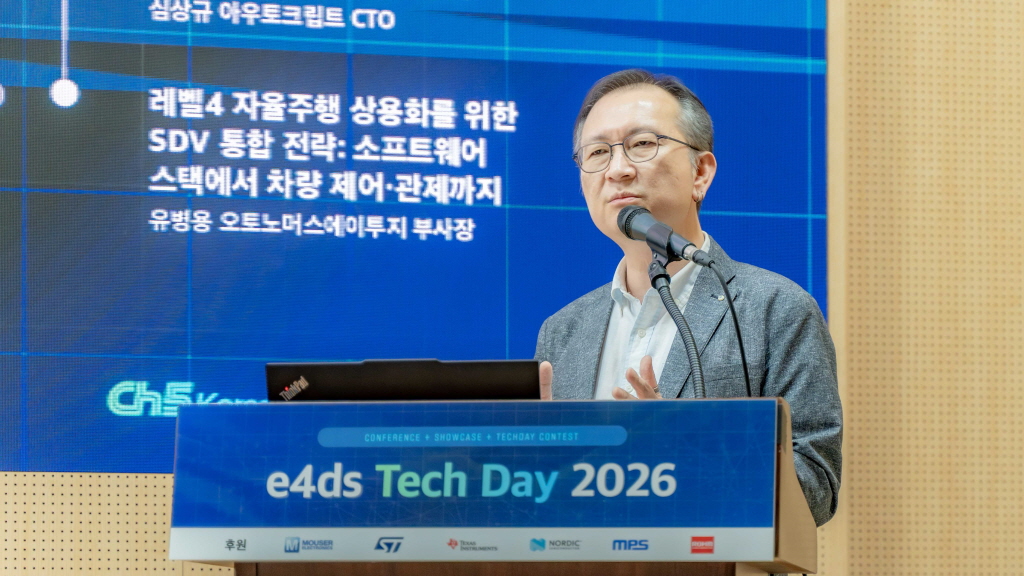
[e4ds Tech Day 2026 ⑨] Sim Sang-gyu, Autocrypt CTO: "In the Physical AI Era, Automotive Security Must Extend Beyond the Vehicle"
At e4ds Tech Day 2026, Sim Sang-gyu, CTO of Autocrypt, explained automotive cybersecurity strategies in the era of Physical AI and SDV (Software-Defined Vehicle). Automobiles are evolving as part of an ecosystem connected to AI, cloud, chargers, IoT, and robots, and he emphasized that the scope of security must expand beyond the vehicle interior to the entire connected environment. In particular, AI model tampering, adversarial attacks, OTA updates, and EV charger hacking were identified as major threats. He explained that response measures require zero trust, AI model integrity protection, intrusion detection, Security by Design and Default, and full lifecycle security management, and that proactive security system establishment beyond regulatory compliance is critical for securing future mobility competitiveness.
2026.10.12by 배종인 기자

Practical HIL Construction Strategy for Automotive and Off-Highway Controller Validation
As vehicle E/E architecture transitions to zonal structures and shifts to software-defined vehicles (SDV), the number of controllers (ECUs) requiring validation and software complexity are surging dramatically. Meanwhile, real vehicle testing cannot provide repeated verification under identical conditions and entails lead time and safety concerns. This white paper explains the principles of HIL (Hardware-in-the-Loop) validation and the structure of the NI platform composed of PXI, SLSC, and VeriStand, and through two actual implementation cases—Camera Record & Replay HIL for In-Cabin Monitoring Controller (ICMU) and Forklift Controller (VCU) HILS—describes how controller-level regression testing becomes possible. Additionally, it explicitly states application boundaries and limitations, such as lack of A2B support.
2026.10.12by 편집부











