



Maxim Launches 'HSP 3.0' Reference Design for Healthcare Wearables, Capturing Medical-Grade Information
 Published2020.11.12 16:35
HSP 3.0 with free source code access
Collection of medical data such as HR, ECG, HRV, and SpO2
The COVID-19 pandemic has made remote monitoring of patients' vital signs more important than ever. The pandemic is accelerating the adoption of digital healthcare services, which had previously been sluggish. Remote monitoring is expected to play a crucial role in preventive medicine and chronic disease management.
Maxim Integrated Korea released the 'Health Sensor Platform (HSP) 3.0' on the 12th, which can shorten the development time of healthcare wearable devices by more than six months.
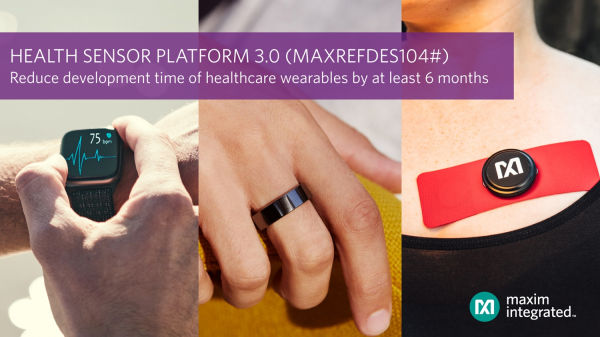
Launch of the reference product MAXREFDES104# [Photo = Maxim]
Today, many healthcare professionals and users are using wearable devices to obtain health information and manage chronic and acute conditions. As demand for more health information and accurate analysis grows, wearable device manufacturers are incorporating multiple measurement technologies into their devices.
Maxim's wristwatch-type reference wearable device, 'MAXREFDES104#', provides medical-grade information on body temperature, activity, respiratory rate (RR), heart rate (HR), electrocardiogram (ECG), heart rate variability (HRV), blood oxygen saturation (SpO2), as well as sleep quality and stress index through built-in algorithms.
Wearable designers can immediately begin collecting data with this reference product, reducing device development time by more than six months.
Unlike HSP 2.0, which was released in 2018, HSP 3.0 can measure ECG, SpO2, and use dry electrodes, so it can be made into a patch or ring-type wearable device to detect heart and respiratory problems, and can manage diseases such as chronic obstructive pulmonary disease (COPD), infectious diseases (COVID-19), and obstructive sleep apnea (AFiB).
With freely available source code and design files, HSP 3.0 also includes complete optical and electrode designs, along with algorithms to meet medical requirements. To achieve this, HSP 3.0 utilizes improved devices compared to those featured in HSP 2.0.
◇ Five Maxim devices used in HSP 3.0
The MAX86176 analog front end (AFE) performs photoplethysmography (PPG) and electrocardiography (ECG) measurements, providing a signal-to-noise ratio (SNR) of 110dB and a common-mode rejection ratio (CMRR) of greater than 110dB for oxygen saturation for dry electrode ECG applications. Synchronous acquisition of PPG and ECG measurements at independent sampling rates provides pulse transit time information relevant to cardiac disease.

It can help medical professionals make accurate diagnoses. [Photo = Maxim]
Optimized for wearable health monitoring devices, the MAX20360 PMIC consists of Maxim's ModelGauge m5 EZ battery fuel gauge module and a sophisticated haptic driver, along with a low-noise buck-boost converter driver that maximizes SNR and minimizes power used for optical biosensing.
The ultra-low-power MAX32666 MCU with built-in Bluetooth features dual Arm Cortex-M4F cores and a smart DMA. The smart DMA allows the BLE stack to run independently, freeing the two main cores for critical tasks. Furthermore, all security features and error-correcting code (ECC) are integrated into memory, enhancing system reliability.
The 'MAX32670', an ultra-low-power MCU for PPG algorithms, can be configured as a sensor hub that supports firmware and algorithms or an algorithm hub that supports multiple algorithms. Additionally, it seamlessly implements customer-desired sensor functions, such as managing the MAX86176 PPG and ECG measurement AFE and providing raw or output data to external parties.
The MAX30208 digital temperature sensor, featuring low power consumption and high accuracy, is housed in an ultra-small 2mm x 2mm package. It measures temperature from the top of the package and can be mounted on a flexible cable or PCB, making it ideal for wearable product design. With a 0.1°C error range, it also meets medical-grade temperature requirements.
Comments
Related news
Disaster alert text messages will be sent to wearable devices, with specifications under development.
Bluetooth SIG announced that it is developing a specification that can apply the existing smartphone-based exposure notification system to wearable devices. More than 130 Bluetooth SIG exposure notification working group member companies are currently defining the standard specification, and the initial version is expected to be released within several months.
2020.08.20by 이수민 기자
The once ambiguous smartwatch has found its true role thanks to COVID-19.
In the first half of 2020, the global smartwatch market size expanded by 20% compared to the same period in the previous year. This is interpreted as resulting from increased interest in health due to the COVID-19 pandemic. Accordingly, smartwatch manufacturers are equipping various sensors and further strengthening the healthcare functions of smartwatches.
2020.09.08by 이수민 기자
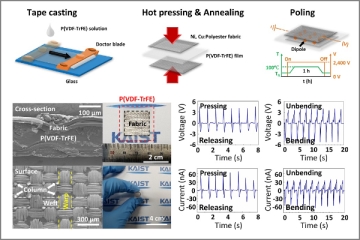
The commercialization of fabric-based wearable devices is now possible.
Recently, wearable devices based on comfortable and durable fabrics have attracted significant attention. A research team led by Professor Hong Seung-bum from the Department of Materials Science and Engineering at KAIST has developed a method for manufacturing fabric-based wearable piezoelectric energy harvesters that combine conductive polyester fabric and piezoelectric polymer film using a hot-pressing process.
2020.09.11by 이수민 기자

ESP32 Development Environment Selection and GPS Application Implementation
The ESP32 is a microcontroller that integrates Wi-Fi, Bluetooth, 12-bit ADC, capacitive touch, PWM, DAC, and UART in a single SoC. However, the abundance of features does not by itself solve the designer's problems. The real challenges lie in selecting the appropriate development environment, determining which pins can be used and which must be avoided, and converting raw data from modules into usable information. This document addresses ESP32 peripheral constraints (ADC2 and Wi-Fi coexistence limitation, UART1 occupancy, ADC non-linear regions), the trade-offs between Arduino IDE and ESP-IDF, and the process from connecting NEO-6M/NEO-M8N GPS modules to UART2, parsing NMEA sentences, and visualizing routes in Google Earth, all organized based on documented references.
2026.10.12by 편집부

MIPI CSI-2, DSI-2, C-PHY, D-PHY Test Solution Technical White Paper
The MIPI interface adopts a burst mode that transitions between low-power (LP) and high-speed (HS) states for low-power consumption, and in return, strict timing rules are imposed on state transitions. Additionally, the high-speed section operates as a packet-based protocol with headers, ECC, and CRC, so verification engineers must handle waveforms and protocols simultaneously. Traditional configurations combining general-purpose oscilloscopes and AWGs reveal limitations in setup complexity, measurement uncertainty, and lack of reproducibility when faced with these requirements. This white paper, based on webinar materials, organizes the structure of this problem and describes how the SV5C-DPTXCPTX generator for receiver testing and SV5C-DPRXCPRX analyzer for transmitter testing integrate state transition testing, stressed eye testing, and protocol analysis into a single bench, along with their application boundaries.
2026.10.12by 편집부











