


KERI Develops Elastic Wave Sensor with Built-in Preamplifier for Fault Prediction
 Published2020.11.13 08:51
Development of elastic wave electrical sensor technology with built-in preamplifier
Eco-friendly sensor using lead-free materials to replace lead
The impact of natural disasters due to rapid climate change is raising concerns about the durability and safety of large-scale external buildings and structures. In particular, with the implementation of Korea's Green New Deal policy, a large number of electrical and energy facilities are being built, increasing demand for technologies that can predict and diagnose on-site accident risks.
On the 10th, Dr. In-Seong Kim's team at the Korea Electrotechnology Research Institute (KERI)'s Electrical Conversion Materials Research Center developed a 'preamplifier-embedded electrical sensor technology' that can diagnose signs of deterioration or failure in various facilities and equipment in advance by detecting acoustic emissions, which are microscopic vibrations transmitted from elastic bodies.
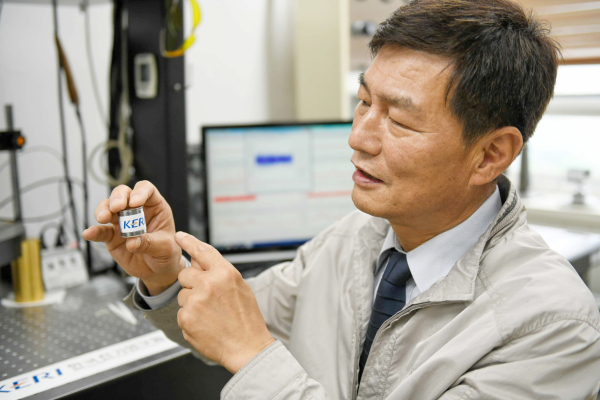
Elastic waves are a type of wave generated when a material is deformed or broken. The greater the degree of destruction or abnormality in the material, the more elastic waves are generated. The technology developed this time is a system sensor that can prevent major accidents in advance by monitoring signs of equipment deterioration or failure in advance through detection of elastic waves generated naturally from the equipment itself.
The research team built a preamplifier that amplifies small elastic waves at their source, thereby reducing the noise level that interferes with measurements to the same level as the US company PAC's product, at 25dB. Using KERI's own piezoelectric technology, the team succeeded in localizing the 'preamplifier-built elastic wave electrical sensor (AE Sensor)', which has a measurement sensitivity of 85-90dB, which is higher than that of existing products (80dB).
A new lead-free material has also been developed and implemented to replace the lead used in existing sensor materials. With the Restriction of Hazardous Substances (RoHS) directive banning the use of lead in electrical and electronic devices starting in July next year, this new material is expected to replace existing products.
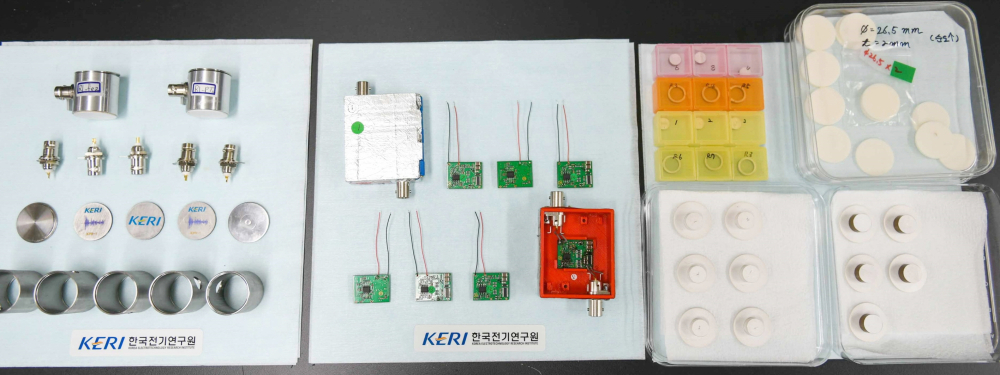
This sensor technology is expected to be primarily utilized in the safety diagnosis field of the energy industry, including ▲diagnosis of various facilities and components of nuclear, thermal, wind, and hydroelectric power plants, ▲abnormal diagnosis of transformers and circuit breakers in large substations and power plants, and ▲preliminary detection of structural deterioration and deformation of oil tanks and large oil tankers.
In the case of wind power, it is expected that stable facility operation will be possible by being able to measure damage to the generator's shaft, bearings, gears, oil contamination, etc. in advance. Hydroelectric power plants can also monitor and take proactive measures to prevent potential failures in valves, steam lines, and joint pipelines.
In addition, it can be used to prevent accidents in large buildings and facilities, such as ▲diagnosing abnormalities in the main towers and ropes of large suspension bridges, ▲observing bending and destruction of concrete and civil engineering structures, and ▲detecting seismic waves (P waves, S waves) transmitted within the earth's crust.
Dr. Kim In-seong said, “The sensor we developed this time can be applied to various fields such as strengthening the competitiveness of the national safety diagnosis sector and autonomous vehicles, smart factories, and healthcare,” and “It is still at the sensor stage that detects elastic waves in a designated resonant frequency band, but in the future, we plan to expand the bandwidth and develop a composite sensor that includes wideband and acceleration.”
In the future, the research team plans to improve the perfection of the technology, promote mass production of sensor elements in conjunction with the Gyeongnam Changwon Gangso Research and Development Special Zone project, and discover demand companies to promote commercialization.
Comments
Related news
Korean power equipment exports, previously blocked by COVID-19, are now being reopened through virtual registration.
Power equipment manufacturers must obtain test certificates from authorized testing and certification organizations in the presence of personnel from the relevant country's power authority in order to export products. However, recently, due to COVID-19, it has become difficult for overseas inspectors to visit Korea, making it challenging for companies to conduct timely tests and export goods. In response, KERI announced that it will implement a non-contact witness testing service.
2020.08.28by 명세환 기자

To improve the energy efficiency of industrial equipment, CbM technology must be introduced.
Seawater desalination technology requires substantial energy consumption. It also demands considerable time, money, and resources. ADI's Autosense platform provides an opportunity to achieve improved efficiency in this technology. Autosense is a CbM technology capable of continuously and accurately measuring and monitoring the integrity of equipment, and it can accumulate data regarding equipment condition faster and more accurately than other sensing platforms.
2020.10.26by 이수민 기자
LGU+ Launches Real-Time Fall Detection Service Based on Radar Sensors
LG Uplus announced that it is conducting a demonstration of a real-time fall detection service based on radar sensors and will begin commercialization starting next year. The fall detection service offered by LG Uplus detects people's movements in real-time within a designated space through radar sensors installed on walls or ceilings, and immediately sends notifications to guardians via wireless communication when a suspected fall situation occurs. This enables fast detection of fall accidents 24 hours a day from a remote location and allows for rapid response.
2020.11.03by 강정규 기자
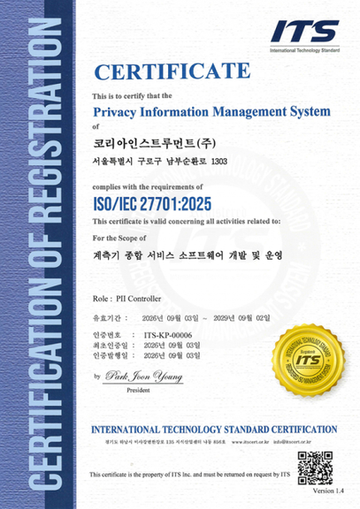
Korea Instrument, KOLAS Accredited Calibration Agency First to Simultaneously Acquire ISO/IEC 27,001·27,701
Korea Instrument has become the first among KOLAS accredited calibration agencies to simultaneously acquire ISO/IEC 27,001 and ISO/IEC 27,701 certifications. Through its proprietary platforms CWIZ Enterprise and CWIZ Partners, the company has embedded information security and personal data protection requirements across all business processes including customer information, equipment data, and calibration reports, with plans to continuously advance its management system through regular audits and security inspections.
2026.10.12by 배종인 기자

TeamViewer One, IT Incident Automation Workflow and Resolution Center Enhanced
TeamViewer has added IT incident automation capabilities and an advanced Resolution Center to its integrated digital workplace management platform 'TeamViewer ONE'. Recurrent service disruptions, configuration errors, and capacity shortages are automatically handled according to preset policies, and device status verification through script deployment can be managed in a unified interface, significantly reducing repetitive tasks for IT teams.
2026.10.12by 배종인 기자











