



ETRI develops 25 Gbps wireless backhaul using mmWave bands.
 Published2020.12.02 09:40
Realizing communication speeds of up to 25 Gbps within a 1 km range
Wired backhaul and redundancy can help you cope with crises.
PC and smartphone users use Internet services connected to the telephone company's core network via a nearby mobile base station.
Backhaul, the connection between the base station and the telephone exchange, is typically implemented through wired connections, typically utilizing optical cables or copper wires. However, wired systems face numerous installation constraints, such as the difficulty of laying new cables depending on the environment, and are also time-consuming and expensive to build.
The Electronics and Telecommunications Research Institute (ETRI) announced on the 1st that it has developed wireless backhaul technology that supports ultra-high-speed communications. Utilizing the 70-80 GHz millimeter wave (mmWave) band, this technology enables communications at speeds of up to 25 Gbps within a 1-kilometer range by installing a hub in the core network and a terminal at the base station.
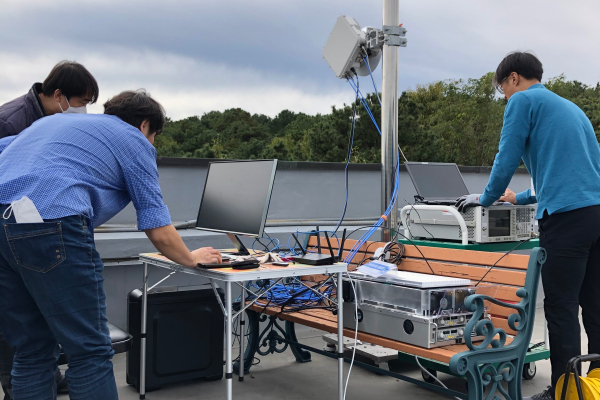
The research team developed this technology by utilizing ▲phase noise removal technology ▲polarized interference minimization technology ▲dual-polarized integrated modem technology ▲commercial 25Gbps optical transceiver technology.
The wireless section communication transmission speed of existing wireless backhaul technology was up to 10 Gbps, but the research team's technology exceeds the maximum transmission speed (20 Gbps) of 5G mobile communication base stations. Therefore, it is expected to be of great help in building base station infrastructure to provide 5G services.
Compared to new installations, the cost can be reduced by approximately 20%, making it economical. By utilizing wireless backhaul to complement wired networks and provide redundancy, even in the event of a fire or other disruption, a stable communication environment can be established and speed reductions can be minimized.
ETRI's wireless backhaul technology supports both point-to-point and point-to-multipoint wireless transmission methods. Because it provides a user interface based on Ethernet standards, it is compatible with existing base station products, making it advantageous for commercialization.
This technology has undergone field trials in networks for 5G media services. The research team plans to transfer the technology to wireless communications equipment companies and others for use in 5G communication centers, small cells, and other areas.
In addition, research is being conducted on backhaul technology, which connects ground stations and mobile base stations equipped with small cells mounted on aerial unmanned vehicles such as drones, to solve problems such as emergencies that occur in areas with weak communication networks, such as mountainous regions or remote islands.
Comments
Related news
[Webinar Key Q&A] True 5G Depends on Millimeter Waves
5G signifies more than just next-generation mobile communications. For at least the next decade, 5G will lead wireless standards. To establish the foundation for a network that will operate for 10 years, we must anticipate what will happen going forward and prepare accordingly. The 5G plans of major countries already include not only the sub-6GHz band infrastructure that has been partially built, but also millimeter-wave band infrastructure deployment. Therefore, securing relevant technological capabilities will have a significant impact on future corporate competitiveness.
2020.11.09by 이수민 기자
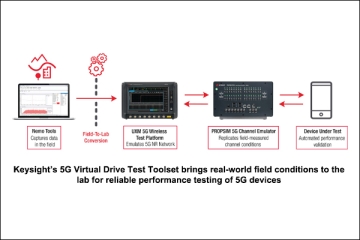
Keysight Unveils Real-World-Based "5G VDT Toolset"
Keysight has launched a 5G virtual drive test toolset that enables 5G device and chipset manufacturers, as well as mobile operators, to validate end-user experience in laboratory environments that are similar to field conditions and fully automated. The toolset combines the company's channel and network emulation capabilities with collection, logging, and scripting tools to implement a realistic test environment, allowing 5G devices to be validated across various network signaling and wireless channel conditions.
2020.11.25by 이수민 기자
3 mobile carriers accept '3.17 trillion' in exchange for frequency reallocation... "Conditions for building 5G wireless stations"
Discussions on frequency reallocation have been concluded. The three mobile carriers will be required to pay between a minimum of 3.17 trillion won and a maximum of 3.77 trillion won, depending on the number of 5G wireless stations constructed, in exchange for reusing 310㎒ of the 320㎒ bandwidth of 3G and LTE frequency bands whose usage period expires in 2021 for the next five years. The Ministry of Science and ICT has finalized the detailed policy plan for mobile communication frequency reallocation containing these provisions, and SK Telecom, KT, and LG U+ have accepted it.
2020.12.01by 이수민 기자
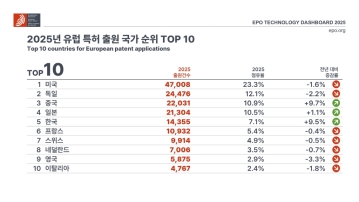
European Patent Applications Surpass 200,000 for the First Time… South Korea Maintains 5th Place, Led by Batteries and Telecommunications
According to the European Patent Office (EPO)'s 'Technology Dashboard 2025', European patent applications last year reached 201,974, surpassing 200,000 for the first time. Korean companies and inventors filed 14,355 applications, representing a 9.5% increase from the previous year and maintaining 5th place by country. Battery, digital communication, and semiconductor technologies led the growth, with Samsung ranking as the top EPO applicant for the second consecutive year and LG reaching 3rd place. The presence of major domestic cities such as Seoul, Suwon, and Yongin was also confirmed. It was also revealed that Korea's European patent strategy is expanding beyond individual technologies to span the entire industry.
2026.03.24by 명세환 기자
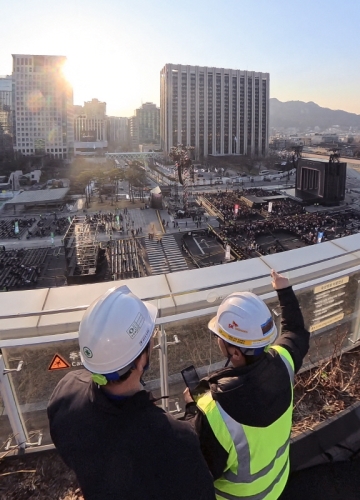
SK Telecom First Applies AI-Based Network Operations at Gwanghwamun K-Pop Concert
SK Telecom announced that it applied an AI-based network operation system for the first time at a large-scale K-pop concert held in the Gwanghwamun area of Seoul on March 21st, managing communication quality throughout the event. Mobile data usage during the three hours before and after the concert reached 12.15TB, approximately doubling compared to the same time slot the previous weekend. SK Telecom monitored traffic using the AI system 'A-One' in five-minute and 50-meter units to respond to potential overload situations, while also operating temporary communication facilities and on-site personnel in parallel. This case is interpreted as confirmation of the practical applicability of AI-based autonomous network operation in an environment where demand from dense events and foreign users increases simultaneously.
2026.03.23by 명세환 기자











