



Cyber threats next year will focus on manufacturing, healthcare, and the cloud.
 Published2020.12.09 14:05
Threats will increase in manufacturing, healthcare, and the cloud.
Ransomware crimes are becoming more sophisticated, highlighting vulnerabilities in online contact.
The digital transformation of businesses has accelerated since the spread of COVID-19. With increasing interconnectivity across various industries, cyberattacks are expected to increase in manufacturing, healthcare, and cloud computing next year.
SK Infosec EQST Security Expert Group announced this on the 9th while releasing the 2021 Cyber Threat Outlook Report.
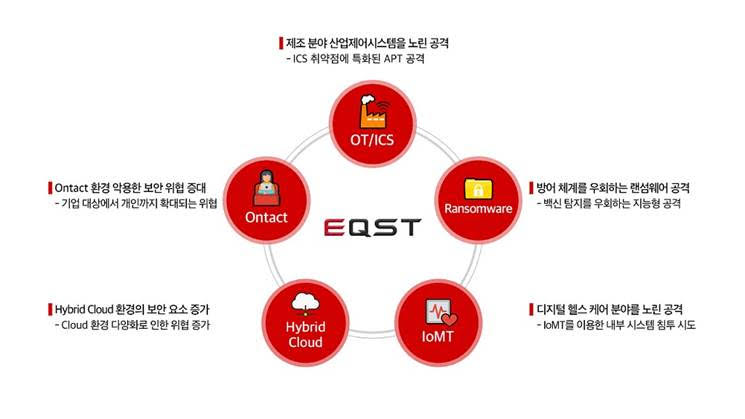
The report identified the five most likely cyber threats to occur in 2021: attacks on industrial control systems in the manufacturing sector, ransomware attacks that bypass defense systems, attacks in the digital healthcare sector, increased security elements in hybrid cloud environments, and security threats exploiting ontact environments.
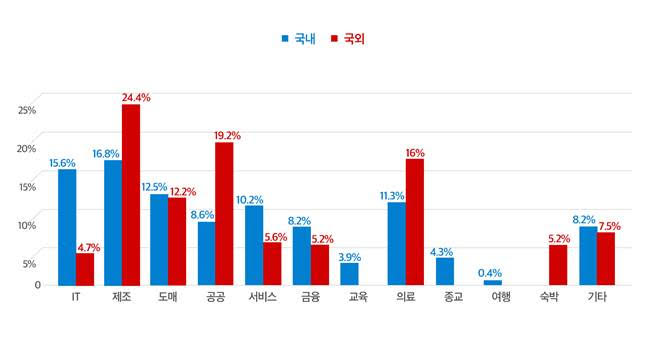
Hacking attacks targeting manufacturing facilities are expected to intensify next year. According to the report, the manufacturing sector accounted for 16.8% of breaches this year, the highest among all industries. These attacks primarily targeted security vulnerabilities in operational technology (OT), industrial control systems (ICS), and dedicated communication protocols.
The report predicts that attacks on manufacturing facilities will increase further as connections to external networks continue to increase to improve production efficiency.
Ransomware was ranked as the most concerning attack for next year. Previous ransomware attacks involved infiltrating internal systems, encrypting data, and demanding ransom. However, recent attacks have become increasingly brazen, with methods threatening to disclose sensitive data, such as personal information, to the public. Furthermore, attacks have even emerged that utilize virtual machines or MS Windows OS programs to bypass security solutions.
Kim Tae-hyung, head of the EQST security expert group at SK Infosec, said, “Ransomware attacks targeting companies are imitating attack cases or forming organizations to carry out large-scale attacks in order to maximize profits,” and “ransomware attacks will continue to be the biggest concern for security managers because they make tracking difficult by demanding money in virtual currency.”
Security threats targeting the digital healthcare sector are also expected to increase. In the wake of COVID-19, more and more hospitals are introducing new, non-face-to-face treatment processes. However, the report points out that hospital access systems, various medical devices, patient records, and administrative systems are vulnerable to threats due to their insecure connections. The report predicts that cyberattacks targeting patient health information, which is being traded at high prices on the dark web, will increase.
Finally, the report warned of security vulnerabilities arising from the shift in corporate work environments and IT infrastructure to ontact and cloud computing. In particular, the report emphasized the growing use of hybrid clouds, combining public and private clouds, and the need for a robust security system, as security management factors increase.
Kim Tae-hyung, in charge, said, “With the COVID-19 virus spreading this year, companies are rapidly transforming digitally to ensure business continuity,” and added, “Because hackers are quickly looking for opportunities to attack even before we become accustomed to the new ICT environment, digital transformation with security in mind is absolutely necessary.”
Comments
Related news
GitLab Completes Integration of Fuzzing Solutions, Strengthening DevSecOps Capabilities
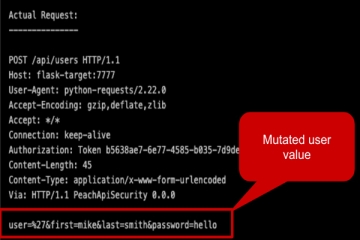
GitLab has completed its integration of Fuzz Tech, a security software development company specializing in protocol fuzz testing and DAST API testing security, and Fuzzitech, a continuous fuzz testing solution provider offering coverage-guided testing. Through this integration, GitLab now delivers a comprehensive and integrated security solution to its security features customers, spanning from automated DevOps security testing deployment to vulnerability management and remediation.
2020.12.03by 이수민 기자
Demonstration of "smart city" services based on 5G's low-latency characteristics begins.
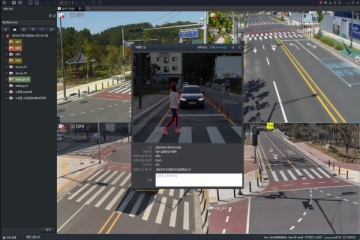
ETRI has developed a 5G drone-based control service solution and 5G CCTV-based intelligent road safety support service technology, and completed demonstration for precision control services. It can also be utilized for density analysis for quarantine management within buildings, making it useful for security control within buildings as well.
2020.12.07by 이수민 기자

STM32CubeIDE, FreeRTOS Thread-Aware Debugging Added
ST Microelectronics has added FreeRTOS thread-aware debugging functionality to the STM32CubeIDE development environment, enabling users to complete projects easily and quickly. Through this feature, users can efficiently develop RTOS for modern embedded systems with increasing complexity from sophisticated capabilities such as cybersecurity, wireless connectivity, user interface graphics, and multiple operation modes.
2020.12.08by 강정규 기자
.png)
Databricks Unveils Open AI Security Monitoring 'Lakewatch'
Databricks entered the security market on March 24 by unveiling LakeWatch, an open-source agentic SIEM. The core functionality of this product is to integrate and analyze security, IT, and business data in a single environment to support AI-based threat detection and investigation. The company explained that it reduces the limitations of existing security operations centers, which have had to forgo some data due to high cost structures, and enables large-scale data analysis and automation based on open formats and ecosystems. LakeWatch is currently offered as a private preview, with Adobe and Dropbox mentioned as early customers. Databricks also announced an expanded partnership with Anthropic as well as the acquisition of Antimatter and SiftD.ai.
2026.03.26by 배종인 기자
Kaspersky Unveils Revamped 'NEXT' Combining SOC Integrated Management and AI Analytics
As enterprises increase demand for integrated management and automation in the construction and operation of Security Operations Centers (SOC), Kaspersky has disclosed updates to its B2B security product suite 'Kaspersky Next'. This update expands EPP, EDR, XDR, and SIEM integration through a single console based on OSMP, incorporates AI capabilities such as DLL hijacking detection and suspicious account takeover behavior identification, and includes integration with generative AI assistant tool KIRA. The company stated that in large-scale deployment environments, EDR Expert can reduce resource requirements by up to 30%, and XDR Expert by up to 60%.
2026.03.25by 배종인 기자











