


Thermal imaging cameras to determine whether buried equipment is functioning properly
 Published2021.01.21 17:13
FLIR E5 thermal imaging camera, post-construction system
A convenient, affordable solution for maintenance tasks
Accumulated snow in winter can cause traffic congestion and accidents. Recently, many local governments have been introducing underground snow melting systems to reduce snow-related accidents. These systems are constructed by burying heating wires and sensors up to 150 mm below the road surface.
On the 21st, FLIR Systems introduced an application example of the 'FLIR E5' thermal imaging camera equipment optimized for underground snow melting systems.
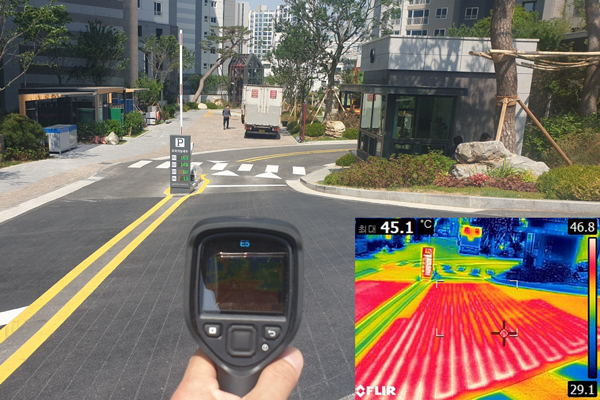
The snowmelting system uses temperature and humidity sensors to automatically detect snow and ice, energizing heating wires to generate heat and melt the snow or ice. Unlike calcium chloride spraying, it has the advantage of not polluting soil or water.
Since 2007, Namdong E&W has installed more than 500 snow melting systems for residential, public, and commercial facilities. In 2014, the FLIR E5 thermal imaging camera equipment was introduced into the system construction, supervision, and after-sales management regulations.
Kim Byeong-sam, CEO of Namdong E&W, said, “It is difficult to visually check whether the heating wires of the snow melting system are in good construction or operating condition because they are buried underground on the road,” and “Thermal imaging cameras are the optimal equipment to confirm to the client and construction supervisor whether the heating wires are operating normally by visualizing the lowest and highest temperatures in various colors within the image captured on the screen.”
According to CEO Kim, it is much more effective to check the reliability of invisible facilities on-site with a thermal imaging camera screen than to explain them in a hundred words.
CEO Kim said, “It is also convenient to use a thermal imaging camera when performing system maintenance after construction,” adding, “If there is a problem with the heating wire, the temperature of the faulty and normal areas are distinguished by different colors, so you can quickly identify and respond to the problem.”
◇ A popular thermal imaging camera that clearly displays object outlines.
The FLIR E5 is an entry-level thermal imaging camera used for electrical installation and inspection, as well as preventive maintenance. It provides both thermal and visual images, and FLIR's MSX technology clearly displays details like numbers and labels, as well as object outlines, in the thermal image.
The resolution is 10,800 pixels, and the measurement temperature range is -20℃ to 250℃. It supports a screen center point meter function for temperature measurement, and provides an area box tool that automatically tracks temperature maximum and minimum values. It is convenient to use as the task is completed by pressing the shutter toward the target object.
Its durability has also been proven, having passed a 2-meter drop test. The battery lasts up to 100 minutes on a single charge, and the removable lithium-ion battery can be recharged in under two hours using the optional charging cradle or in just two and a half hours when recharged directly from the camera body.
Comments
Related news
Thermal imaging cameras provide safe speed information in icy areas.
The Ministry of Land, Infrastructure and Transport and the National Police Agency have established a plan to provide drivers with speed limits in advance through variable speed limit signs and roadway electronic message signs when passing through icing-prone sections. The key measures include establishing an adjusted speed limit control system within ice-vulnerable management sections, providing drivers with adjusted speed limit information, and guiding compliance with adjusted speed limits during operation.
2020.02.13by 최인영 기자
Preventing the spread of infectious diseases depends on the proper use of thermal imaging cameras.
The spread of COVID-19 shows no signs of slowing down. Disease prevention measures must continue until a fully verified vaccine is available. Crowded spaces and enclosed environments are primary venues for virus transmission. Therefore, individuals with fever must be identified as quickly and accurately as possible through non-contact methods. When using thermal imaging cameras, body temperature of the subject can be measured from a distance and displayed in an easily understandable image format, eliminating the need for direct contact or close approach to the subject.
2020.09.23by 이수민 기자
Element14 and AMETEK Land Expand Temperature Inspection Technology
Element14 has announced a franchise agreement with AMETEK Land, a manufacturer of infrared non-contact body temperature measurement devices. 'VIRALERT 3', a human skin temperature detection technology, performs body temperature measurement and facial recognition using a thermal imaging camera.
2020.09.29by 김동우 기자
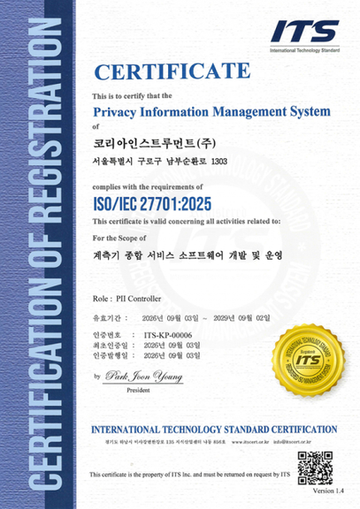
Korea Instrument, KOLAS Accredited Calibration Agency First to Simultaneously Acquire ISO/IEC 27,001·27,701
Korea Instrument has become the first among KOLAS accredited calibration agencies to simultaneously acquire ISO/IEC 27,001 and ISO/IEC 27,701 certifications. Through its proprietary platforms CWIZ Enterprise and CWIZ Partners, the company has embedded information security and personal data protection requirements across all business processes including customer information, equipment data, and calibration reports, with plans to continuously advance its management system through regular audits and security inspections.
2026.10.12by 배종인 기자

TeamViewer One, IT Incident Automation Workflow and Resolution Center Enhanced
TeamViewer has added IT incident automation capabilities and an advanced Resolution Center to its integrated digital workplace management platform 'TeamViewer ONE'. Recurrent service disruptions, configuration errors, and capacity shortages are automatically handled according to preset policies, and device status verification through script deployment can be managed in a unified interface, significantly reducing repetitive tasks for IT teams.
2026.10.12by 배종인 기자











