



A sensor that detects hydrogen leaks without external power has been developed
 Published2021.01.19 15:45
Application after production of sensitive light transmittance change film
Remote access is possible when power supply is not smooth
Hydrogen gas is attracting attention as a next-generation eco-friendly energy source, but continuous monitoring is essential due to the high risk of explosion in the event of a leak. However, existing hydrogen detection devices require continuous power supply, which limits their use for long periods of time in various wireless environments.
A joint research team of Professor In-Kyu Park of the Department of Mechanical Engineering at the Korea Advanced Institute of Science and Technology (KAIST), Professor Jun-Bo Yoon of the Department of Electrical and Electronic Engineering, and Professor Jun-Seok Noh of Pohang University of Science and Technology (POSTECH) announced on the 18th that they have developed a wireless hydrogen detection sensor that can operate stably for long periods of time without an external power supply.
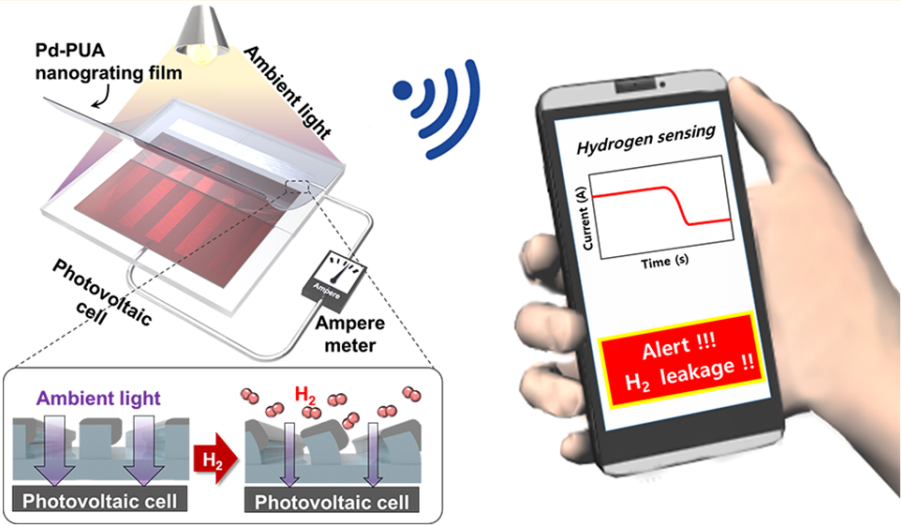
Wireless gas sensor utilizing [Image = KAIST]
The research team discovered that when they asymmetrically coated one side wall of a flexible polymer nano grating with palladium (Pd), the polymer nano grating mechanically bent as the palladium expanded when it absorbed hydrogen molecules, causing a change in light transmittance, similar to a kind of "curtain."
By utilizing this phenomenon, if a sensing film is attached to the surface of a solar cell, the light reaching the solar cell is blocked when exposed to hydrogen gas, which leads to a change in the solar cell output, allowing the concentration of hydrogen gas to be precisely detected without an external power supply.
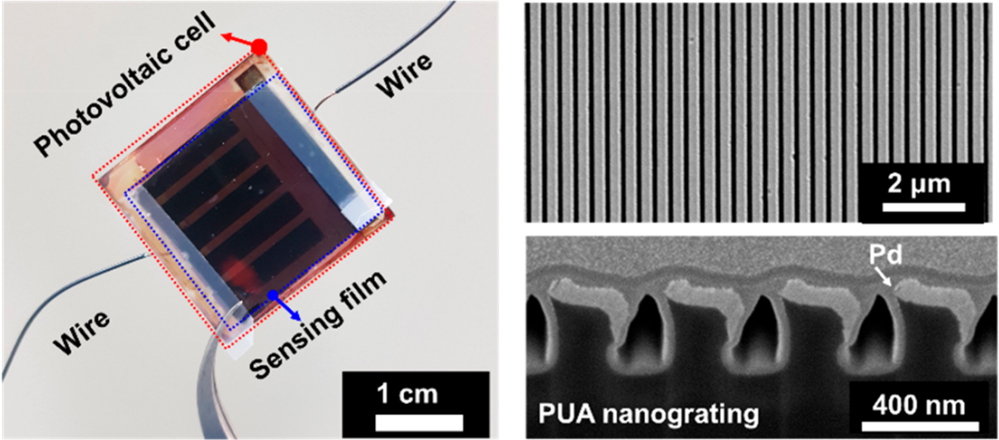
Light Transmittance Changing Film [Image = KAIST]
The wireless hydrogen detection sensor developed this time can accurately predict the concentration of hydrogen gas without an external power source, and is expected to be utilized in various wireless remote environments that utilize hydrogen.
To maximize the performance of the sensor, the palladium coating conditions (incident angle) were optimized through numerical simulations to achieve high sensor sensitivity even for low-concentration hydrogen gas of 0.1%, and it was also verified that a stable signal was maintained even under repeated hydrogen gas leaks and humidity changes.
The research team also presented a prototype that can remotely check the detected hydrogen concentration using a smartphone by mounting the developed wireless hydrogen sensor on a mobile device, thereby increasing its usability in an actual wireless environment.
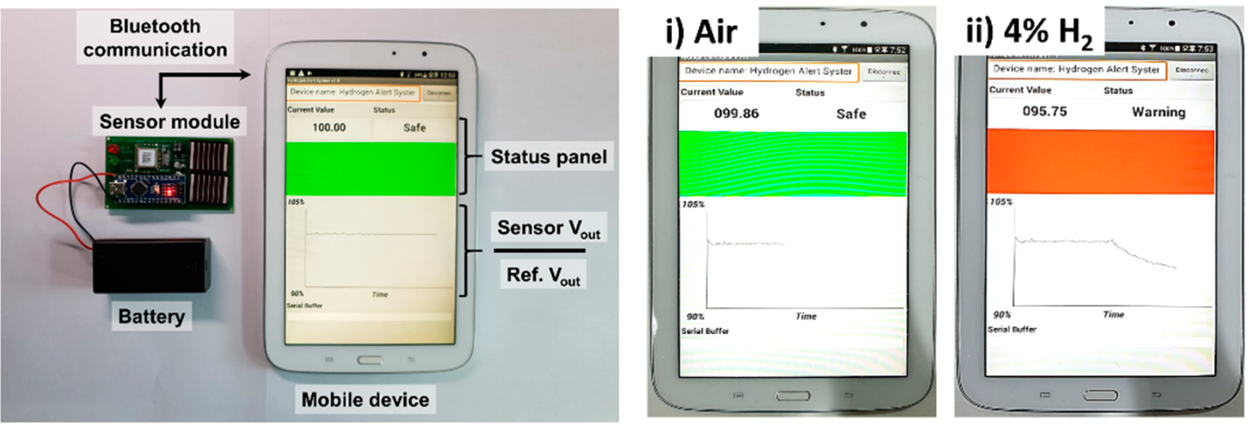
Prototype and mobile app [Photo = KAIST]
The prototype is equipped with a solar cell that is used for hydrogen detection, as well as an additional solar cell to compensate for changes in ambient light intensity, allowing real-time compensation and transmitting a signal to a smartphone via Bluetooth. The smartphone app sounds an alarm when the hydrogen gas concentration exceeds the explosive limit of 4%.
Professor Park In-gyu said, “The developed prototype is expected to greatly increase usability in remote areas where sensor power supply is not smooth, and contribute to the safe use of hydrogen, a next-generation energy source.”
Meanwhile, the results of this study, which was conducted with the support of the National Research Foundation of Korea's Leading Research Center Support Project and the Nano and Material Technology Development Project, were published in the December 2020 issue of the international academic journal 'ACS Nano'.
Comments
Related news
Quantum sensors to detect gas leaks are expected to be released this year.
SK Telecom has signed a business agreement with the Korea Gas Safety Corporation's Gas Safety Research Institute, Korea Plant Management, and Quantum Sensing, and has decided to move forward with commercializing gas safety solutions utilizing quantum sensing. SKT plans to conduct pilot applications of quantum-based gas sensing solutions at major domestic gas facilities in cooperation with the Korea Gas Safety Corporation by the end of this year.
2020.09.17by 강정규 기자
.jpg)
FLIR Launches Detection Solution for Visualizing Uncooled Gases
The GF77 Gas Find IR series, developed based on the existing GF77 camera for methane gas detection, now provides two types of lenses so users can detect a wider variety of gases with a single camera. FLIR announced that it has developed the GF77 Gas Find IR series based on the GF77 camera. The GF77 Gas Find IR series offers two types of lenses to enable detection of a more diverse range of gases with one camera.
2020.10.27by 김동우 기자
Korea Mechanical Engineering & Construction Co. develops Korea's first 'Neon' Brayton refrigeration system
The Korea Institute of Machinery and Materials (KIMM) has successfully developed Korea's first Brayton cryogenic refrigeration system using neon gas as the working fluid and demonstrated 2kW output at ultra-low temperatures of minus 200°C. With this successful development and demonstration of the ultra-low temperature refrigeration system, a foundation has been established for the localization of ultra-low temperature refrigeration systems, which currently rely entirely on foreign imports.
2020.12.18by 강정규 기자

Intel Unveils Next-Generation 'Core Ultra Series 3' and vPro Platform for Enterprise PCs
Intel has officially unveiled the "Intel Core Ultra Series 3" for next-generation enterprise PCs and the latest vPro platform, addressing a wide range of demands from enterprise notebooks to high-performance workstations.
2026.03.26by 배종인 기자
ROHM Launches ESD Protection Diode Compatible with High-Speed Interfaces of 10Gbps or Higher
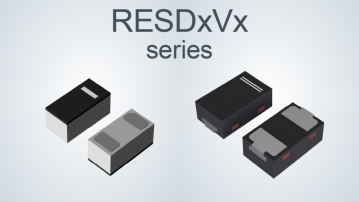
Semiconductor specialist ROHM has developed the 'RESDxVx series' of ESD (electrostatic discharge) protection diodes capable of responding to next-generation high-speed data communication environments exceeding 10Gbps, simultaneously enhancing both signal quality maintenance required in high-speed interfaces and IC protection performance.
2026.03.26by 배종인 기자











