


Apple Ignites Arm Revolution in Computer Industry
 Published2021.02.08 09:30
Intel and AMD, and Qualcomm and Microsoft are each seeking countermeasures.
It is time for a change in Korea's system semiconductor ecosystem.
A seismic shift is taking place in the computer industry. In November 2020, Apple unveiled the 'M1' chip, its first Arm core-based System on Chip (SoC) dedicated to the Mac.
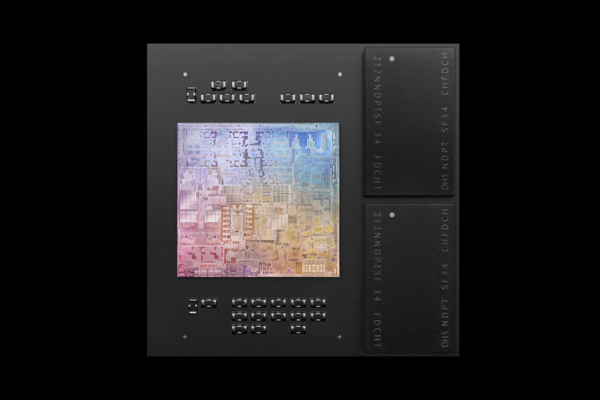
While it is common knowledge that current-generation products outperform their predecessors, the 4th-generation MacBook Air, 6th-generation 13-inch MacBook Pro, and 5th-generation Mac mini, all equipped with the M1 chip, demonstrated a remarkable performance improvement of nearly double compared to previous-generation Intel CPU-based products in various benchmarks. Power efficiency also doubled.
The M1 chip, produced using TSMC's 5nm process technology, provides performance optimized for Apple computers by integrating an 8-core CPU consisting of 4 high-performance cores and 4 low-power cores, along with up to 8-core GPUs, 16-core NPUs, and 2 DRAMs. Over the next two years, Apple plans to transition the architecture of its computers from Intel x86 to Arm architecture.
Considering that the Arm architecture, an Instruction Set Architecture (ISA) based on Reduced Instruction Set Computer (RISC), has been primarily adopted in MCUs for embedded systems and Application Processors (APs) for smartphones, Apple's latest move can be seen as shaking the foundation of computers.
Desktop/laptop PCs, servers, etc., which we commonly call computers, adopt the Intel x86 architecture and its derivative architectures, which are Complex Instruction Set Computer (CISC) based ISAs. With the release of the M1 chip, Apple shattered the premise that Arm is low-power and x86 is high-performance.
How did Apple surpass the performance of a high-performance architecture with a low-power architecture?
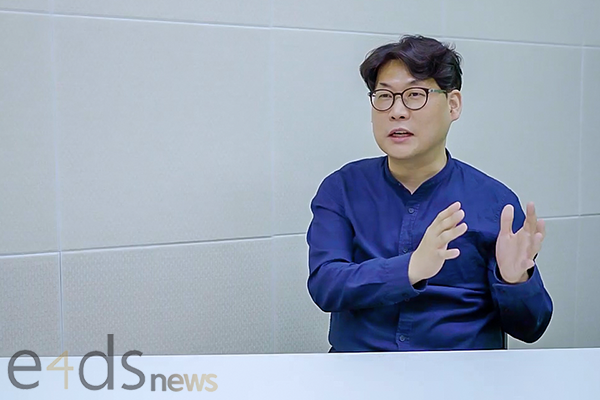
Yoo Myung-hwan, CEO of Access Lab, the first company in Korea to manufacture Arm servers, explained, “Apple is the only company capable of manufacturing all components of a computer, from parts such as processors and memory to the boards to which they are mounted, the software to run on them, and even heat control technology,” adding, “The M1 chip was created by combining Arm architecture reconfiguration capabilities and SoC design capabilities to significantly shorten the bus between components.”
CEO Yoo Myung-hwan predicted which companies would be spurred by Apple's latest move and take action. First, he foresaw that Intel and AMD, the two pillars of the CPU market, would accelerate the development of accelerators to support x86 architecture-based processors. He analyzed that the acquisitions of FPGA companies Altera (2015) and Xilinx (2020) by Intel and AMD, respectively, laid the groundwork for this.
Qualcomm, which is competing with Apple in technology in the smartphone AP market, acquired Nubia earlier this year, a company founded by former developers of Apple's 'A series' APs. CEO Yoo predicted, “Although it may be difficult for Qualcomm to immediately produce a chip at the level of the M1, now that they have confirmed the potential of the Arm architecture, they will not remain in the already saturated smartphone AP market but will strive to enter the laptop market, which has grown significantly due to COVID-19.”
He observed, “Nubia is a company that used to manufacture Arm servers, and if Qualcomm establishes itself in the laptop market, it will likely aim to re-enter the server market, where it previously failed.” Furthermore, he analyzed that Microsoft (MS) would take the opposite direction. MS recently announced that it would manufacture Arm chips for its own data centers. CEO Yu analyzed, “After this attempt is successful, they will produce Arm chips for consumers.”
While there is a growing trend among leading companies to manufacture Arm chips in-house, the domestic system semiconductor industry appears hesitant to take the initiative. CEO Yoo stated, "The domestic ICT industry has focused on applications while neglecting the fundamentals," adding, "To build a system semiconductor industry, we must properly establish an industrial ecosystem that includes talent development, and to narrow the gap with overseas competitors in the short term, an alliance among companies with similar goals is necessary."
Apple sowed the seeds to manufacture the M1 chip more than 30 years ago. CEO Yoo stated, “Arm started in 1990 as a joint venture (JV) of Acorn Computer, VLSI Technology (now NXP Semiconductors), and Apple,” and criticized that it would be difficult to survive if the current domestic system semiconductor ecosystem does not change.
More details about the M1 chip can be found at the free special lecture on e4ds Campus hosted by CEO Yoo Myung-hwan on Wednesday, February 17.
Comments
Related news

CEVA DSP Adopted for Renesas Next-Generation Automotive SoC
CEVA announced that its high-performance DSP solution will be integrated into Renesas' next-generation automotive SoC. Automotive manufacturers are adopting more cameras, radars, and other sensors in vehicles to provide safe and automated driving environments. In active safety and autonomous driving functions, DSP is recognized as a core IP for processing sensor data generated by in-vehicle sensors.
2020.11.25by 명세환 기자
Mouser Supplies Maxim SoC with CNN Accelerator for AIoT
Mouser supplies Maxim's MAX78000 SoC, which integrates a dual-core MCU and an ultra-low-power deep neural network accelerator. The new product delivers the computing performance required for high-performance AI applications. It is ideal for applications such as machine vision, facial recognition, object detection and classification, time-series data processing, and audio processing.
2020.12.11by 이수민 기자

Intel Unveils 'Facial Authentication Solution' with 'Anti-Spoofing' Function
Intel unveiled Intel RealSense ID on the 8th, an on-device solution for secure and accurate user recognition facial authentication. With a simple registration process and no network configuration required, Intel RealSense ID combines a dedicated neural network and SoC with embedded security elements integrated into an active depth sensor. This enables the system to recognize users while accounting for physical feature changes such as facial hair growth or wearing glasses over time.
2021.01.10by 이수민 기자

Intel Unveils Next-Generation 'Core Ultra Series 3' and vPro Platform for Enterprise PCs
Intel has officially unveiled the "Intel Core Ultra Series 3" for next-generation enterprise PCs and the latest vPro platform, addressing a wide range of demands from enterprise notebooks to high-performance workstations.
2026.03.26by 배종인 기자

ROHM Launches ESD Protection Diode Compatible with High-Speed Interfaces of 10Gbps or Higher
Semiconductor specialist ROHM has developed the 'RESDxVx series' of ESD (electrostatic discharge) protection diodes capable of responding to next-generation high-speed data communication environments exceeding 10Gbps, simultaneously enhancing both signal quality maintenance required in high-speed interfaces and IC protection performance.
2026.03.26by 배종인 기자











