


Hillshire supports 'MRP' to enhance ring topology network stability.
 Published2021.04.14 12:05
Support for improved stability and runtime loss prevention
Hillscher Offers MRM and MRC Functions for MRP
Hilscher announced on the 14th that its PROFINET IO device and equipment controller products now support the PROFINET Media Redundancy Protocol (MRP). MRP enables the use of ring topologies in PROFINET IO RT (Real-Time) networks and compensates for single-point errors.
The PROFINET protocol offers several technologies that enable system engineers to build deterministic industrial Ethernet networks with high availability and fail-safe functionality. Among them, the ring topology offers fast recovery times of less than 200 ms. Using this in a PROFINET RT network requires MRP.
Devices in a PROFINET RT network are typically configured in linear or star topologies, communicating status, control, and diagnostic information between devices and equipment controllers. However, if a central device fails, the entire network can be severely impacted in the worst-case scenario. Therefore, to ensure network availability, a ring topology, which is not commonly used in Ethernet environments, is often applied as an alternative.
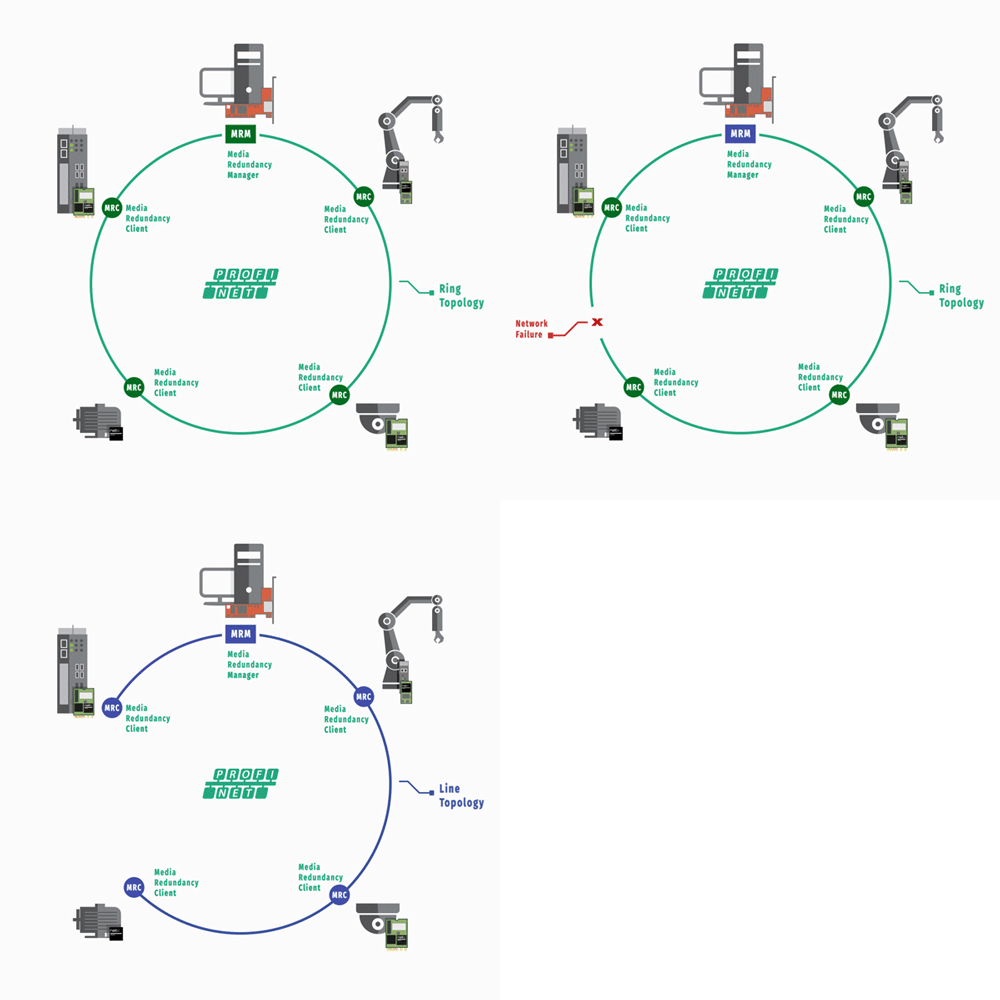
Converting a linear topology to a ring topology [Figure = Hillscher]
To maintain proper operation, MRP utilizes a Media Redundancy Manager (MRM), which constantly monitors the ring topology. If a network error is registered, it is designed to provide network relocation information to Media Redundancy Clients (MRCs) in a linear topology. All Hilscher PROFINET IO device controllers can act as MRMs in PROFINET IO networks. Furthermore, all PROFINET IO devices include MRC functionality.
When the MRM issues test frames at regular intervals to assess the integrity of the ring network, the MRC forwards the test frames back to the MRM along the ring. If the MRM fails to return the test frames, it interprets this as a network error, notifies all MRCs of the network error, and transmits control data to transition to a linear topology. Furthermore, the MRC detects link state changes using one of its ports and relays these to the MRM, reducing the time it takes for the MRM to detect errors and repairs.
Comments
Related news

NXP Unveils Processor Supporting CC-Link IE TSN Protocol
NXP announced a TSN solution for industrial automation supporting the CC-Link IE TSN protocol in collaboration with PORT. NXP implemented the CC-Link IE TSN Layer-2 stack on the LS1028A industrial application processor and i.MX RT1170 crossover MCU, while PORT provides the CC-Link IE TSN master station stack, remote station stack, and ICC tool for remote stack configuration to enable integration of the CC-Link IE TSN protocol into both chips.
2021.02.26by 이수민 기자
.jpg)
Hilscher cifX M.2 PC Card, Supporting PROFIBUS-DP Protocol
The PROFIBUS-DP protocol based on fieldbus continues to hold significant importance in the factory automation sector. Despite the advances of real-time Ethernet-based protocols, as many as 1.9 million new nodes were installed in 2019 alone. In response, Hilscher has updated its cifX PC card to support the PROFIBUS-DP slave protocol.
2021.03.11by 이수민 기자
Keysight Unveils LTE/5G Network Traffic Monitoring Capabilities
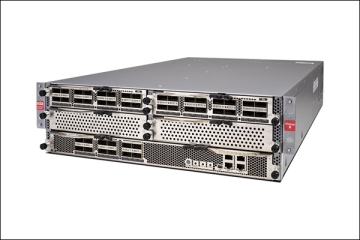
Keysight announced MobileStack, a new capability exclusively for its Keysight Vision X network packet broker platform. The MobileStack feature provides scalable subscriber-aware visibility into LTE and 5G core networks, enabling cost reduction while improving service monitoring quality.
2021.03.31by 이수민 기자
European Patent Applications Surpass 200,000 for the First Time… South Korea Maintains 5th Place, Led by Batteries and Telecommunications
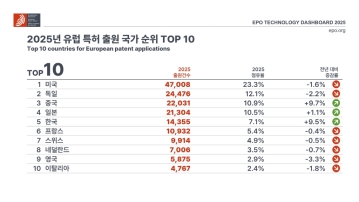
According to the European Patent Office (EPO)'s 'Technology Dashboard 2025', European patent applications last year reached 201,974, surpassing 200,000 for the first time. Korean companies and inventors filed 14,355 applications, representing a 9.5% increase from the previous year and maintaining 5th place by country. Battery, digital communication, and semiconductor technologies led the growth, with Samsung ranking as the top EPO applicant for the second consecutive year and LG reaching 3rd place. The presence of major domestic cities such as Seoul, Suwon, and Yongin was also confirmed. It was also revealed that Korea's European patent strategy is expanding beyond individual technologies to span the entire industry.
2026.03.24by 명세환 기자

SK Telecom First Applies AI-Based Network Operations at Gwanghwamun K-Pop Concert
SK Telecom announced that it applied an AI-based network operation system for the first time at a large-scale K-pop concert held in the Gwanghwamun area of Seoul on March 21st, managing communication quality throughout the event. Mobile data usage during the three hours before and after the concert reached 12.15TB, approximately doubling compared to the same time slot the previous weekend. SK Telecom monitored traffic using the AI system 'A-One' in five-minute and 50-meter units to respond to potential overload situations, while also operating temporary communication facilities and on-site personnel in parallel. This case is interpreted as confirmation of the practical applicability of AI-based autonomous network operation in an environment where demand from dense events and foreign users increases simultaneously.
2026.03.23by 명세환 기자











