


Three Stratasys 3D printers supporting "Additive Manufacturing 2.0"
 Published2021.04.28 09:51
Achieving Additive Manufacturing 2.0 with P3, SAF, and FDM Technologies
A separate event for domestic customers will be held on May 18th.
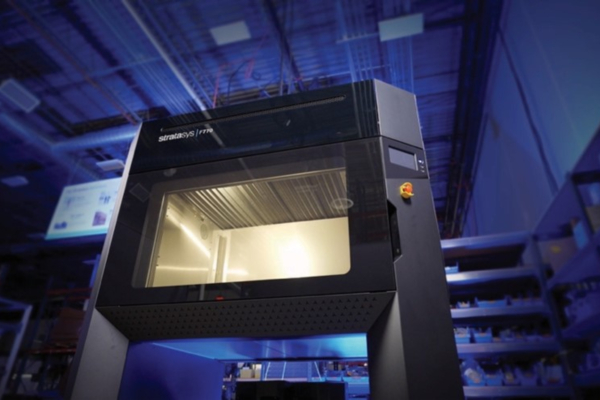
Stratasys announced on the 28th three new 3D printers that will significantly address the needs of the multi-billion dollar additive manufacturing technology-based end-use parts market: the Origin® One, the H350™ 3D Printer, and the F770 FDM® 3D Printer. These three new 3D printers are expected to contribute to the transition to additive manufacturing for the production of low- to medium-volume end-use parts that were previously difficult to fully handle with conventional manufacturing technologies.
“Additive manufacturing gives companies complete flexibility over when, where, and how they produce their parts,” said Yoav Zeif, CEO of Stratasys. “Stratasys is committed to providing our customers with polymer 3D printing solutions that meet their every need.” Last year, Stratasys achieved more than 25% of its total revenue from manufacturing-related applications. From 2022 onwards, manufacturing sales growth is expected to outpace other sectors, with an annual growth rate of 20%.
◇ Origin One, a 3D printer for producing small parts
The Origin One is Stratasys' first product since acquiring 3D printing startup Origin, and is designed for end-use part manufacturing applications.
Leveraging its proprietary "P3™" technology and software-first architecture, Origin One supports a wide range of third-party certified materials. It also delivers high accuracy, detail, finish, repeatability, and rapid production times, enabling mass production of finished parts. Customers can also benefit from cloud connectivity for additional functional enhancements.
Stratasys predicts that the production-oriented industries well-suited for Origin One, including automotive, consumer goods, medical, dental, and tooling applications, will grow to $3.7 billion by 2025. Orders for the Origin One 3D printer, post-processing equipment, and related software will begin in May through Stratasys channels worldwide.
◇ The 'H350' 3D printer maximizes production capacity.
The H350 printer, the first in the H Series™ Production Platform, delivers production-level throughput for end-use parts based on Selective Absorption Fusion (SAF) technology. It delivers production consistency, competitive and predictable cost per part, and complete control even in production runs of thousands of parts. In particular, it contains approximately 12 parts 3D printed using SAF technology.
Stratasys has been beta testing the H350 3D printer since early this year with several manufacturers, including Stratasys Direct Manufacturing, prototyping centers in Europe, Israel, and the US. Commercial availability is expected in the third quarter. Applications include end-use components such as covers, connectors, hinges, cable holders, electronic housings, and ducting.
◇ 'F770 FDM' 3D printer for manufacturing large parts
The F770 3D printer is built on Stratasys' industrial-grade Fused Deposition Modeling (FDM) technology. Ideal for producing large parts, it features the longest heated build chamber on the market and a generous 13 cubic feet of build capacity.
Lower priced than existing large-part 3D printers, the F770 is ideal for prototyping, jigs and fixtures, and tooling applications requiring thermoplastics. Its use of soluble support materials simplifies post-processing, and its workflow is streamlined with GrabCAD Print software. MTConnect Standard and the GrabCAD Software Development Kit enhance enterprise connectivity.
Meanwhile, Stratasys will host an online virtual launch event on April 28th at 10 a.m. EST (11 p.m. KST) to introduce three new 3D printers.
Additionally, Stratasys Korea will host a separate virtual launch event for domestic customers online at 10:00 AM on May 18, introducing the technology behind three new printers and announcing its domestic market strategy and vision. Related information can be found on the website .
Comments
Related news
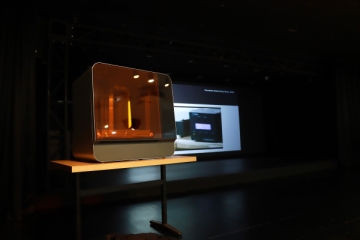
A road show opens to experience the industrial 3D printer "Form 3L."
EL Corporation will exclusively conduct the "2020 Formlabs Roadshow" from October 26th to November 13th over three weeks, Monday through Friday, offering one-on-one or small group sessions by time slot through advance reservation. Participants will be able to directly experience the latest 3D printer "Form 3L" from 3D printer company Formlabs.
2020.10.22by 강정규 기자
3D printers are ideal for manufacturing customized products.
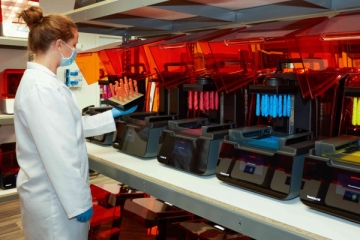
Formlabs has unveiled the 'Formlabs Factory Solution' for manufacturing enterprises that enables flexible adjustment of production volumes. The solution integrates three components: customized factory packages, customized material development, and Formlabs consulting. It supports customers in adjusting production scale, securing new materials, and controlling their supply chains.
2021.01.20by 이수민 기자
Metal 3D printing technology for rapid manufacturing of large parts has been developed.
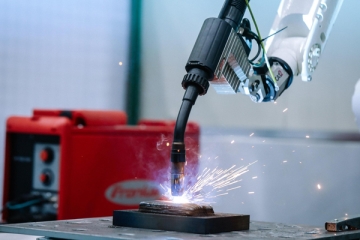
Metal 3D printers can precisely custom-manufacture any mold with complex shapes, thereby reducing costs from product development to mass production. They are particularly effective for high-value-added parts such as large-scale transport equipment components like ships and aircraft, where small-batch, high-mix production is required. To address this, KITECH has developed metal 3D printing technology that enables faster and more cost-effective manufacturing of large-scale components and die-casting molds.
2021.04.16by 이수민 기자
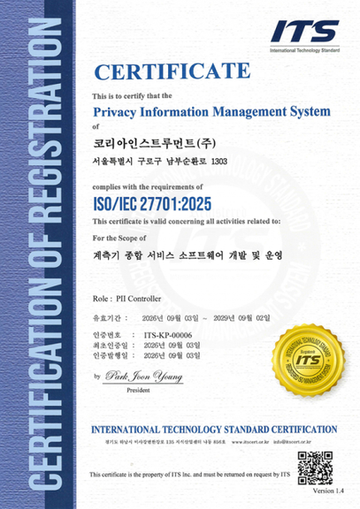
Korea Instrument, KOLAS Accredited Calibration Agency First to Simultaneously Acquire ISO/IEC 27,001·27,701
Korea Instrument has become the first among KOLAS accredited calibration agencies to simultaneously acquire ISO/IEC 27,001 and ISO/IEC 27,701 certifications. Through its proprietary platforms CWIZ Enterprise and CWIZ Partners, the company has embedded information security and personal data protection requirements across all business processes including customer information, equipment data, and calibration reports, with plans to continuously advance its management system through regular audits and security inspections.
2026.10.12by 배종인 기자
TeamViewer One, IT Incident Automation Workflow and Resolution Center Enhanced
TeamViewer has added IT incident automation capabilities and an advanced Resolution Center to its integrated digital workplace management platform 'TeamViewer ONE'. Recurrent service disruptions, configuration errors, and capacity shortages are automatically handled according to preset policies, and device status verification through script deployment can be managed in a unified interface, significantly reducing repetitive tasks for IT teams.
2026.10.12by 배종인 기자











