


Saenggiwon and Konkuk University reduce hydrogen production catalyst production costs by 50%.
 Published2021.05.07 09:41
Production costs are expected to be reduced by 50% compared to existing chemical processes.
Amidst the growing demand for hydrogen across industries, particularly in semiconductor microfabrication, a technology for manufacturing low-cost, high-efficiency hydrogen-generating catalysts has been developed by domestic researchers.
On the 6th, the Korea Institute of Industrial Technology (KITECH) and Konkuk University developed a fundamental technology for manufacturing a hydrogen-generating catalyst using an eco-friendly physical process utilizing a pulsed laser. This method creates the catalyst by directing a pulsed laser onto the surface of carbon nanotubes to add a heterogeneous element other than carbon in a single-atom form, without the need for environmentally harmful chemical processes.
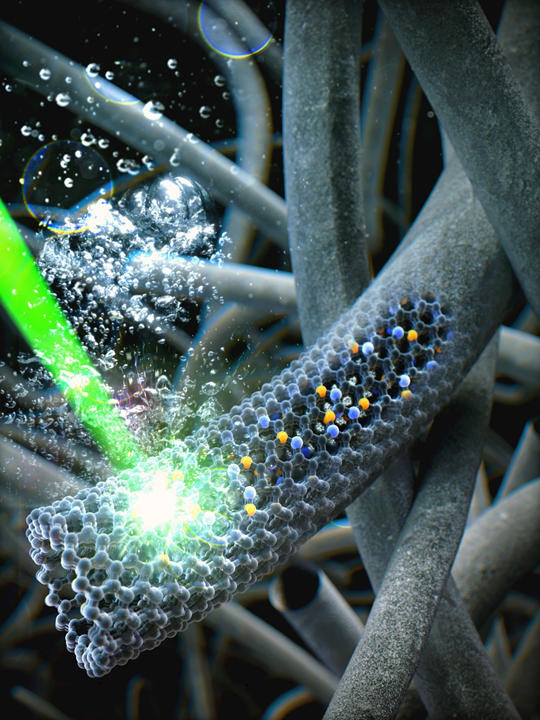
Manufacturing a hydrogen-generating catalyst [Graphic = Saenggiwon]
Hydrogen-generating catalysts are crucial to the efficiency and cost of hydrogen production in water electrolysis systems, which produce hydrogen through electrolysis. Current water electrolysis systems rely on precious metal catalysts like platinum (Pt) and ruthenium (Ru), leading to high costs and challenges in commercialization.
As an alternative, a new technology that improves water electrolysis properties by adding heterogeneous elements such as cobalt (Co), nickel (Ni), and iron (Fe), which have excellent hydrogen-generating catalytic properties, in the form of single atoms to carbon materials with excellent electrical conductivity is attracting attention recently. However, in order to manufacture a catalyst with a single atom added, secondary heat treatment and chemical processes are inevitably involved, which takes a long time to process and there are many difficulties in manufacturing a high-concentration catalyst.
A joint research team led by Dr. Kangmin Kim of the Functional Materials and Components Research Group at the Korea Institute of Energy Research and Professor Hyuksoo Han of the Department of Future Energy Engineering at Konkuk University has developed the mechanism for producing graphene quantum dots from carbon nanotubes using pulsed lasers, which they discovered last September, and applied it to the manufacture of hydrogen-generating catalysts. The pulsed laser process is a physical process that requires no chemical additives, making it an environmentally friendly way to produce nanomaterials. Its fast reaction speed also contributes to shortened process times.
The research team succeeded in producing a high-concentration Co, phosphorus (P) single-atom catalyst by utilizing the phenomenon in which single atoms evenly penetrate the entire surface of a carbon nanotube during the instantaneous formation and disappearance of high temperature and high pressure when a pulse laser is irradiated on the carbon nanotube.
Actual experimental results demonstrated that the developed catalyst achieved a doping density approximately 5.5 times higher than that of single-atom catalysts manufactured through chemical processes, and its hydrogen production efficiency improved by approximately 7% compared to precious metal catalysts. If commercialized, the process time is expected to be shortened by approximately 80% compared to existing chemical processes, and catalyst production costs are expected to be reduced by more than 50%.
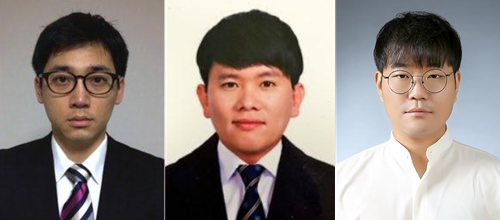
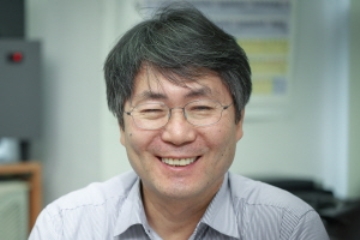
Professor Han Hyuk-soo of Konkuk University and Postdoctoral Researcher Kang Seok-hyeon of the Korea Institute of Surgery [Photo = Korea Institute of Surgery]
Meanwhile, the results of this study were published in the online version of 'ACS Nano', an international journal in the field of nanomaterials, in March. Additionally, this research will be conducted for two years from September 2020 to February 2022 with support from the National Research Foundation of Korea's Individual Basic Research Project for Mid-career Researchers.
Comments
Related news
Hydrogen for Semiconductors, a Key Material for Advanced EUV Technology, is Rising
Air Liquide has recently completed the first phase of construction of a 25MW water electrolysis hydrogen plant between Tainan and Hsinchu Science Park in Taiwan. The hydrogen is expected to be used exclusively for semiconductors, including by TSMC, and hydrogen consumption for semiconductors is projected to increase as advanced EUV processes become more prevalent.
2021.04.07by 배종인 기자
Wonik Materials: "Record-Best Performance in 2021 and 2022"
Onewick Materials is expected to achieve record-high performance in 2021 and 2022 due to increased material input quantities related to capacity expansion in response to growing difficulty levels in semiconductor memory processes.
2021.04.19by 배종인 기자
Palladium, More Expensive Than Gold, Opens Way to Recycling
A new synthesis technique has been developed that enables recycling of expensive catalyst materials such as palladium, which is more costly than gold. The technology is receiving attention as a method to reduce process costs through multiple uses of high-value materials and to decrease the consumption of limited precious metal mineral resources.
2021.04.23by 배종인 기자
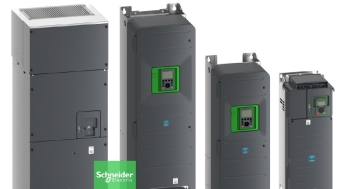
Schneider Aims for Building Energy Savings and Operational Stability with Next-Generation HVAC Drives
Schneider Electric has unveiled its next-generation HVAC drive product line 'Altivar HVAC'. The new product line's key features center on enhanced energy savings, system operational stability, and building management system integration. The products are divided into 'ATH200' for OEM and small equipment applications, and 'ATH600' for environments requiring continuous operation and advanced control. The company plans to expand the application scope from commercial buildings to facilities where HVAC system stability is critical, such as hospitals, airports, and data centers. The announcement includes over 30% energy savings, operation from -10°C to +60°C, Modbus and BACnet support, and compatibility with low global warming potential refrigerants.
2026.03.26by 명세환 기자
Ecolab Expands AI Data Center Cooling Business Through Acquisition of CoolIT
Ecolab has agreed to acquire CoolIT Systems, a liquid cooling company for AI data centers, for approximately $4.75 billion. The transaction is expected to close by Q3 2026, subject to regulatory approvals. CoolIT has been supplying direct-to-chip cooling-based coolant distribution units, cold plates, and manifolds, serving hyperscale data centers and colocation operators as customers. This acquisition is a measure to address the high-heat and high-density server environments created by AI proliferation. Ecolab plans to combine its water management and digital monitoring capabilities with CoolIT's hardware technology to expand its data center cooling business.
2026.03.26by 명세환 기자











