



The domestic earwear market is steadily growing, riding the ANC trend.
 Published2021.05.12 09:55
Earwear accounts for over 70% of the market, higher than wrist-worn devices.
Hyper-personalized services are expected to collaborate with healthcare and fashion industries.
On the 10th, Korea IDC announced that the domestic wearable market is expected to record a compound annual growth rate (CARG) of 3.5% over the next five years, reaching a total of 15.15 million units in 2025.
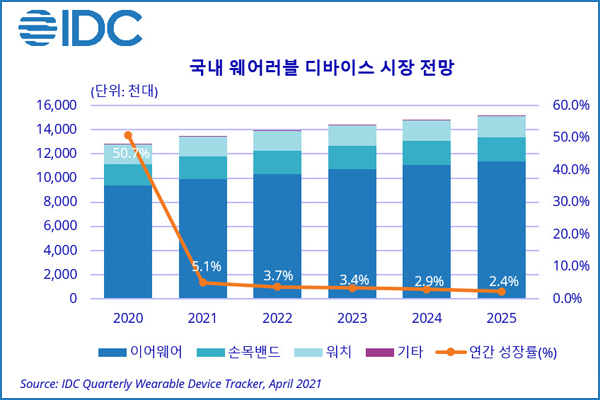
Despite the COVID-19 pandemic, the domestic wearables market grew 1.5 times year-on-year, fueled by the spread of online contact culture. Driven by heightened interest in healthcare and growing consumer demand for audio and video content, the market is expected to maintain robust growth throughout the forecast period.
By product, earwear is expected to show robust growth, with a CAGR of 3.9% over the next five years, surpassing watches and bands. Its share of the overall wearables market is projected to steadily increase from 73.6% in 2020 to 75.0% in 2025.
Earwear is expected to go beyond simply delivering digital content, including audio and video, to offer innovative features like health coaching and smart assistants, offering new experiences across users' lives. In particular, active noise cancellation, a key feature for calls and content consumption, is expected to be a key growth driver.
Wrist-worn products, including watches and bands, are expected to maintain a 25% share of the overall wearables market and continue to grow. The improved readability of information on the display and the convenience of multitasking while freeing up one's hands are expected to be its strengths.
Wristbands, with their low prices, are expected to grow at a slightly higher average annual rate of 2.6%, compared to watches, which are projected to grow at a rate of 2.1%. Watches are expected to continue their growth through various use cases, including smartwatches, hybrid watches, and monitoring watches.
Kim Hye-rim, a senior researcher at IDC Korea, said, “We need to pay attention to the evolution of services and content that complement wearable devices,” and added, “Recently, the combination of home training subscription services, including Apple Fitness Plus, and wearable devices is enhancing customer experience by providing customized content through user data collection.”
Additionally, he stated, “In the future, wearables will provide hyper-personalized services by combining accumulated data with real-time user biometric information,” and “The wearable market will continue to expand based on improved customer loyalty and collaboration with related industries such as healthcare and fashion.”
Comments
Related news
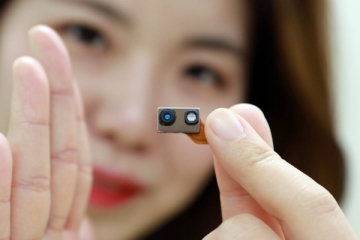
LG Innotek Develops ToF Module Dedicated to MS Azure Cloud
LG Innotek announced that it has signed an MOU with Microsoft for joint development and supply cooperation of a ToF module dedicated to Azure Cloud. The ToF module to be developed through the cooperation of both companies is intended to be mounted on wearable devices and serve as a data input device that interworks with Azure Cloud, with mass production targeted for the second half of this year.
2021.03.09by 이수민 기자

ST provides services that implement virtual ticket/card payment systems.
ST Microelectronics has launched the STPay Mobile platform to enable easy implementation of security-sensitive public transportation ticketing and payment card virtualization on smartphones and wearable devices. The platform supports mobile device manufacturers in leveraging ST's ST54 secure SoC functionality to process contactless transactions and protect critical information such as data and authentication credentials.
2021.03.18by 명세환 기자
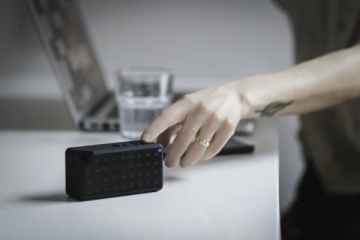
Bluetooth devices, '4 billion units shipped in 2020 → 6.4 billion units in 2025'
With the spread of remote work and telemedicine, the completion of LE Audio specifications, and the activation of connected lighting, the Bluetooth peripheral device market—including earbuds, wearables, sensors, and smart lighting—is experiencing rapid growth. The Bluetooth SIG forecasts that annual Bluetooth device shipments in 2025 will reach 6.4 billion units, a 60% increase from 4 billion units in 2020.
2021.04.15by 이수민 기자

ESP32 Development Environment Selection and GPS Application Implementation
The ESP32 is a microcontroller that integrates Wi-Fi, Bluetooth, 12-bit ADC, capacitive touch, PWM, DAC, and UART in a single SoC. However, the abundance of features does not by itself solve the designer's problems. The real challenges lie in selecting the appropriate development environment, determining which pins can be used and which must be avoided, and converting raw data from modules into usable information. This document addresses ESP32 peripheral constraints (ADC2 and Wi-Fi coexistence limitation, UART1 occupancy, ADC non-linear regions), the trade-offs between Arduino IDE and ESP-IDF, and the process from connecting NEO-6M/NEO-M8N GPS modules to UART2, parsing NMEA sentences, and visualizing routes in Google Earth, all organized based on documented references.
2026.10.12by 편집부

MIPI CSI-2, DSI-2, C-PHY, D-PHY Test Solution Technical White Paper
The MIPI interface adopts a burst mode that transitions between low-power (LP) and high-speed (HS) states for low-power consumption, and in return, strict timing rules are imposed on state transitions. Additionally, the high-speed section operates as a packet-based protocol with headers, ECC, and CRC, so verification engineers must handle waveforms and protocols simultaneously. Traditional configurations combining general-purpose oscilloscopes and AWGs reveal limitations in setup complexity, measurement uncertainty, and lack of reproducibility when faced with these requirements. This white paper, based on webinar materials, organizes the structure of this problem and describes how the SV5C-DPTXCPTX generator for receiver testing and SV5C-DPRXCPRX analyzer for transmitter testing integrate state transition testing, stressed eye testing, and protocol analysis into a single bench, along with their application boundaries.
2026.10.12by 편집부











