



"Securing mass production technology to popularize titanium" Interview with MTI's Vice President Lee Hyeong-min
 Published2021.06.01 13:47
MTI Develops Its Own Mass Production Process for Titanium
Vice President Lee Hyung-min takes on the challenge of titanium spherical powder.
Advances in materials technology have a profound impact on creating better products than before. They not only enable performance previously unattainable due to volume and weight limitations, but also create new industrial sectors. However, the problem is that new materials, being unused in the past, are often difficult to use and difficult to recycle.
For example, 'Titanium', which we commonly call titanium, is a key material in the aerospace industry, as it is used as parts for aircraft and spacecraft due to its high strength.
Its excellent corrosion resistance makes it widely used in marine structures and ships. Furthermore, its low metal allergy risk and non-toxicity make it suitable for use in implants and other medical applications. Contrary to popular belief, its light weight also makes it suitable for accessories.
Titanium, despite its proven utility in such diverse fields, is still in limited supply. Its strength and corrosion resistance, coupled with its inherent difficulty in processing, are significant drawbacks. Furthermore, much of the titanium is discarded as waste during processing to obtain pure titanium.
While titanium isn't a rare resource, tantalum is even more expensive because reserves are so limited that demand can't keep up. A civil war even broke out in Congo over this resource. Tantalum, which has superior performance compared to ceramic as a capacitor material, is a very important key to the development of the electronics industry as it can reduce the weight and volume of products.
.jpg)
To make the most of highly available resources, we need to be able to manufacture products at low prices and utilize technologies to recycle byproducts and waste generated during product manufacturing and use. Founded in 2006, MTIG is a competitive company in materials, particularly titanium. We met with MTIG's Vice President, Lee Hyung-min, to discuss the progress of their titanium and tantalum businesses, as well as their future goals and aspirations.
Q. Nice to meet you. Could you please introduce yourself to MTI?
A. MTIG is a technology company founded with the goal of popularizing titanium, often called the dream new material. Titanium is the fourth most abundant resource on Earth, but its processing is difficult, limiting its utility. MTIG has developed a technology for mass-producing titanium using a powder injection molding process. We have a full-cycle process from powder production to final product and component production, and in 2008, we received the New Excellent Technology (NET) certification mark for this process from the Ministry of Trade, Industry and Energy (then the Ministry of Knowledge Economy).
Building on this foundation, MTIG currently supplies medical titanium components to dental implant companies. As its name (Material Technical Innovation Group; MTIG) suggests, through continuous technological innovation, we have developed a diverse range of titanium products, including anodizing jigs for electronic device exteriors, interior and exterior materials for electronic devices, titanium hammers, cosmetics applicators, and fashion accessories. We are continuously developing additional products.
Q. I recently heard that the MTIG Hwaseong plant has completed facility renovations. I'm curious about what new equipment has been added.
A. First, we introduced three pieces of automated process equipment to improve the work environment and a large mixer for hydrogenation heat treatment to produce high-quality products.
The first piece of equipment introduced to improve the work environment was an automatic gate cutter. Similar to conventional plastic injection molding, the powder injection molding process retains a gate for feeding the feedstock for injection. Removing this gate is crucial for the final product to retain its value. Previously, the entire gate had to be manually removed, resulting in quality variations. However, the introduction of the automatic gate cutter has enabled consistent quality.
The second piece of equipment introduced is an automatic product alignment machine. The powder injection molding process largely involves the "injection-debinding-sintering" process. The debinding and sintering processes utilize high-temperature heat treatment. During this process, if each product touches another, metal atoms can diffuse, potentially causing product-to-product bonding. To prevent this, the products must be aligned to prevent bonding. Previously, manual alignment was required, but the introduction of an automatic product alignment machine has reduced the time by approximately 30%.
The third piece of equipment is an automatic sorter. This sorter screens out titanium products and components that fall outside the design tolerance range. Currently, MTI's primary production of titanium components for implant packaging is automated throughout the entire implant packaging process. If any product falls outside the design tolerance range during this automated process, the entire packaging line halts. To mitigate this risk, we have developed an automatic sorter, lowering the defect rate and ensuring the supply of high-quality products.
To produce high-quality titanium powder for high-quality titanium products, high-quality raw materials are essential. To achieve this, we introduced a continuous hydrogen heat treatment system that takes titanium's high oxygen affinity into account, creating the conditions for producing high-quality titanium powder with low oxygen concentrations.
Mass production of titanium products and components requires the production of large quantities of feedstock for the powder injection molding process. Metal powders cannot be used in this process. Therefore, a process is needed to impart fluidity by mixing the feedstock with a polymer binder or organic material. To achieve this, we introduced a large mixer for hydrogenation heat treatment and are increasing the daily feedstock production capacity, thereby boosting the production of titanium products and components.
Q. A new plasma device has recently been added to MTIG. I'd like to hear how you plan to use it.
A. A plasma device generates high-temperature plasma. As powder passes through the plasma, it undergoes a "melting-resolidification" process, transforming angular powder into spherical powder. Recently, additive manufacturing technology utilizing 3D printing has been attracting attention, and many institutions are conducting R&D to integrate titanium into 3D printing technology.
Currently, titanium spherical powder for 3D printing is supplied by several companies with 3D printing equipment, but it is manufactured using a gas atomizer method, making it very expensive. MTI, on the other hand, can mass-produce this powder inexpensively using its own powder manufacturing process, but it is only available in square shapes, making it unsuitable for 3D printing. Therefore, we decided to introduce a plasma spheroidizing device that would convert square powder into spherical powder at a low cost, allowing us to produce high-quality titanium spherical powder.
Q. Please explain this year's key products and business direction.
A. Currently, MTI's main production item is titanium packaging parts for dental implants. As the aging society arrives, demand for dental implants is increasing, and the supply is also increasing, and the number of orders for implant packaging parts is also increasing.
This year, our goal is to popularize titanium by expanding the base for medical materials such as surgical tools, where titanium is widely used, as well as developing and supplying products in the fields of electronic device interior and exterior materials, consumer goods, mechanical parts such as hammers and gears, jewelry, fashion accessories, and accessories such as eyeglass frame parts, which we are continuously researching.
Q. I understand that MTIG possesses technology to recycle titanium and tantalum scrap. Could you please explain this technology? Also, please explain any future plans for the titanium and tantalum recycling business.
A. In 2016, with support from the Korea Energy Technology Evaluation and Planning Institute, MTIG, together with the Korea Institute for Advanced Engineering, Korea Institute of Industrial Technology, Pohang Institute of Industrial Science and Technology, Korea PGM, Seoul National University of Science and Technology, and NATM, developed a technology to recycle tantalum scrap, which is not recycled domestically but entirely exported overseas, and turn it into high-value-added materials. Tantalum, like titanium, is a metal with hydrogen storage capabilities and can be pulverized when hydrogen is stored. MTIG can utilize these characteristics to convert tantalum scrap into high-quality tantalum powder through a “pretreatment-hydrogenation-pulverization-dehydrogenation” process.
Approximately 25% of titanium scrap is generated during the manufacture of titanium sponges and products, and this scrap contains a large amount of oxygen and impurities, making it particularly difficult to use. Since 2020, MTI has been developing technologies for a pretreatment process to remove impurities from titanium scrap, a deoxidation process to remove oxygen, and recycling the oxygen-free titanium material. Currently, under the supervision of the Korea Evaluation Institute of Industrial Technology, a project to develop a technology to deoxidize and refine more than 100 kg of off-grade titanium scrap per day to produce 4N5-grade ingots and powder is underway in collaboration with the Korea Institute for Advanced Technology, Korea Institute of Industrial Technology, Korea Institute of Geoscience and Mineral Resources, Kyungpook National University, Soonchunhyang University, Hanbat National University, and Intops.
Titanium and tantalum are highly value-added materials. MTIG goes beyond recycling titanium and tantalum. We strive to maximize their added value by developing products and components utilizing recycled materials.
Q. What are your future plans and ambitions to become a global titanium company?
A. MTIG, possessing the core technology for titanium and tantalum materials, is a company with significant future growth potential. Beyond manufacturing and supplying related components, our goal is to lead the trend by enabling component manufacturers interested in utilizing titanium to use our titanium materials. MTIG will continue to diversify its product offerings and ensure reliability, ensuring the day when our products will be widely available worldwide.
Comments 2
2 Comments:
Related news
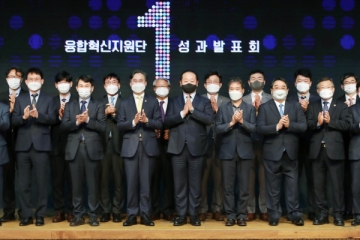
Small Business Fusion Innovation Support Group, Support for 23,000 Cases from 5,000 Companies in One Year
The Materials, Components and Equipment Convergence Innovation Support Division (hereinafter referred to as the Convergence Innovation Support Division) achieved sales performance of 818.1 billion won in direct and indirect revenue and resolved 3,100 technical challenges through providing approximately 23,000 technical support instances to approximately 5,000 companies over the past year.
2021.05.07by 배종인 기자
.jpg)
Securing deoxidation technology for waste titanium, securing resources and increasing value added, 'killing two birds with one stone'
A technology is currently under development to enable recycling of off-grade titanium (Ti) scrap, which was previously non-recyclable, through a hydrogen absorption-desorption (HDH) process. Upon project completion, it is expected that waste titanium will be upgraded to higher quality and higher added value, while also achieving material self-sufficiency in titanium.
2021.05.14by 배종인 기자

Inorganic-based semiconductors to rise "also cheaper"
Adhesive health monitoring devices and foldable and rollable displays require flexible semiconductors. Most flexible semiconductors are organic-based, but a research team at UNIST's School of Advanced Materials Engineering has developed an inorganic-based flexible semiconductor. Since it can withstand high-temperature, high-pressure processes and exhibits good durability, it is expected to be applicable to the development of various flexible devices.
2021.05.17by 이수민 기자
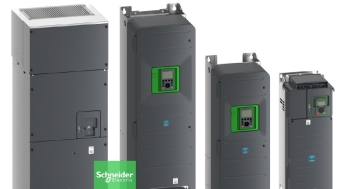
Schneider Aims for Building Energy Savings and Operational Stability with Next-Generation HVAC Drives
Schneider Electric has unveiled its next-generation HVAC drive product line 'Altivar HVAC'. The new product line's key features center on enhanced energy savings, system operational stability, and building management system integration. The products are divided into 'ATH200' for OEM and small equipment applications, and 'ATH600' for environments requiring continuous operation and advanced control. The company plans to expand the application scope from commercial buildings to facilities where HVAC system stability is critical, such as hospitals, airports, and data centers. The announcement includes over 30% energy savings, operation from -10°C to +60°C, Modbus and BACnet support, and compatibility with low global warming potential refrigerants.
2026.03.26by 명세환 기자
Ecolab Expands AI Data Center Cooling Business Through Acquisition of CoolIT
Ecolab has agreed to acquire CoolIT Systems, a liquid cooling company for AI data centers, for approximately $4.75 billion. The transaction is expected to close by Q3 2026, subject to regulatory approvals. CoolIT has been supplying direct-to-chip cooling-based coolant distribution units, cold plates, and manifolds, serving hyperscale data centers and colocation operators as customers. This acquisition is a measure to address the high-heat and high-density server environments created by AI proliferation. Ecolab plans to combine its water management and digital monitoring capabilities with CoolIT's hardware technology to expand its data center cooling business.
2026.03.26by 명세환 기자












앞으로도 엠티아이지의 무궁무진한 발전을 기원합니다.
어려운 분야에서 지속적인 연구개발 및 노력을 통해 원자재 종속성 보유를 위한 노력을 많이 하고 있으신것으로 보입니다.