


Why Huawei, Having Missed the Contactless Sector Boom, Released 'Harmony OS 2' for Free
 Published2021.06.21 16:24
Basic code donated to Open Atomic Energy Foundation due to low participation
Apple's Ecosystem Remains Solid Despite Downturn in Chinese Smartphone Market
U.S. sanctions against China continue under the pretext of security. In May 2019, the U.S. placed Huawei and 68 of its overseas affiliates on the export control list, raising suspicions that backdoors were embedded in Huawei's telecommunications equipment to transmit national and corporate secrets to the Chinese government.
In May 2020, it was mandated that any company using even a portion of U.S. semiconductor-related technology must obtain U.S. government approval to supply specific products to Huawei. The Biden administration, succeeding the Trump administration, is also not letting up the pressure, having announced an executive order on June 3 placing 59 entities, including Huawei, on a watchlist and banning investment by U.S. citizens.
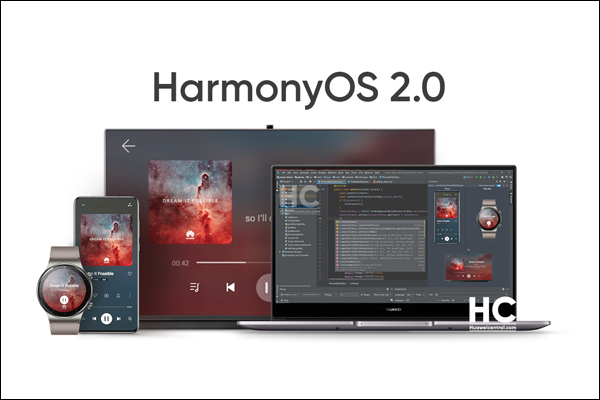
Huawei, which was unable to install Google's 'Android OS' on its smartphones, announced its plan to expand its ecosystem by unveiling its integrated IoT platform, 'Harmony OS 2,' on the 2nd. Hongmeng OS 2 is designed to be used on a variety of devices, including not only smartphones but also tablets, smart TVs, laptops, smartwatches, cars, and home appliances.
Users can control multiple devices as if they were a single device through the Control Panel, Task Center, and Home Screen of Harmony OS 2. A key feature is that videos can be played directly from a smartphone to a TV simply by opening the Control Panel and dragging the Smart Screen icon, while the Task Center allows access to all functions and services from different devices without the need to install applications on each individual device. In particular, the Home Screen supports convenient features, such as the ability to easily share information via widgets.
In addition, the privacy and security technologies previously used by Huawei in the Android 10 open-source-based 'EMUI' have been applied directly to Harmony OS 2. For example, when multi-device collaborative authentication is enabled, users can unlock their smartphone only through authentication via facial recognition or a smartwatch connected to the device.
In the future, there are plans to expand Hongmeng OS 2 to more devices by collaborating with companies such as Chinese home appliance manufacturer Midea, drone manufacturer DJI Technology, Swiss watch brand Tissot, and Swatch.
◇ Launches source code release as 'Hongmeng' ecosystem participation appears sluggish
On the 7th, five days after announcing Harmony OS 2, Huawei donated the base code to the Open Atom Foundation under China's Ministry of Industry and Information Technology so that more Chinese institutions and companies could use Harmony OS 2. The Open Atomic Energy Foundation operates a type of open source ecosystem in which various foundational platforms and other companies can participate, and anyone can access platforms registered with the foundation to develop apps and the like.
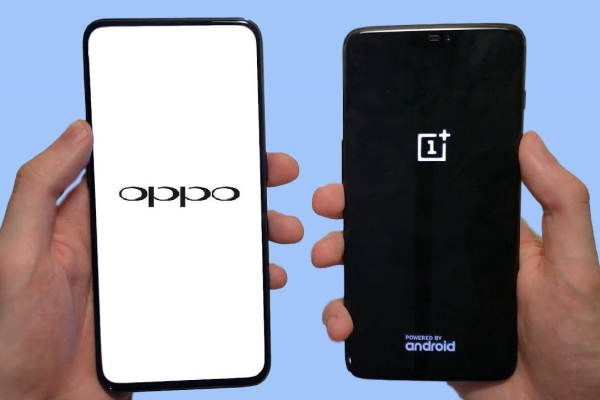
Chinese manufacturers are also now scrambling to build ecosystems. [Photo by OnePlus]
Huawei’s policy is interpreted as a move to abandon its technological monopoly and expand its ecosystem through nationalization, following the announcement by Chinese competitors such as Xiaomi, Oppo, and Vivo that they would not participate in building the Hongmeng ecosystem and would continue using the Android OS.
Hongmeng OS 2 is listed on the Open Atomic Energy Foundation website under the name 'Open Harmony,' and banks and universities in China have already begun utilizing it. Bank of China, Guangfa Bank, and CITIC Bank have launched payment apps running on Hongmeng OS 2, and Wuhan University became the first university in China to establish a Hongmeng OS 2 training course. Given the strong government control in China, the number of companies joining the Hongmeng OS ecosystem is expected to eventually increase from a long-term perspective.
◇ Apple benchmarking as smartphone market contraction becomes visible
Due to U.S. sanctions, Huawei was unable to launch normal products and consequently missed out on the contactless boom. According to the China Academy of Information and Communications Technology (CAICT), smartphone shipments in China in May totaled 22.6 million units, down 16% from the previous month and 31% from the same month last year. Of these, shipments of 5G smartphones totaled 16.7 million units, down 22% from the previous month.
Nam Dae-jong, an analyst at eBest Investment & Securities, analyzed, “The fact that 5G smartphone shipments decreased more significantly than those of LTE or lower-end models is due to the impact of component shortages and a decline in demand for flagship smartphones within China.”
On the other hand, Apple soared. Smartphone shipments from non-Chinese manufacturers, where the iPhone accounts for the majority, reached 3.72 million units, a 36% increase from the previous month, leading to a significant rise in market share. Even though sales of the 'iPhone 12' series have entered their eighth month, sales volume remains solid, and market share appears to be expanding. It also increased by 33% compared to the same month last year. Kim Rok-ho, an analyst at Hana Financial Investment, interpreted this as "favorable data considering that the 'iPhone SE 2' was released last year," adding that "Apple has clearly filled a portion of the void left by Huawei."
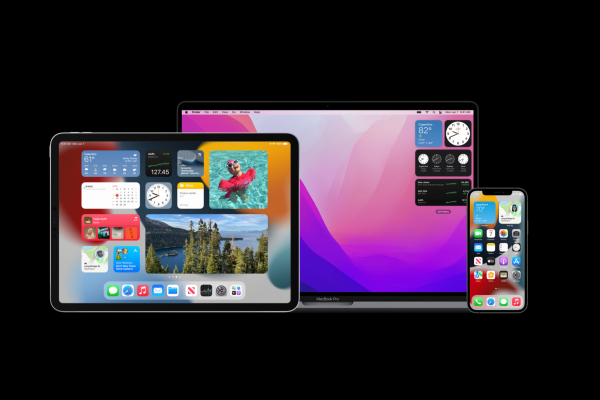
Apple has released new, enhanced operating systems. [Photo = Apple]
On the 7th (local time), Apple announced 'iOS 15' for iPhone, 'iPad OS 15' for iPad, 'Mac OS Monterey' for Mac, and 'Watch OS 8' for Apple Watch at its annual developer forum, 'WWDC 2021'. New operating systems have enhanced inter-device connectivity and communication capabilities, promoted productivity improvements for content consumption and remote work, and encompass non-face-to-face service sectors such as healthcare, smart homes, and security.
Apple, having demonstrated its hardware capabilities with the development of the 'M1' chip following its convenient software ecosystem, continues to thrive despite the shrinking smartphone market and has seized market share from Huawei; in response, Huawei is launching a counterattack. The release of the source code for Harmony OS 2 marks the beginning of this move. In terms of software, the company has now parted ways with the Android OS camp, and in terms of hardware, component supply remains unstable. Huawei plans to overcome these challenges by gathering allies based on the Chinese domestic market. It is also grappling with finding new sources of revenue through the advancement of electric vehicles and autonomous driving technologies.
There is no guarantee that Huawei's attempt will be successful. However, it is clear that due to the release of the source code, our companies looking to enter the Chinese market also need to prepare for Hongmeng OS 2.
Comments
Related news
.jpg)
[Planning] Smartphone Outlook for the Second Half of the Year: Sharp Rebound in Q3, Continued Growth in Q4
The second half of the global smartphone market is expected to grow driven by easing semiconductor supply shortages, normalization of COVID-19, and entry into the peak season. Intense competition among smartphone manufacturers for market expansion is anticipated as Huawei's market share weakens and LG Electronics withdraws from the smartphone business.
2021.06.15by 배종인 기자
Samsung Electronics Launches New uMCP Products, Incorporating DRAM and NAND in a Single Chip
Samsung Electronics has enhanced design convenience and space utilization for smartphone manufacturers through the launch of a high-performance uMCP new product that integrates DRAM and NAND flash memory on a single chip.
2021.06.15by 배종인 기자
[China Briefing] OnePlus Pushes for Merger with Oppo, etc.
e4ds News China Region ICT Briefing - June 18, 2021 [China Briefing]: ◇OnePlus, founded by former OPPO executives, recently merged ◇Taiwan in 'hot export, cold domestic' state with frozen domestic demand but hot exports ◇Huawei supporting AR content and app development through AR engine ◇SANI-China Telecom-Huawei establishing 5G factory for equipment manufacturing ◇China's sole 12-inch CMP equipment manufacturer in listing process, etc.
2021.06.18by 이수민 기자
Camera for Both Humans and Machines: ST BrightSense 5MP Dual Shutter Image Sensor
Video consumed by humans and imagery analyzed by machines impose different requirements on the sensor in terms of shutter method and wavelength band. Until now, sensors had to be separated or supplemented with companion chips and high-performance processors, and this cost and complexity became a bottleneck in vision system design. The ST BrightSense next-generation 5MP image sensor (VD5943, VD1943, VB5943, VB1943) with 2.25 µm pixels supports both global and rolling shutters, and through on-chip staggered HDR (up to 100 dB), on-chip RGB-IR separation and 5MP NIR smart upscaling, and frame-by-frame context switching, absorbs both requirements internally at the sensor level. This white paper describes the rationale, choices, trade-offs, and results of each design decision based on presentation slides and technical Q&A, and specifies application boundaries. The product is scheduled for mass production in February 2026, and evaluation and sampling are currently available.
2026.10.13by 편집부
Practical Application of ESP32 Arduino Development Environment: From GPIO to Web Server
This white paper, based on the presentation slides and technical Q&A from the e4ds-hosted webinar "Completing Your Own IoT System with ESP32," explains five fundamental hands-on exercises for working with ESP32 on the Arduino platform (GPIO input/output, serial debug, UART communication, Bluetooth SPP, Wi-Fi web server) from a design decision perspective. Each exercise is organized around causality—identifying what problem prompted it, what was chosen, and what was sacrificed—and boundary conditions that must be verified during the productization phase, such as power consumption, electrical protection, security, and OTA, are explicitly stated based on technical Q&A.
2026.10.13by 편집부











