


China's H3C developing 7nm... producing 16nm
 Published2021.07.26 12:10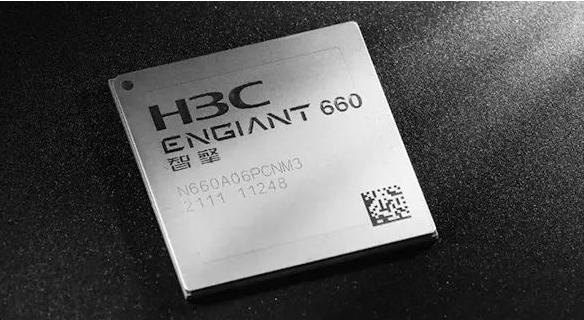
Chinese chip manufacturers have begun developing 7nm chips following the production of 16nm chips, and have set out in earnest to narrow the technology gap with top companies in chip manufacturing.
H3C, a subsidiary of UNIS under China's Tsinghua Unigroup, announced that it has begun developing the 7nm chip 'Engiant 800' following the 16nm chip 'Engiant 660' series, which recently entered production.
In a recent conference call, UNIS responded to participants' questions by stating that it began research and development of network chips in 2019, started developing the 'Engiant660' premium network processor core based on the 16nm process late last year, is currently testing the product, and is preparing for an official launch in the fourth quarter of this year.
They also announced that they are currently researching and developing a 7nm premium router chip.
The 'Engiant 600' series mentioned in the announcement is a chip released in April of this year by H3C, a subsidiary of UNIS. It is a communication card with 256 cores, 4,096 hardware threads, 18 billion transistors, and 2.4 Tbps, manufactured using a 16 nm process, capable of meeting the demands of operators and major networks.
The 'Engiant 800', currently under development at 7nm, includes over 500 cores and more than 40 billion transistors, surpassing the 'Engiant 600' series. The company expects performance to improve by 122%.
Meanwhile, China's Tsinghua Unigroup entered bankruptcy restructuring unable to cope with its massive debt exceeding 20 trillion won, and recently issued a call for strategic investors and is continuing its desperate efforts to revive itself.
Comments
Related news
NVIDIA and 14 Robots, Humanoid Robot Development Intensifies (China)
The United States leads in robotics development, with companies like Tesla and Boston Dynamics demonstrating the capabilities of advanced humanoid robot prototypes and commercial products to the public, generating considerable interest. In response, multiple Chinese companies are accelerating robotics product development through collaborations with Nvidia. Among the 14 humanoid robotics companies introduced by Nvidia, following the 4 U.S. robotics companies covered previously, this article introduces products from 6 Chinese humanoid robotics companies.
2025.01.20by 권신혁 기자
China, Trump's trade war response 'domestic demand boost'... stock market crisis and opportunity points
As the second Trump administration signals drastic changes in the external trade environment through advanced technology sanctions and tariff policies against China, experts predict that China will strongly push domestic demand stimulus measures in response to the second Trump administration.
2024.12.16by 권신혁 기자
US-China Trade War Season 2, “Korea, Raw Material Risk Far Higher than Exports”
As the Trump second term approaches, the prelude to another U.S.-China trade war is taking shape. While major domestic manufacturing industries such as semiconductors, batteries, and electric vehicles are expected to be affected, industry experts have gathered to provide key insights into the upcoming 2025 trade environment.
2024.12.13by 권신혁 기자

Rush begins in Korean car and rental car market
Amid martial law and impeachment proceedings that have plunged the domestic political sphere into chaos, Chinese capital is taking advantage of the turbulent domestic situation to extend its reach into the domestic automobile market and the broader economy and industry sectors.
2024.12.11by 권신혁 기자
Trump 2nd term, electric car and battery blue
Donald Trump, the vanguard of America First, has won the 2024 U.S. Presidential election for his second term as the 47th President, making a "Trump 2.0" era increasingly likely. In the U.S. Congressional elections, as of 7 a.m. Korean Standard Time on the 7th, Republicans have successfully secured a majority in the Senate, and the Republicans are expected to hold a majority in the House as well. With the Trump administration controlling both Congress and the executive branch, significant transformations in trade relations are anticipated in the △semiconductor △automotive △energy industry sectors going forward.
2024.11.07by 권신혁 기자











