


'Digitalization, Miniaturization, and Connectivity', the Foundation for Medical Innovation
 Published2021.09.15 10:10
High demand for connector and antenna products that deliver stability performance
Medical robots streamline invasive surgical procedures to aid in the patient's rapid recovery, while medical wearable devices monitor medication and daily activities. Collected data is transmitted to doctors, who use this information to assess the patient's condition in real time.
This is a vision of the future based on advancements in medical technology. With progress in wireless data transmission and component miniaturization technologies, minimally invasive surgery and telemedicine are becoming a reality.

That's enough, and drug delivery devices are also being commercialized. [Photo by Mouser]
In particular, drug delivery devices are expected to bring about a major change. Last April, Molex and its medical device supplier, Phillips-Medisize, commissioned a survey on the future of digital healthcare and medicine. The survey was conducted among 215 pharmaceutical industry professionals across various positions and regions.
According to the survey results, the adoption of drug delivery devices is accelerating, and one in three respondents stated that their company is already promoting drug delivery devices. 65% believed that this technology would be extremely important for their company's future. 92% of respondents predicted that drug delivery devices would have a positive impact on the medical field. In particular, they anticipated that it would be useful for infectious diseases in the endocrine, respiratory, inflammatory/immunological, and cardiovascular sectors.
Drug delivery devices can enhance patient convenience, encouraging better adherence to medication instructions and ultimately improving treatment efficacy. In this survey, 69% of respondents stated that the ability to increase patient engagement was the primary driving force behind their interest in the devices.
◇ Consumer Wearables & Medical Wearables
To maximize the benefits of telemedicine, engineers need to design wearables that meet the requirements for durability and reliability while increasing patient convenience.
Although consumer wearables and medical wearables differ in the regulations that apply to them, they are similar in that they must be designed to be easy and convenient to use, and to achieve reliability and accuracy.
To make wearable devices lightweight and compact, technologies for automatic injection devices or miniaturization and wireless operation of wearable systems are required. Accordingly, Molex offers compact board-to-board, signal wire-to-board, and flat printed circuit connector products.
The products include the 'Easy-On FFC/FPC Connector' and 'SlimStack Connector' product families, connector PCBs and flexible circuits, and Bluetooth/Wi-Fi/NFC/wireless antenna products. Additionally, it offers highly durable and flexible 'Premo-Flex Cable Jumper' assemblies and USB Type-C and Type-BI/O products. This enhances the convenience and reliability of connectivity solutions.
◇ Robot-assisted surgery
The introduction of robots into the operating room has enabled more precise surgeries than in the past. However, equipping a single robot with diverse functions requires complex electronic systems. Design engineers must simultaneously pursue low latency and optimal performance within a micro-package. Adding features that connect the robot to the outside world is even more challenging.
Molex’s Compact Robotic Connectors (CRCs) are compact solutions that meet the durability required for small robots and the environmental requirements of operating rooms. These products are designed to meet the space-saving and shielding needs of various medical and cleanroom applications.
In addition, the 'Versabeam Array MT Cable' assembly provides performance that exceeds the requirements of high-bandwidth medical applications. Based on Molex's existing data communication and telecommunications chassis connection technologies, these interconnect systems are suitable for robot-assisted surgery applications and Picture Archiving and Communication System (PACS) applications.
In cases where space is limited, hybrid design products reduce the number of required connectors and allow for easy installation in most applications. In addition, using hybrid connectivity allows optical fibers and copper wires to be combined in a single connector housing, making switching easy.
◇ Multifunctional cardiovascular device
Physicians are interested in energy and technologies that support diagnosis, treatment, and post-treatment monitoring for the effective treatment of cardiovascular diseases. The use of cryo-energy and microwave lasers can achieve maximum clinical efficacy with minimal invasiveness.
Integrating multiple technological methods into a single catheter increases complexity. Since a large number of wires and cables are required, connectors must have high contact density while still providing optimal performance. The 50–300mm 433MHz 'ISM antenna' offered by Molex measures 90 × 40mm and provides radiation efficiency of 50–56%.
The 868MHz and 915MHz ISM antennas utilize 'MobliquA™' technology to significantly reduce antenna volume and eliminate the need for expensive circuitry and frequency tuning required for the ground plane. Additionally, cardiovascular device applications require both power and signal. Molex's 'Mini-Fit Connector' family delivers power of up to 8.5A with a 3mm pitch.
To ensure the reliability of cardiovascular devices, Molex also offers the 'Micro-Fit TPA Connector' family. It supports Terminal Position Fixation (TPA) functionality to prevent defects in the end application.
Advancements in wireless data transmission and technologies for miniaturizing components and connectors are enabling innovations in the medical field, such as medication delivery devices and minimally invasive robotic surgery. Molex’s diverse interconnect products and compact, high-performance antenna products are accelerating innovation in the medical sector.
Comments
Related news
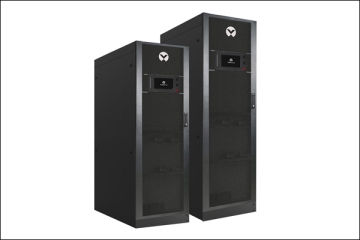
Vertiv Unveils Improved 3-Phase UPS with Minimal Installation Space Constraints
Vertiv has launched the Vertiv Liebert EXM2, a three-phase single uninterruptible power supply (UPS) designed for a wide range of applications including railways, healthcare, light industry, commercial offices, and mid-size data centers. The Vertiv Liebert EXM2 three-phase single UPS delivers dual conversion efficiency of up to 97%. It offers power capacity of 100~250kVA with minimal installation space constraints.
2021.05.14by 이수민 기자
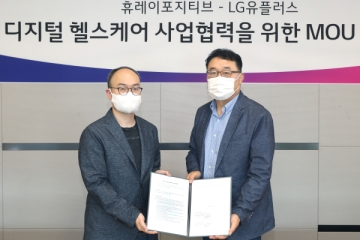
U+ to Develop Digital Healthcare Service Platform
LG Uplus announced that it has signed a business partnership agreement with Huray Positive for digital healthcare. Huray Positive is a digital healthcare startup that possesses a total of 11 types of disease prediction algorithms—the most in Korea—and provides healthcare solutions and services. Both companies will pursue joint construction and operation of B2C and B2G2C health management platforms, creation of new customer value based on telecommunications and healthcare big data, and exploration of new business opportunities including kids care services.
2021.09.01by 이수민 기자
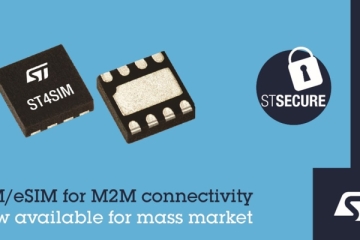
ST Unveils GSMA-Certified M2M-Dedicated eSIM IC 'ST4SIM'
ST announced the online launch of 'ST4SIM,' an eSIM IC for M2M applications. ST's industrial eSIM provides all services necessary to connect IoT devices to wireless networks. It is suitable for applications including equipment condition monitoring and predictive maintenance, asset tracking, energy management, and connected medical service devices.
2021.09.10by 이수민 기자

Intel Unveils Next-Generation 'Core Ultra Series 3' and vPro Platform for Enterprise PCs
Intel has officially unveiled the "Intel Core Ultra Series 3" for next-generation enterprise PCs and the latest vPro platform, addressing a wide range of demands from enterprise notebooks to high-performance workstations.
2026.03.26by 배종인 기자

ROHM Launches ESD Protection Diode Compatible with High-Speed Interfaces of 10Gbps or Higher
Semiconductor specialist ROHM has developed the 'RESDxVx series' of ESD (electrostatic discharge) protection diodes capable of responding to next-generation high-speed data communication environments exceeding 10Gbps, simultaneously enhancing both signal quality maintenance required in high-speed interfaces and IC protection performance.
2026.03.26by 배종인 기자











