


KIAT Shares Latest Trends in Camera Module Technology and Market
 Published2022.02.25 15:02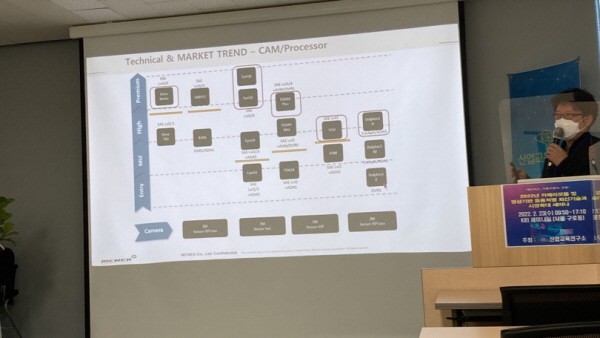
MCnex Director Jung Young-hyun stated, "Sensing systems are for 'safety' rather than 'convenience'."
Autonomous Vehicles, Vision Cameras Attract Attention
Sensing System Development, 'Safety' First
The Industrial Education Research Institute held the '2022 Seminar on Latest Technologies and Market Expansion for Camera Modules and Image-Based Applications' on the 23rd.
Field experts including No Geun-chang, Managing Director at Hyundai Motor Securities, Professor Park Sang-sik at Sejong University, Dr. Min Kyung-won at the Korea Electronics Technology Institute, Director Kim Young-woong at Pixel Plus, and Manager Jung Young-hyun at MCnex served as lecturers to present market trends and the latest technologies of camera modules.
One of the topics covered extensively at the seminar was autonomous vehicles.
To implement autonomous driving, it is presupposed to clearly recognize the surroundings of the vehicle, and for this purpose, multiple cameras are required.
According to market research firm Omdia, the automotive semiconductor industry is projected to show a compound annual growth rate of 12.3% by 2025.
Increased sales of battery electric vehicles and rising demand for ADAS systems and infotainment played a key role in the growth.
Electric vehicles and ADAS vehicles contain approximately 2,000 semiconductors, which is about 10 times more than internal combustion engine vehicles.
Given the growth of industry giant Tesla and Chinese electric vehicle companies, it is predicted that the supply shortage of automotive semiconductors will persist until the end of the year.
Senior Vice President No Geun-chang stated that due to the shortage of automotive semiconductor parts, the sales of major IDMs increased by 30–50%, and TSMC’s automotive foundry sales also increased by 55% year-on-year.
It was predicted that the demand for CIS (CMOS Image Sensor) would be negative because the supply shortage is expected to continue until the end of 2022.
With supply shortages expected to ease starting in the second half of the year, shipments from new electric vehicle companies are projected to increase from 2.17 million units in 2021 to 5 million units in 2022, rising to 5% of total finished vehicle demand.
One of the key areas to watch in this fiercely competitive automotive semiconductor market is vision cameras.
Tesla unveiled technology that eliminates even lidar and radar.
The radar was removed due to the frequent occurrence of phantom braking (a phenomenon where a vehicle suddenly stops while driving) caused by the radar and for cost reduction purposes.
Tesla demonstrated autonomous driving in North America equipped only with a vision camera.
Although it did not demonstrate perfect autonomous driving capabilities, it is significant in that it greatly increased the importance of camera sensors.
Meanwhile, attention is focused on whether NVIDIA's Drive Orin and Qualcomm's Snap Dragon Ride will be able to stop Tesla's dominance.
Mercedes-Benz and others have adopted NVIDIA's solution, and Drive Hyperion 8 has been supplied to Tier 1 and robotaxi companies.
This includes 12 ultrasound sensors, 9 radar sensors, 1 lidar sensor, and a camera. It supports 12 △3 In Cabin cameras, and the sensors can be adjusted according to the needs of each company.
NVIDIA is collaborating with Tier 1 companies such as Flex, Deai, Valeo, and Quanta, and is also supplying to Chinese electric vehicle companies Nio, Xpeng, LI Auto, and R Auto.
Samsung Electronics also joined the anti-Tesla camp by supplying Exynos Auto to Audi through Harman and providing the same solution to Volkswagen.
Although Tesla has removed radar, some argue that radar for cornering and long-range measurement is still necessary for 'safety' reasons.
NXP expressed the view that radar, which is not affected by external environments (weather, season) like cameras and lidar, is essential for driver safety in autonomous driving.
MCnex Director Jung Young-hyun also emphasized, “Detecting environmental changes is important,” adding that “sensing systems are for ‘safety’ rather than ‘convenience.’”
Meanwhile, the Industrial Education Research Institute will hold the '2022 New Technology and Safety & Security Seminar for Building and Advancing the Autonomous Vehicle Ecosystem' for two days starting March 22.
Instructors including Kim In-sik, an official from the Ministry of Trade, Industry and Energy, and Sonnet Chairman Son Jun-woo are scheduled to share the current status of autonomous vehicles both domestically and internationally, as well as trends in related technologies, laws, and regulations, and the autonomous driving software research and development of leading companies in the field.
Comments
Related news
.jpg)
KETI launches pilot service to prevent hidden camera use, strengthening public safety.
The Korea Electronics Technology Institute (KETI, Director Kim Young-sam) has completed the development of an illegal hidden camera detection device and is beginning full-scale pilot service operations, garnering expectations that it will contribute to enhanced safety in public facilities within urban areas.
2021.10.13by 명세환 기자
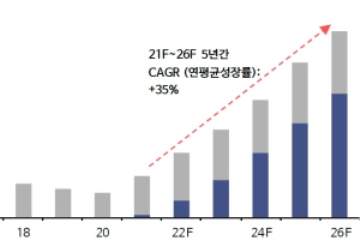
Growth of Automotive Cameras and Virtual Platforms to Accelerate in 2022
Despite the high base effect resulting from the surge in sales in 2021 due to COVID-19 benefits, the IT components and electrical/electronic equipment industry in 2022 is expected to show modest growth driven by improved breathing room for non-memory semiconductors due to foundry capacity expansions, the proliferation of virtual platforms following the spread of new technologies, and the expansion of automotive electronics product markets.
2021.11.15by 배종인 기자
.jpg)
Onsemi Monitors Drivers and Passengers with a Single Camera
ON Semiconductor presents an advanced design that combines driver and occupant monitoring in a single camera, enhancing automotive safety features and delivering a high-quality user experience.
2022.01.05by 배종인 기자
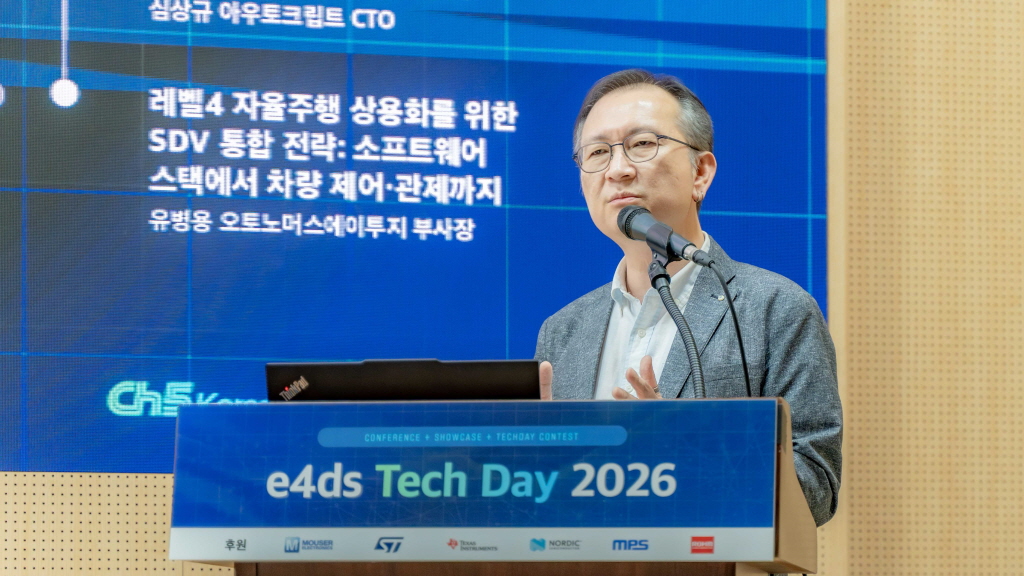
[e4ds Tech Day 2026 ⑨] Sim Sang-gyu, Autocrypt CTO: "In the Physical AI Era, Automotive Security Must Extend Beyond the Vehicle"
At e4ds Tech Day 2026, Sim Sang-gyu, CTO of Autocrypt, explained automotive cybersecurity strategies in the era of Physical AI and SDV (Software-Defined Vehicle). Automobiles are evolving as part of an ecosystem connected to AI, cloud, chargers, IoT, and robots, and he emphasized that the scope of security must expand beyond the vehicle interior to the entire connected environment. In particular, AI model tampering, adversarial attacks, OTA updates, and EV charger hacking were identified as major threats. He explained that response measures require zero trust, AI model integrity protection, intrusion detection, Security by Design and Default, and full lifecycle security management, and that proactive security system establishment beyond regulatory compliance is critical for securing future mobility competitiveness.
2026.10.12by 배종인 기자

Practical HIL Construction Strategy for Automotive and Off-Highway Controller Validation
As vehicle E/E architecture transitions to zonal structures and shifts to software-defined vehicles (SDV), the number of controllers (ECUs) requiring validation and software complexity are surging dramatically. Meanwhile, real vehicle testing cannot provide repeated verification under identical conditions and entails lead time and safety concerns. This white paper explains the principles of HIL (Hardware-in-the-Loop) validation and the structure of the NI platform composed of PXI, SLSC, and VeriStand, and through two actual implementation cases—Camera Record & Replay HIL for In-Cabin Monitoring Controller (ICMU) and Forklift Controller (VCU) HILS—describes how controller-level regression testing becomes possible. Additionally, it explicitly states application boundaries and limitations, such as lack of A2B support.
2026.10.12by 편집부











