



Science and Technology Ministry and Four Major Science and Technology Institutes Discuss Semiconductor Talent Development
 Published2022.03.07 15:16
On the 4th, the Ministry of Science and Technology and Information and Communications held the first "Four Major Science and Technology Institutes Semiconductor Talent Development Council (hereinafter referred to as the Council)."
The Council held discussions on supporting semiconductor research and development and talent development that the industry seeks through the four major science and technology institutes.
Semiconductors account for 20% of the nation's total exports and are the top export product; however, the issue of a shortage of talent desired by the industry continues to be raised.
Recently, as major countries such as the United States and China view semiconductors not as a simple commodity but as a national security asset, conflicts between nations over semiconductors are intensifying. Going forward, global competition to secure semiconductor talent is expected to become even more fierce.
Accordingly, the Ministry of Science and Technology and Information and Communications formed a consultative body between domestic semiconductor industry players including Samsung Electronics, SK Hynix, DB Hitek, and Nemesis, and four major science and technology institutes including Korea Advanced Institute of Science and Technology (KAIST), Gwangju Institute of Science and Technology (GIST), Daegu Gyeongbuk Institute of Science and Technology (DGIST), and Ulsan National Institute of Science and Technology (UNIST), and established a forum to facilitate communication on semiconductor curriculum design, talent development, and research and development directions at the science and technology institutes.
At this Council meeting, each science and technology institute first presented the status of their semiconductor research fields and workforce development, and the industry presented the profile of semiconductor talent needed to strengthen the nation's semiconductor industry competitiveness.
Following free discussion, the Council discussed future cooperation methods between the four major science and technology institutes and the industry.
The four major science and technology institutes will make efforts to reflect industry views in future semiconductor research and talent development, and agreed to share implementation progress at the second Council meeting to be held in August.
Hwang Pan-sik, Director of the Future Talent Policy Division at the Ministry of Science and Technology and Information and Communications, noted that "as the school-age population declines, the need for demand-customized talent development is increasingly growing" and stated, "I hope the science and technology institutes will conduct basic research from a long-term perspective while also making efforts in research and talent development from a medium to short-term perspective in response to industry demand," and promised that the government will do its utmost to support this.
In response, Kim Jung-ho, Chairman of the Council, stated, "Our country, which lacks resources, has risen to become one of the world's top 10 economies because we have been able to develop many excellent talents," and added, "Through the Council, we will foster future semiconductor talent needed by industry and establish a consistent talent development system between science and technology institutes and industry so that our nation can maintain sustained competitiveness in the semiconductor industry."
Comments
Related news

Ministry of Science and ICT Eases Conformity Assessment Conditions for Some Broadcasting and Telecommunications Equipment
The Ministry of Science and ICT is amending the notice on conformity assessment of broadcast and telecommunications equipment to address industry pain points and will enforce it from the 28th. The main contents of this amendment are improvements to the conformity assessment test and registration procedures for large and fixed-type equipment, regulatory relief for industrial electric welding machines used in restricted areas, and making the submission of test reports for wireless devices mounted on domestically-produced aircraft more realistic.
2021.06.28by 이수민 기자
Ministry of Science and ICT appoints new PM in charge of ICT future technology
Baek Eun-gyeong, specialist committee member at the Korea IT Industry Promotion Agency, Moon-joo Park, professor at Incheon National University, and Woo-jin Byeon, director at the Electronics and Telecommunications Research Institute, will newly participate in policy formulation for future information and communications technologies including digital transformation and technology hegemony competition.
2021.09.23by 배종인 기자
Ministry of Science and ICT Adds Two Radio Wave Testing Facilities
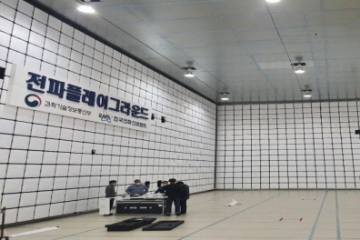
The Ministry of Science and Technology and Information and Communications (hereinafter referred to as MSIT) is expanding the "Radio Playground," a large-scale electromagnetic shielding facility, to regions outside the metropolitan area to enable companies in the radio frequency sector to conduct free radio wave testing.
2022.01.24by 성유창 기자
Intel Unveils Next-Generation 'Core Ultra Series 3' and vPro Platform for Enterprise PCs
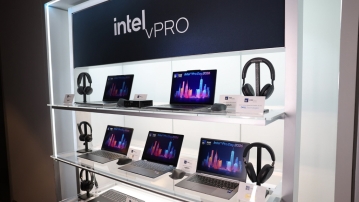
Intel has officially unveiled the "Intel Core Ultra Series 3" for next-generation enterprise PCs and the latest vPro platform, addressing a wide range of demands from enterprise notebooks to high-performance workstations.
2026.03.26by 배종인 기자
ROHM Launches ESD Protection Diode Compatible with High-Speed Interfaces of 10Gbps or Higher
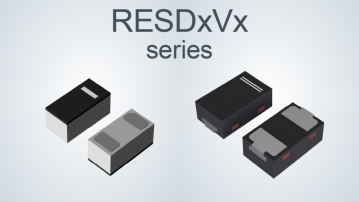
Semiconductor specialist ROHM has developed the 'RESDxVx series' of ESD (electrostatic discharge) protection diodes capable of responding to next-generation high-speed data communication environments exceeding 10Gbps, simultaneously enhancing both signal quality maintenance required in high-speed interfaces and IC protection performance.
2026.03.26by 배종인 기자











