



Bus Route-Linked Hydrogen Charging Station Completed
 Published2022.04.14 17:01
The Ministry of Trade, Industry and Energy held a completion ceremony on the 14th with Changwon City for the bus-linked Gapo hydrogen charging station.
This completion ceremony is the result of the 'Hydrogen Bus Charging Station Demonstration Project' which has been carried out with a total project cost of 19.4 billion won since 2020, and has been promoted with the participation of the Korea Automotive Research Institute, Changwon Industrial Promotion Agency, Korea Natural Gas Hydrogen Charging Association, and Gyeongnam Technopark, among others.
In this project, an operational plan linked with bus routes will be established to analyze hydrogen bus charging patterns (single charge amount, number of charges per day, total charge amount per day, etc.), and low-pressure charging demonstration (700bar → 350bar) will also be pursued when charging equipment fails, to present stable operational methodologies for bus hydrogen charging stations.
Enhancement of the localization rate of charging station equipment is also being planned. Most of the domestic technology development for key hydrogen charging station components has been completed, but the actual commercialization rate remains low due to insufficient track records and reliability of domestic parts. By constructing the charging station equipment with a domestic localization rate of 80% or higher, the plan is to verify operational characteristics, performance analysis, durability, and reliability of domestic parts.
While operating two chargers each equipped with domestic and imported compressors, performance will be compared and monitored to present measures to enhance the domestic localization rate of hydrogen charging stations in the future, and demonstrate and operate components and equipment developed by domestic companies under actual hydrogen operating conditions (700 bar, minus 40°C) to secure data and establish technical and performance standards.
The Gapo hydrogen charging station is an excellent opportunity to accumulate hydrogen bus operation experience by being linked with actual bus routes, and the accumulated experience is expected to be disseminated to local governments, contributing to the establishment of hydrogen bus operation and charging station construction models.
The Director of Hydrogen Economy Policy at the Ministry of Trade, Industry and Energy stated, "Changwon City is rapidly establishing a hydrogen economy ecosystem with over 130 hydrogen parts companies, hydrogen production bases, liquefied hydrogen plants, and large-scale fuel cell power generation projects," and added, "Going forward, we will continue to support enhancement of the domestic localization rate of hydrogen charging stations as well as explore new business models such as clean hydrogen-based charging stations and hydrogen-electric integrated charging stations."
Comments
Related news
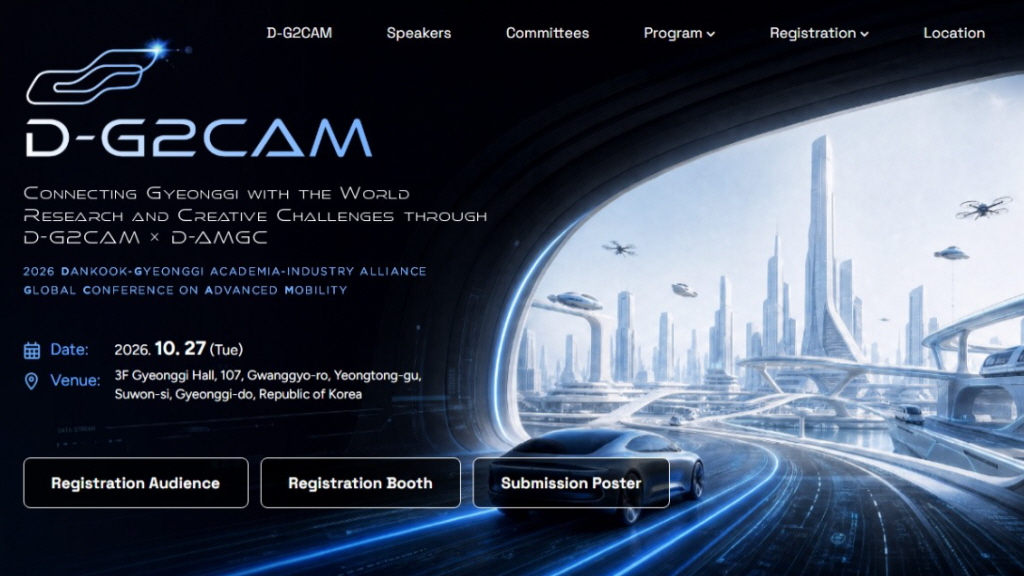
GAIA-Festa 2026, Autonomous Driving, AI, and Aerospace Experts Gather…Discussing Global Cooperation in the 'Silicon Intelligence Era'
GAIA-Festa 2026, which will be held in Suwon on October 27, is an industry-academia-research exchange event that explores the present and future of future mobility and AI technology through the global conference D-G2CAM 2026 and the international contest D-AMGC 2026. Domestic and international experts will share the latest research in autonomous driving, 5G/6G mobility, space technology, and data protection fields, while university students will showcase robots and physical AI prototypes that they have independently developed. Additionally, through poster presentations, corporate exhibitions, international cooperation meetings, and signing ceremonies, a platform will be established to connect the research capabilities and industrial needs of the Gyeonggi region with a global cooperation network.
2026.10.13by 배종인 기자
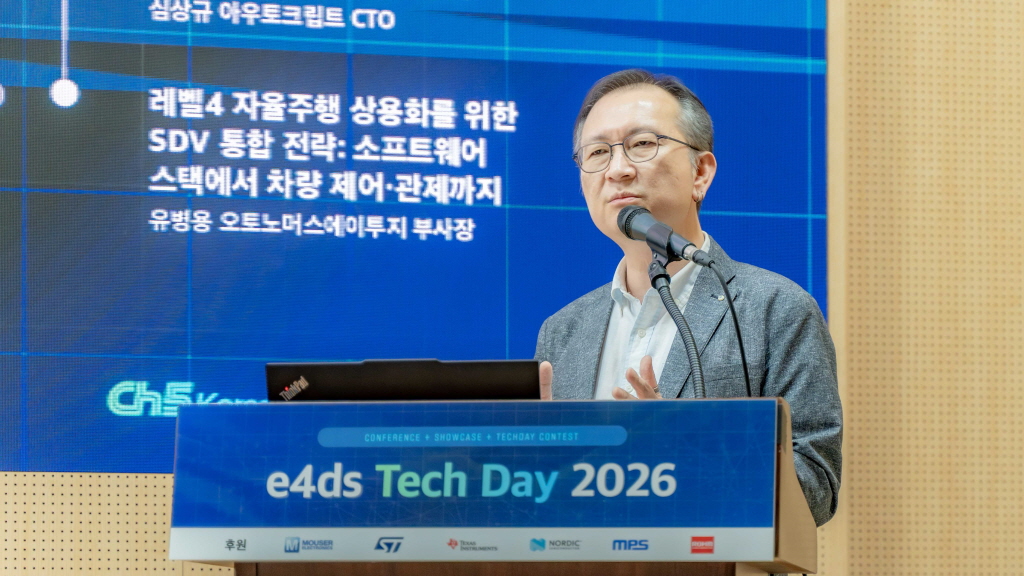
[e4ds Tech Day 2026 ⑨] Sim Sang-gyu, Autocrypt CTO: "In the Physical AI Era, Automotive Security Must Extend Beyond the Vehicle"
At e4ds Tech Day 2026, Sim Sang-gyu, CTO of Autocrypt, explained automotive cybersecurity strategies in the era of Physical AI and SDV (Software-Defined Vehicle). Automobiles are evolving as part of an ecosystem connected to AI, cloud, chargers, IoT, and robots, and he emphasized that the scope of security must expand beyond the vehicle interior to the entire connected environment. In particular, AI model tampering, adversarial attacks, OTA updates, and EV charger hacking were identified as major threats. He explained that response measures require zero trust, AI model integrity protection, intrusion detection, Security by Design and Default, and full lifecycle security management, and that proactive security system establishment beyond regulatory compliance is critical for securing future mobility competitiveness.
2026.10.12by 배종인 기자

Practical HIL Construction Strategy for Automotive and Off-Highway Controller Validation
As vehicle E/E architecture transitions to zonal structures and shifts to software-defined vehicles (SDV), the number of controllers (ECUs) requiring validation and software complexity are surging dramatically. Meanwhile, real vehicle testing cannot provide repeated verification under identical conditions and entails lead time and safety concerns. This white paper explains the principles of HIL (Hardware-in-the-Loop) validation and the structure of the NI platform composed of PXI, SLSC, and VeriStand, and through two actual implementation cases—Camera Record & Replay HIL for In-Cabin Monitoring Controller (ICMU) and Forklift Controller (VCU) HILS—describes how controller-level regression testing becomes possible. Additionally, it explicitly states application boundaries and limitations, such as lack of A2B support.
2026.10.12by 편집부
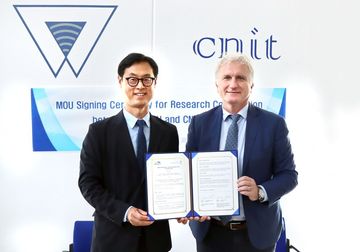
Korea Automotive Research Institute Signs MOU with Italy National Institute for Wireless Communications
The Korea Automotive Research Institute will sign an MOU with Italy's National Institute for Wireless Communications and launch joint research on next-generation mobility technologies based on 6G, V2X, and connected vehicles. The two organizations will conduct research to apply advanced wireless communication technologies to vehicles and discover international joint projects to advance next-generation connected vehicle technology development.
2026.10.12by 배종인 기자
Color Accuracy Issues in Vehicle Interior Ambient Lighting and Intelligent LED Drivers
Vehicle interior ambient lighting is spreading across all price segments, and the level of color accuracy required of lighting designers is rising accordingly. This white paper quantitatively addresses why temperature drift and individual variations of RGB LEDs cannot be corrected by standard constant-current drivers, and explains an intelligent LED driver approach that integrates an MCU, calibration data, and a LIN network interface into the driver. It covers implementation details of the LITIX Interior TLD4020-3ET currently in production, portfolio roadmap, and evaluation/development environments, and clarifies application boundaries including lack of 48V support, lack of RGBi/ISELED support, and absence of direct optical degradation diagnostics.
2026.10.08by 명세환 기자











