


Hyundai Rotem wins contract for a demonstration project for a liquefied hydrogen charging station in Gangwon Province.
 Published2022.04.25 08:44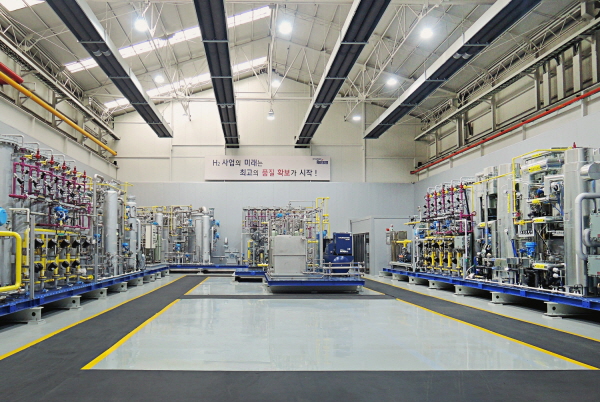
A domestic company has begun demonstrating its own liquid hydrogen charging station system.
Promoting market development through commercialization of liquid hydrogen infrastructure, including cryogenic storage containers.
Hyundai Rotem announced on the 22nd that it had won a contract for the Gangwon Techno Park liquid hydrogen charging station demonstration project.
As part of the Gangwon-do Liquefied Hydrogen Industry Regulatory-Free Zone demonstration project, Hyundai Rotem will build a liquefied hydrogen charging station in Gangwon-do. This marks Hyundai Rotem's first liquefied hydrogen project contract.
Liquefied hydrogen is hydrogen that has been liquefied by cooling gaseous hydrogen to an extremely low temperature of -253 degrees Celsius. It has excellent economic efficiency as it has a volume of only about 1/800th of gaseous hydrogen, allowing for a large amount of storage and distribution at one time. It is also efficient because it can be stored at a low pressure of about 2 bar, which is the normal atmospheric pressure level.
Hyundai Rotem plans to demonstrate its liquid hydrogen charging station construction system, including its own charging station layout and operating system, through this project.
Unlike regular hydrogen charging stations, liquid hydrogen charging stations require a process of converting liquid hydrogen into high-pressure gaseous hydrogen when charging vehicles. Therefore, the system technology to implement this process is considered a core competency.
This is the first time that a system developed with domestic technology has been applied to an actual liquid hydrogen charging station.
With this order, Hyundai Rotem has laid the groundwork for pioneering the liquid hydrogen charging station market. According to the government's "Hydrogen Economy Activation Roadmap" announced in 2019, the number of hydrogen charging stations in Korea is projected to increase to 1,200 by 2040, leading to an expected increase in demand for these facilities.
Hyundai Rotem plans to pioneer the liquid hydrogen infrastructure market, which is currently in the early stages of market formation, including charging stations and storage containers.
To this end, Hyundai Rotem is preparing for future markets by proactively securing specialized personnel and promoting liquefied hydrogen-related commercialization. Last year, the company signed a Memorandum of Understanding (MOU) with Gangwon Province and Samcheok City to establish a liquefied hydrogen industry value chain, collaborating on the construction of a charging station and storage tank factory, with completion targeted for 2024. Furthermore, the company has embarked on the development of cryogenic storage tanks tailored to the characteristics of liquefied hydrogen.
On the 20th, Hyundai Rotem signed a contract with Korea Gas Corporation for the production and installation of the Jeonju-Wanju Hydrogen Delivery Center. The hydrogen distribution center is a distribution hub that supplies hydrogen from production facilities to charging stations via hydrogen transport vehicles, such as tube trailers, enabling the supply of hydrogen to nearby areas inexpensively and efficiently.
Through this project, Hyundai Rotem will build a hydrogen delivery center in Wanju County, Jeollabuk-do, and will handle the entire process, including design, manufacturing, and installation. Hyundai Rotem has secured proven competitiveness in related projects, having won the contract for the Hydrogen Energy Network (HyNet) Dangjin Hydrogen Delivery Center in 2020 and successfully completed it last year.
A Hyundai Rotem official said, “We have proven our related technological prowess and business capabilities by winning consecutive orders for liquefied hydrogen charging stations and hydrogen delivery centers,” adding, “We will proactively respond to domestic and international markets by enhancing the competitiveness of our hydrogen charging infrastructure business sector, which is continuously growing.”
Comments
Related news
Hyundai Motor Launches EV Charging Service Platform… Full-Scale Leadership of Charging Ecosystem
Hyundai Motor Group is leading the growth of the electric vehicle charging ecosystem with 'E-pit (E-pit Charging Service Platform)', which applies an 'electric vehicle charging service platform (E-CSP)'.
2022.04.11by 성유창 기자
Hyundai Motor Strengthens Electric Vehicle Maintenance Capabilities
Hyundai Motor announced on the 18th that it will accelerate the cultivation of specialized electric vehicle maintenance personnel through the launch of the new 'Hyundai Master Certification Program Electrified (HMCPe)'.
2022.04.18by 성유창 기자
.jpg)
Global Vehicle, PBV, Subscription Service Expansion
Connected cars are projected to account for 98% of new vehicles globally by 2030, and as interest in purpose-built vehicles (PBV) and various in-vehicle services continues to rise, a venue has been established to share information on how mobility will evolve.
2022.04.21by 성유창 기자
MathWorks Provides TUV SUD Certification Guidelines for Agentic AI Workflows
MathWorks has formalized certification guidelines for agentic AI workflows for safety-critical industries such as automotive and aerospace. This initiative, which includes AI tool classification guidelines based on ISO 26,262, presents methods to comply with functional safety standards while improving development efficiency through the use of Simulink Agentic Toolkit and Polyspace Agentic Toolkit.
2026.10.15by 배종인 기자
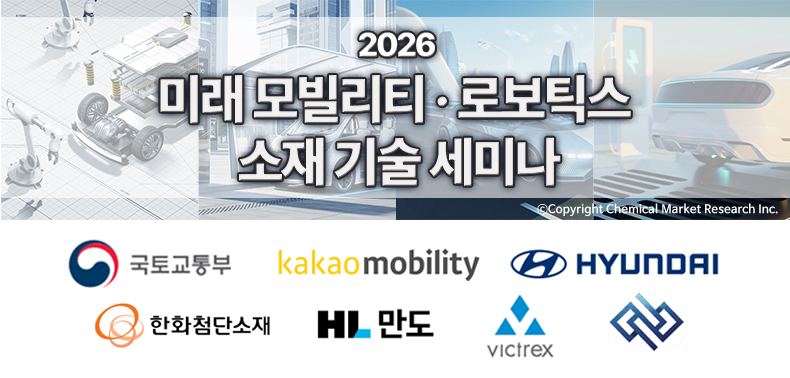
Chemical Economics Research Institute Holds Future Mobility and Robotics Materials Technology Seminar
The Chemical Economics Research Institute will hold the "2026 Future Mobility and Robotics Materials Technology Seminar" on October 30 in Yeouido, Seoul. Government and private sector experts including the Ministry of Land, Infrastructure and Transport, Hyundai Motor, Kakao Mobility, HL Mondo, and Hanwha Advanced Materials will participate to share the current status and future direction of materials technology required for autonomous driving and robotics industries.
2026.10.13by 배종인 기자











