


[Semiconductor Digital Forum] Data Explosion Driven by Metaverse and AI: The Solution Ultimately Comes from Semiconductors
 Published2022.04.26 12:16
▲Semiconductor Digital Forum hosted by the Korea Semiconductor Industry Association
The importance of post-processing in HBM, which combines memory and processors, is increasing.
With the growing importance of SerDes, wideband, low latency, and low power are key.
CXL DRAM Flexibility and Scalability Increase, "CXL Will Become Mainstream"
Data volumes are growing exponentially. This is due to the massive increase in data to be processed due to advancements in technologies like AI, autonomous driving, the metaverse, and the cloud. In the age of AI and big data, humanity is generating a massive amount of data, surpassing the amount of data accumulated in previous eras in just one or two days.
Accordingly, advancements in semiconductor technology, which must process and transmit infinitely increasing data, are essential, and changes at the SoC level for improved interconnectivity and innovation in computing architecture are attracting attention.
At the Korea Semiconductor Industry Association's Semiconductor Digital Forum, which was held on the 20th, a lecture was given on future semiconductor technology trends with the topic of the future of the semiconductor industry.
Kim Young-woo, head of SK Securities' Research Center, who led a session as a speaker at the forum that day, stated, "With the widespread adoption of the metaverse and cloud environments, data movement and transmission volumes will increase, making broadband, low-power, and ultra-high-speed transmission key." He explained the semiconductor trend of maximizing data transmission speeds while simultaneously combining memory and processors.
"The core of system degradation stems from the bottlenecks inherent in the von Neumann architecture," said Director Kim, noting that advanced interconnects require changes at the SoC level and innovations in computing architecture. He explained that the ultimate goal of SoCs to eliminate these bottlenecks is neuromorphic semiconductors, with PNM and PIM being utilized as transitional steps. “Data transmission consumes more energy resources than computation, so reducing this is important from an ESG perspective as well,” he added.
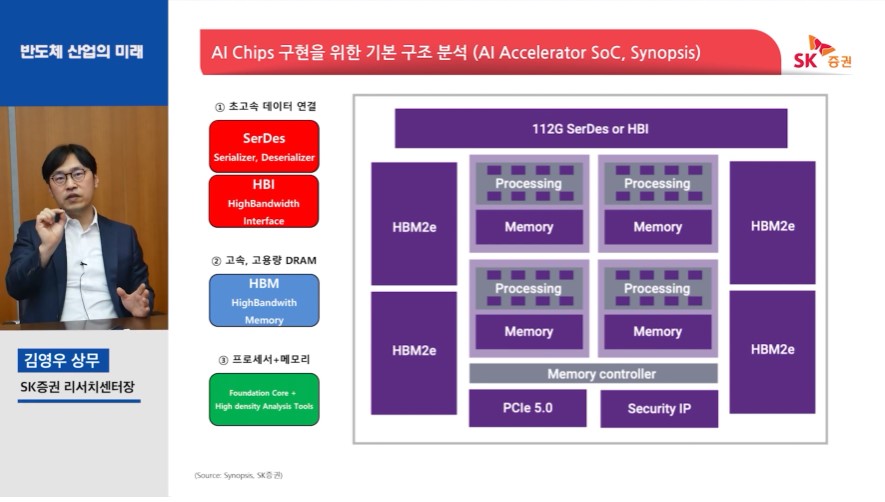
▲Kim Young-woo, Head of SK Securities Research Center (Video capture - Semiconductor Digital Forum)
Director Kim said, “When looking at the patent of Synopsys Inc., which is in charge of the design, the basic structural analysis for implementing AI chips is to place HBM on both sides and attach the processor core and memory,” and emphasized, “If HBM is applied to ultra-high-speed, high-capacity DRAM, the post-processing will inevitably become important.” It is expected that the importance of post-processing will increase as development and supply through collaboration between processor and memory manufacturers will become necessary from the product planning stage.
Also, in regards to the increasing importance of SerDes (Serializer-Deserializer), Director Kim stated, “When data processed in parallel is transmitted serially and data received serially is converted into parallel data and distributed, the importance of SerDes-related chips and interfaces will increase,” and “Ultra-high-speed transmission with wideband, low latency, and low power is expected to be key.”
In computing architecture for interconnect enhancement, there are multiple consortia competing in duplicate, such as OpenCAPI, CCIX, GenZ, and CXL, but Center Director Kim asserted that CXL will become mainstream.
OpenCAPI is adopted only by IBM, CCIX is adopted only by AMD, and CXL was evaluated to have improved its shortcomings by introducing a switch in CXL2.0 while integrating Gen-Z last November, so it is predicted that the next-generation memory will be based on CXL.
Center Director Kim predicted that memory companies would initially enter the CXL market with DRAM memory expanders. Samsung Electronics' CXL DRAM, mentioned as an example, is expected to lead the growth of the ultra-high-speed data service market by developing the industry's first CXL-based DRAM memory technology in May of last year.
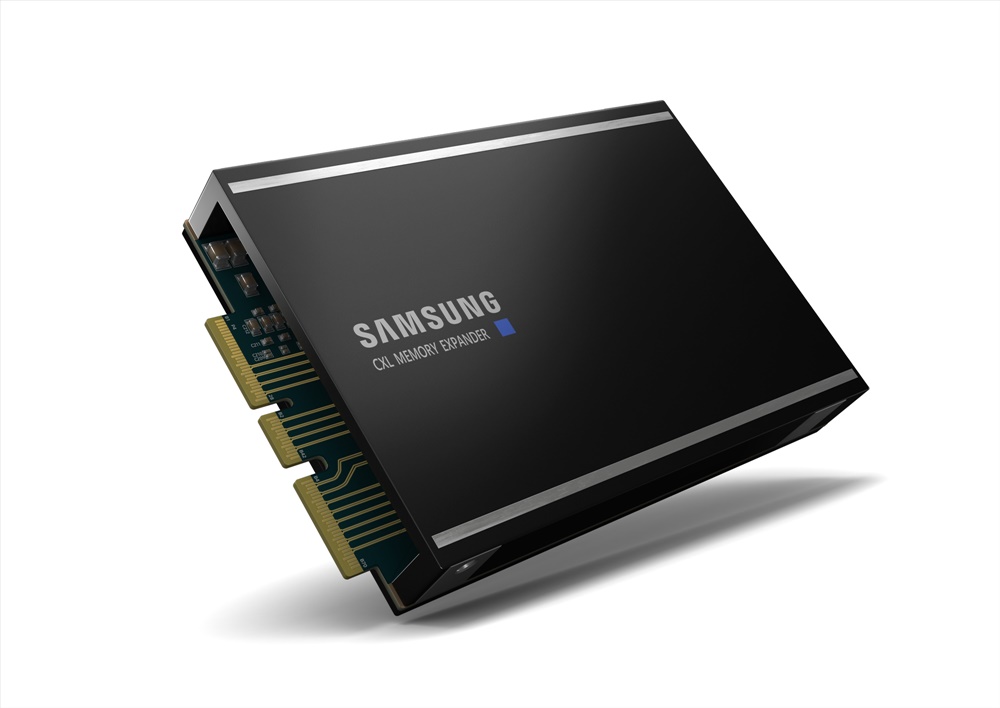
▲ Samsung Electronics CXL-based DRAM memory (Photo: Samsung Electronics)
Director Kim stated, “In the future, data will be transmitted and moved a lot, so the era of smart NICs (Network Interface Cards) with HBM built into the network interface cards will arrive,” adding, “Development of persistent memory to replace Optane SSDs also remains a future task.”
He also predicted that “the importance of strategic product development through inter-industry collaboration will increase as processors and memory are combined.”

Comments
Related news
Intel Unveils Next-Generation 'Core Ultra Series 3' and vPro Platform for Enterprise PCs
Intel has officially unveiled the "Intel Core Ultra Series 3" for next-generation enterprise PCs and the latest vPro platform, addressing a wide range of demands from enterprise notebooks to high-performance workstations.
2026.03.26by 배종인 기자
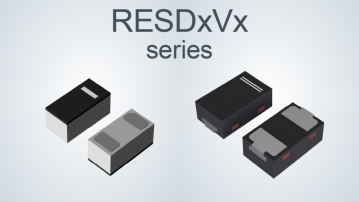
ROHM Launches ESD Protection Diode Compatible with High-Speed Interfaces of 10Gbps or Higher
Semiconductor specialist ROHM has developed the 'RESDxVx series' of ESD (electrostatic discharge) protection diodes capable of responding to next-generation high-speed data communication environments exceeding 10Gbps, simultaneously enhancing both signal quality maintenance required in high-speed interfaces and IC protection performance.
2026.03.26by 배종인 기자
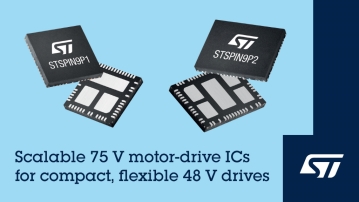
ST Launches 75V Drive IC Targeting 48V Industrial Motor Driving
ST Microelectronics has unveiled the 'STSPIN9P' series of 75V motor drive ICs tailored for 48V-class industrial drive system design. The new product family is characterized by half-bridge and full-bridge configurations that enable design scalability according to motor type and output conditions. Power supply circuits, protection functions, and current sensing circuits are integrated on-chip to simplify system configuration, and the devices are designed to support applications up to 500W maximum. The company plans to provide reference designs and demo boards to support development and evaluation in industrial automation, robotics, pumps, fans, lighting, and textile machinery.
2026.03.26by 배종인 기자

Nordic supports security updates for the entire lifecycle of IoT devices at a single fixed cost
Nordic Semiconductor, a global leader in low-power wireless connectivity solutions, has unveiled a single fixed-cost licensing model that delivers FOTA (Firmware Over-the-Air) and device management capabilities throughout the device lifecycle via nRF Cloud, and introduced a new firmware update solution to prepare for the enforcement of the European Union's Cyber Resilience Act (CRA).
2026.03.26by 배종인 기자
Practical Training in Low-Noise, Low-Power Circuit Design All in One Place… Training Fee Support
The "2026 Advanced Engineer Practical Masterclass" to strengthen competencies in high-sensitivity analog circuit and sensor-based system design will be held on April 16 at the e4ds Conference Center in Gasan-dong, Seoul. This program will be conducted as an offline paid hands-on training session, not online, and is targeted at engineers seeking on-site intensive learning. Texas Instruments will provide educational support for this training, allowing participation at 150,000 won, a 100,000 won discount from the original price of 250,000 won.
2026.03.26by 배종인 기자











