



Hyundai Motor, Q1 sales mix improvement and favorable exchange rate effects
 Published2022.04.26 16:44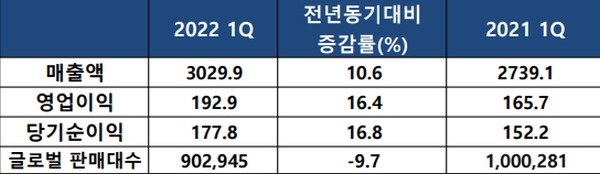
▲Hyundai Motor 2022 Q1 Operating Performance Summary (Revenue and Operating Profit in Units of 100 Million Won, Sales Volume in Units)
Revenue up 10.6% YoY, Operating Profit up 16.4% YoY
Semiconductor shortage and raw material price increases continue to create uncertainty ahead
Hyundai Motor held a 2022 Q1 earnings conference call at its Seoul headquarters on the 25th and announced that Q1 2022 results on an IFRS consolidated basis were: ▲Sales of 902,945 units ▲Revenue of 30.2986 trillion won (automobiles 24.0750 trillion won, finance and others 6.2236 trillion won) ▲Operating profit of 1.9289 trillion won ▲Ordinary profit of 2.2786 trillion won ▲Net income of 1.7774 trillion won (including non-controlling interests).
Hyundai Motor sold 902,945 units in the global market during Q1 2022 (January-March). This represents a 9.7% decrease compared to the same period last year. (Based on wholesale sales)
In the domestic market, despite favorable sales of SUVs including the Ioniq 5, Casper, and G90, as well as new Genesis models, sales decreased 18.0% to 152,098 units year-on-year due to the impact of semiconductor supply shortages and component shortages resulting from lockdowns in certain Chinese regions.
In overseas markets, despite high popularity of SUV models, sales in most regions outside Europe showed weakness due to production disruptions from semiconductor supply shortages, with sales declining 7.8% to 750,847 units compared to the same period last year.
Revenue increased 10.6% year-on-year to 30.2986 trillion won. The sales mix improvement effect centered on Genesis and SUVs, combined with favorable exchange rate effects, offset the impact of the overall volume decline. The average won-dollar exchange rate in Q1 2022 was 1,205 won, up 8.2% compared to the same period last year.
The cost of sales ratio decreased 0.7 percentage points to 80.9% year-on-year. Despite the decline in global wholesale sales, this decreased due to favorable exchange rate effects and the sales mix improvement effect centered on high-value-added vehicle models. The ratio of selling expenses and administrative expenses to revenue was 12.7%, up 0.4 percentage points year-on-year, reflecting increases in marketing costs and investment expenses.
As a result, Q1 2022 operating profit increased 16.4% year-on-year to 1.9289 trillion won. The operating profit margin was 6.4%.
Ordinary profit and net profit were recorded at 2.2786 trillion won and 1.7774 trillion won, respectively.
A Hyundai Motor official stated regarding the Q1 2022 operating results: "Q1 sales decreased year-on-year due to continued production shortages from global automotive semiconductor and other component supply disruptions; however, operating profit increased year-on-year despite the sales volume decline, as improved sales mix centered on Genesis and SUVs combined with favorable exchange rate effects from improved regional mix focused on developed countries offset the volume decline," adding "inventory levels in major markets remain very low, with incentive declines continuing accordingly."
The official further stated: "The semiconductor supply situation is showing slow recovery, and additionally, component supply imbalances from lockdowns in certain Chinese regions and management uncertainties from geopolitical risks are expected to continue in the future."
Meanwhile, Hyundai Motor decided to maintain its annual guidance announced in January 2022 for consolidated revenue growth of 13-14% year-on-year and consolidated operating profit margin of 5.5-6.5% for this year.
A Hyundai Motor official stated: "Although Q2 is expected to present a challenging business environment due to full-scale impacts from raw material price increases and geopolitical risks, we will make company-wide efforts to achieve the guidance announced at the beginning of the year."
Regarding future management environment outlook, Hyundai Motor anticipates stabilization of the global pandemic situation and gradual stabilization of semiconductor shortages; however, the company projects that a difficult business environment will continue due to expanded global uncertainties, including persistent component supply imbalances from lockdown decisions in certain Chinese cities, geopolitical impacts from conflicts between nations resulting in surging raw material prices, and other factors.
Expanded exchange rate volatility and increased marketing costs from intensified competition among companies are also cited as burden factors in management activities.
Meanwhile, Hyundai Motor expects that the global eco-friendly vehicle market will maintain strong growth centered on electric vehicles, influenced by strengthened environmental regulations in major countries, increased investment in eco-friendly infrastructure, and expanding preference for eco-friendly vehicles.
In relation to this, Hyundai Motor plans to focus on: ▲maximizing sales through optimized production and sales ▲expanding market share and defending profitability through improved sales mix centered on high-value-added vehicle models ▲strengthening electric vehicle lineup through global launches of major new models including GV60, GV70 electrified models, and Ioniq 6, among others.
Comments
Related news
Hyundai Motor Enters Community-Based NFT Market
Hyundai Motor has released a video introducing its Hyundai NFT universe 'Metamobility Universe,' under plans to enter the industry's first community-based NFT marketplace among global automakers and provide customers with diverse brand experiences.
2022.04.18by 성유창 기자
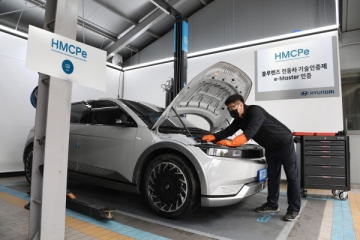
Hyundai Motor Strengthens Electric Vehicle Maintenance Capabilities
Hyundai Motor announced on the 18th that it will accelerate the cultivation of specialized electric vehicle maintenance personnel through the launch of the new 'Hyundai Master Certification Program Electrified (HMCPe)'.
2022.04.18by 성유창 기자
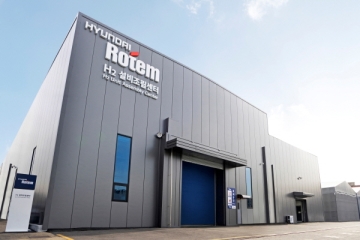
Hyundai Rotem wins contract for a demonstration project for a liquefied hydrogen charging station in Gangwon Province.
Hyundai Rotem announced on the 22nd that it has secured a contract for a liquefied hydrogen charging station demonstration project at Gangwon Technopark.
2022.04.25by 성유창 기자
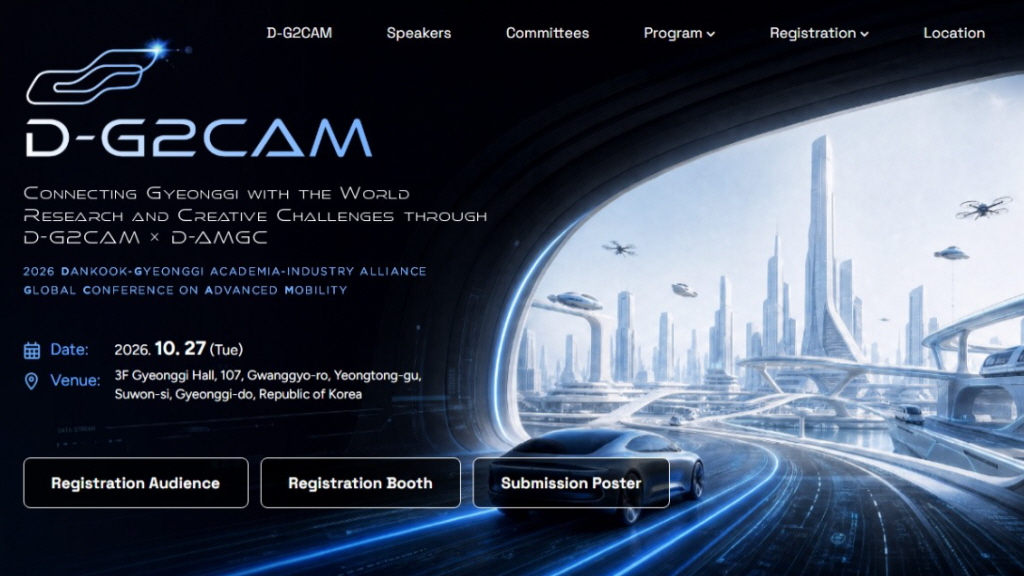
GAIA-Festa 2026, Autonomous Driving, AI, and Aerospace Experts Gather…Discussing Global Cooperation in the 'Silicon Intelligence Era'
GAIA-Festa 2026, which will be held in Suwon on October 27, is an industry-academia-research exchange event that explores the present and future of future mobility and AI technology through the global conference D-G2CAM 2026 and the international contest D-AMGC 2026. Domestic and international experts will share the latest research in autonomous driving, 5G/6G mobility, space technology, and data protection fields, while university students will showcase robots and physical AI prototypes that they have independently developed. Additionally, through poster presentations, corporate exhibitions, international cooperation meetings, and signing ceremonies, a platform will be established to connect the research capabilities and industrial needs of the Gyeonggi region with a global cooperation network.
2026.10.13by 배종인 기자

[e4ds Tech Day 2026 ⑨] Sim Sang-gyu, Autocrypt CTO: "In the Physical AI Era, Automotive Security Must Extend Beyond the Vehicle"
At e4ds Tech Day 2026, Sim Sang-gyu, CTO of Autocrypt, explained automotive cybersecurity strategies in the era of Physical AI and SDV (Software-Defined Vehicle). Automobiles are evolving as part of an ecosystem connected to AI, cloud, chargers, IoT, and robots, and he emphasized that the scope of security must expand beyond the vehicle interior to the entire connected environment. In particular, AI model tampering, adversarial attacks, OTA updates, and EV charger hacking were identified as major threats. He explained that response measures require zero trust, AI model integrity protection, intrusion detection, Security by Design and Default, and full lifecycle security management, and that proactive security system establishment beyond regulatory compliance is critical for securing future mobility competitiveness.
2026.10.12by 배종인 기자











