


"Vehicle Feature Subscription Services Expected to Drive Profitability Differentiation"
 Published2022.04.27 15:48
Securing More Stable Revenue Base Compared to Manufacturing
Product Appeal, Technology, and Consumer Acceptance Require Attention
According to the Korea Automotive Research Institute, as semiconductor component shortages and supply chain crises are resolved and complete vehicle manufacturers diversify their product mix, new strategies to enhance profitability will become necessary, and feature subscription services are expected to occupy an important position.
When parts and materials supply chain issues gradually normalize and a "reverse base effect" occurs that reduces profitability, complete vehicle manufacturers will face the need for profitability differentiation.
In this context, subscription-based services can create higher-margin markets compared to traditional manufacturing when technological and institutional foundations related to autonomous driving and connectivity services stabilize, and also provide utility value.
Through subscription services, companies can establish stable revenue bases on a weekly or monthly basis that could not be generated from existing manufacturing, and can improve efficiency in production automation and three-dimensional logistics by reducing mixed-model production during vehicle manufacturing.
Hyundai Motor provides remote control, safety security, vehicle management, navigation, and music streaming through its "Bluelink" service. Tesla has launched subscription services including "Full Self Driving," which provides Level 2 autonomous driving capability, and "Connectivity Package," which provides video and music streaming.
The Korea Automotive Research Institute stated that the success of vehicle feature subscription services depends on product appeal, technology, and consumer acceptance.
From a product appeal perspective, unlike one-time vehicle sales, feature subscription services after purchase are re-evaluated by consumers at each billing cycle, so the company's philosophy on user experience and service improvement cycles are expected to become important. Additionally, subscription services related to entertainment are likely to gain consumer selection only when distinctly differentiated from mobile devices.
In terms of technology, the competitiveness of foundational technologies for providing feature subscription services, such as OTA and integrated operating systems (OS), is expected to emerge as a core competitive factor for each complete vehicle brand. Accordingly, qualitative improvement in software technology that affects user experience of feature services is necessary.
Consumer acceptance also requires careful consideration. When vehicle safety-related features such as ADAS appear in subscription service form, apart from the service's economic viability, negative perceptions of "selling safety" may spread and consumer complaints may arise.
Meanwhile, the Korea Automotive Research Institute stated that such services can also have positive effects for consumers. While consumers previously had to pay in advance for desired options before vehicle delivery, subscription services allow usage only when needed, reducing economic burden, and enable temporary cancellation and re-subscription, expanding options for vehicle features.
Comments
Related news
OTA, the core of software-defined cars
As 'software-defined vehicles' are being called 'smartphones on the road' and bringing major change to the mobility industry, OTA, a core technology, is also receiving increased attention.
2022.04.12by 성유창 기자

Korea Must Accelerate Autonomous Driving Regulation Improvements
As the global autonomous driving market grows to over $1 trillion by 2035 and commercial deployment of autonomous vehicles accelerates, there are increasing calls for South Korea to improve relevant regulations to enable commercialization of Level 3 and higher autonomous driving.
2022.04.25by 배종인 기자
“Autonomous Driving Accidents, Who Should Be Responsible?”… Laws and Systems Must Be Established
As autonomous driving moves toward commercialization, various issues are expected to arise across multiple sectors including safety, traffic, and insurance. A forum has been organized to analyze laws and regulations for autonomous vehicle operation and gather expert opinions on the matter.
2022.04.25by 성유창 기자
Intel Develops Off-Road Autonomous Vehicle Simulation Platform for U.S. Defense Advanced Research Projects Agency
Intel develops a simulation platform that implements complex off-road environments for autonomous vehicle training, and implements new algorithms to accelerate the research and development process.
2022.04.27by 성유창 기자
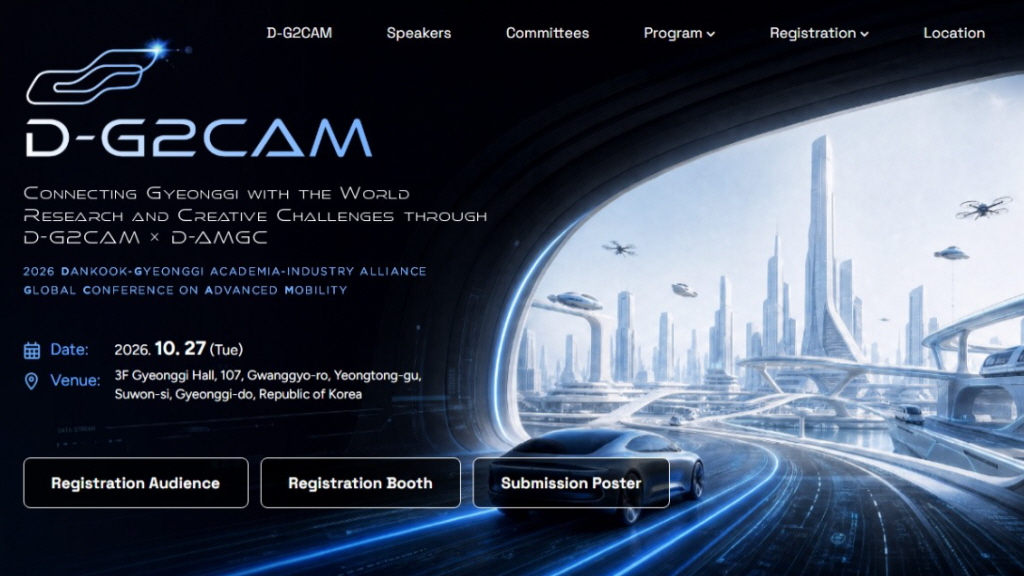
GAIA-Festa 2026, Autonomous Driving, AI, and Aerospace Experts Gather…Discussing Global Cooperation in the 'Silicon Intelligence Era'
GAIA-Festa 2026, which will be held in Suwon on October 27, is an industry-academia-research exchange event that explores the present and future of future mobility and AI technology through the global conference D-G2CAM 2026 and the international contest D-AMGC 2026. Domestic and international experts will share the latest research in autonomous driving, 5G/6G mobility, space technology, and data protection fields, while university students will showcase robots and physical AI prototypes that they have independently developed. Additionally, through poster presentations, corporate exhibitions, international cooperation meetings, and signing ceremonies, a platform will be established to connect the research capabilities and industrial needs of the Gyeonggi region with a global cooperation network.
2026.10.13by 배종인 기자











