



The Ministry of Trade, Industry and Energy will participate in the IPHE General Assembly and share hydrogen economy policies.
 Published2022.04.28 12:27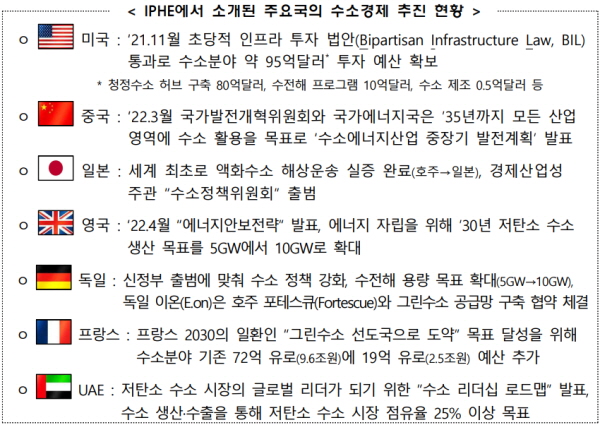
▲Status of hydrogen economy initiatives in major countries presented at IPHE (Image source: Ministry of Trade, Industry and Energy)
Introduction to the implementation status of the 'First Basic Plan for Hydrogen Economy Implementation' and other measures.
We will strive to build a clean hydrogen economy ecosystem both domestically and internationally.
At this general meeting, IPHE member countries, including Korea, shared their newly implemented hydrogen economy policies since the last general meeting (last November) and the progress of tasks of IPHE's working groups. Considering the COVID-19 situation, the meeting was held via video conference.
At a discussion on the current status of hydrogen policies in each country, the Ministry of Trade, Industry and Energy introduced the contents of the 'First Basic Plan for Hydrogen Economy Implementation' announced in November of last year and explained Korea's plan to build a full-cycle ecosystem from hydrogen production to transportation, storage, and utilization.
Also, the contents of the 'Hydrogen Act Safety Management Sector', such as the manufacturing permit/registration system and safety inspection for hydrogen production facilities, fuel cells, etc., which were implemented in February 2022.The government announced its regulatory innovation efforts through the 'Hydrogen-related Regulatory Sandbox', which introduces hydrogen aviation mobility and low-cost hydrogen tube trailer rental businesses.
In addition, the current status of the domestic hydrogen economy was shared by presenting the case of establishing a hydrogen charging station utilizing biogas, along with the recently launched demonstration of mass production of green hydrogen and the operation of hydrogen forklifts.
Major countries, including the United States, China, Japan, and the United Kingdom, have announced the current status of their hydrogen economy policies, which they are pursuing to strengthen their energy security.
The United States explained that it secured approximately $9.5 billion (approximately 11.8 trillion won) in funding for the hydrogen sector through the passage of a bipartisan infrastructure investment bill, while China explained the contents of its recently announced mid- to long-term plan for developing the hydrogen energy industry.
Japan announced that it had completed the world's first demonstration of liquid hydrogen transportation, and the UK and Germany announced plans to double their low-carbon hydrogen production targets by 2030 (from 5 GW to 10 GW).
France announced plans to invest an additional €1.9 billion (KRW 2.5 trillion) in the hydrogen sector as part of its "France 2030" investment roadmap for innovation and fostering the industrial sector, and the UAE became the first Middle Eastern country to join the IPHE, joining international cooperation to expand the hydrogen economy.
An official from the Ministry of Trade, Industry and Energy said at the meeting, “In response to the global energy market crisis, each country is seeking to expand energy independence through the hydrogen economy,” and “We will work to build a domestic and international clean hydrogen economy ecosystem so that we do not fall behind in the competition among countries to take the lead in the energy transition era.”
IPHE was launched in 2003 with the aim of establishing effective implementation plans for international cooperation for the early implementation of a hydrogen economy, an eco-friendly and high-efficiency energy society. It is engaged in activities such as establishing a multilateral research, demonstration, and commercialization cooperation system, and holding forums for policy development and standardization, and 23 countries including Korea, the United States, France, and the United Kingdom are participating as member countries.
Comments
Related news
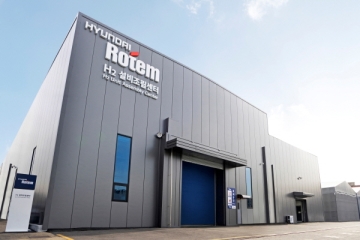
Hyundai Rotem wins contract for a demonstration project for a liquefied hydrogen charging station in Gangwon Province.
Hyundai Rotem announced on the 22nd that it has secured a contract for a liquefied hydrogen charging station demonstration project at Gangwon Technopark.
2022.04.25by 성유창 기자
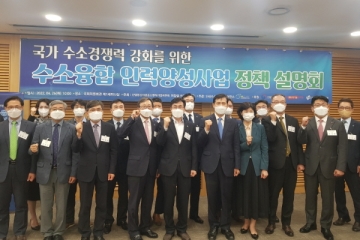
A policy briefing session on the hydrogen fusion human resource development project was held to strengthen the nation's hydrogen competitiveness.
A forum has been prepared to share the current status of hydrogen workforce development both domestically and internationally to strengthen global hydrogen competitiveness, and to listen to voices from industry, academia, and research institutions to advance the hydrogen workforce development roadmap.
2022.04.27by 성유창 기자
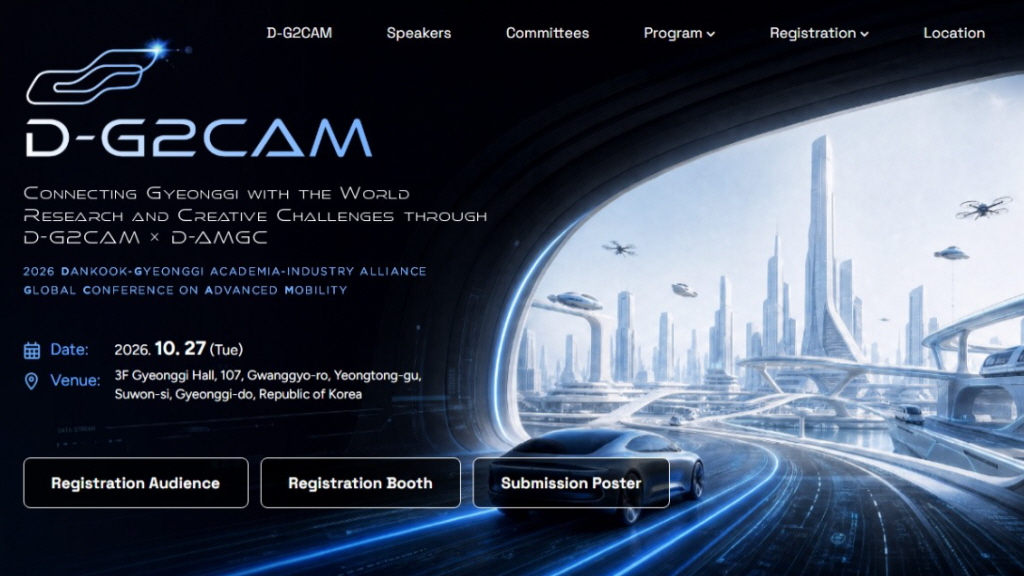
GAIA-Festa 2026, Autonomous Driving, AI, and Aerospace Experts Gather…Discussing Global Cooperation in the 'Silicon Intelligence Era'
GAIA-Festa 2026, which will be held in Suwon on October 27, is an industry-academia-research exchange event that explores the present and future of future mobility and AI technology through the global conference D-G2CAM 2026 and the international contest D-AMGC 2026. Domestic and international experts will share the latest research in autonomous driving, 5G/6G mobility, space technology, and data protection fields, while university students will showcase robots and physical AI prototypes that they have independently developed. Additionally, through poster presentations, corporate exhibitions, international cooperation meetings, and signing ceremonies, a platform will be established to connect the research capabilities and industrial needs of the Gyeonggi region with a global cooperation network.
2026.10.13by 배종인 기자

[e4ds Tech Day 2026 ⑨] Sim Sang-gyu, Autocrypt CTO: "In the Physical AI Era, Automotive Security Must Extend Beyond the Vehicle"
At e4ds Tech Day 2026, Sim Sang-gyu, CTO of Autocrypt, explained automotive cybersecurity strategies in the era of Physical AI and SDV (Software-Defined Vehicle). Automobiles are evolving as part of an ecosystem connected to AI, cloud, chargers, IoT, and robots, and he emphasized that the scope of security must expand beyond the vehicle interior to the entire connected environment. In particular, AI model tampering, adversarial attacks, OTA updates, and EV charger hacking were identified as major threats. He explained that response measures require zero trust, AI model integrity protection, intrusion detection, Security by Design and Default, and full lifecycle security management, and that proactive security system establishment beyond regulatory compliance is critical for securing future mobility competitiveness.
2026.10.12by 배종인 기자

Practical HIL Construction Strategy for Automotive and Off-Highway Controller Validation
As vehicle E/E architecture transitions to zonal structures and shifts to software-defined vehicles (SDV), the number of controllers (ECUs) requiring validation and software complexity are surging dramatically. Meanwhile, real vehicle testing cannot provide repeated verification under identical conditions and entails lead time and safety concerns. This white paper explains the principles of HIL (Hardware-in-the-Loop) validation and the structure of the NI platform composed of PXI, SLSC, and VeriStand, and through two actual implementation cases—Camera Record & Replay HIL for In-Cabin Monitoring Controller (ICMU) and Forklift Controller (VCU) HILS—describes how controller-level regression testing becomes possible. Additionally, it explicitly states application boundaries and limitations, such as lack of A2B support.
2026.10.12by 편집부











