



"We will actively seek input from industry, academia, and research on standardizing autonomous driving data."
 Published2022.05.24 15:49
.jpg)
▲ Jaejun Yoo, a researcher at the Electronics and Telecommunications Research Institute, is presenting the current status of autonomous driving data standardization.
Sharing domestic and international trends in autonomous driving data standardization
Establishing and operating an autonomous driving demonstration complex and verifying the usability of standards.
The Korea Agency for Technology and Standards and the Korea Standards Association held the '2022 New Growth Field National Standards Coordinator Standardization Strategy Briefing' at COEX on the 23rd and shared key technologies and standardization issues for each national standards coordinator in six new industry fields.
In the autonomous vehicle field, the Electronics and Telecommunications Research Institute and the Korea Institute of Autonomous Vehicles presented domestic and international standardization trends under the theme of "Autonomous Vehicle Data Standardization and Data Center Construction Status."
Jaejun Yoo, a researcher at the Electronics and Telecommunications Research Institute, said that since all data is linked to 'safety,' even detailed information is included in the category of autonomous driving data.
There have been many requests from various organizations, including Hyundai Motor Company, to receive consistent experimental information from vehicles. This is because vehicles must be able to receive signal information in the same format regardless of the city to ensure safety on the road, such as at intersections.
He then frequently mentioned 'cooperation' while discussing autonomous vehicle scenarios and data cases.
Data on vehicle information is basic, and 'cooperative driving negotiation', where autonomous vehicles and surrounding vehicles exchange messages to exchange information on which vehicle will pass first at an intersection, and 'cooperative traffic situation awareness', where information on the overall road, such as accidents and weather conditions, are said to be important parts of the scenario.
Regarding the promotion of domestic national standards, regular working groups and R&D on national standards development have been underway since 2021. Domestic demonstration complex operators and industry-academia-research experts are holding regular meetings to develop the standards, and industrial data R&D and demonstration-linked projects are also underway. Through these efforts, efforts are being made to collect, analyze, and define service cases and organize data exchange by scenario to secure the foundation for compatibility and activation of standards-based autonomous vehicle services.
In Seoul, Gyeonggi, Daegu, and other regions, demonstration complexes tailored to regional and business characteristics will be built and operated to verify the usability of standards.
In Sangam, Seoul, SKT and Enzero will lead a project to collect road infrastructure data from 1,036 vehicles and CV data from 1,800 vehicles, with the goal of establishing a foundation for advanced safety services for commercial vehicles. In Pangyo, the Next-Generation Convergence Technology Research Institute will collect autonomous driving shuttles and infrastructure data, aiming to develop autonomous driving demonstrations and services based on open platforms. In Daegu, the project will focus on infrastructure data, such as traffic signal information, in the Technopolis area, with the goal of operating and supporting autonomous driving urban demonstrations and research areas. △ In Gwangju, the Production Technology Research Institute collects data on vehicle failures, controllers, and public information with the goal of establishing an unmanned special purpose vehicle demonstration and integrated control center.
The Electronics and Telecommunications Research Institute (ETRI) is working to establish standards based on feedback from academia, including Seoul National University, and various organizations and ministries. Last year, it created two national standards through this process, which are expected to be released soon, the institute said.
The first is a "conceptual scenario." This involves dividing scenarios into a single set of standards to establish a common consensus and define a directionally and concretely defined standard for "messages," the units of service exchanged between vehicles. The second is a standard that fundamentally presents aspects related to vehicle safety, based on the conceptual scenario.
The working group is also continuing discussions on defining the message format for national standards for signal information. They are closely examining how to efficiently structure and transmit dynamically transmitted messages in conjunction with signal information, and a draft is expected in approximately two months.
Yoo said, “Autonomous driving involves many stakeholders,” and added, “We are working to develop national standards by gathering as many opinions as possible to simultaneously satisfy the needs of all stakeholders.”
He continued, “Autonomous driving data will encompass a vast array of data, extending beyond simply information about vehicles, signals, and infrastructure,” adding, “We will continue to gather demand from relevant sectors and expand and discuss relevant standards.”
Comments
Related news
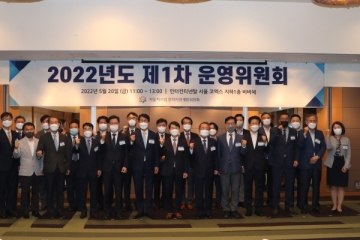
We will support labor transitions, including job transfers and career training, in line with the shift to future vehicles.
The automotive industry is beginning to actively pursue field-oriented, customized workforce development based on standardized future vehicle industry job competencies in response to the structural transformation of the future vehicle industry.
2022.05.23by 성유창 기자

From Jeju Airport to Jungmun by self-driving car
From the second half of 2022, it appears that autonomous vehicles will be able to traverse Jeju Island end-to-end.
2022.05.24by 성유창 기자
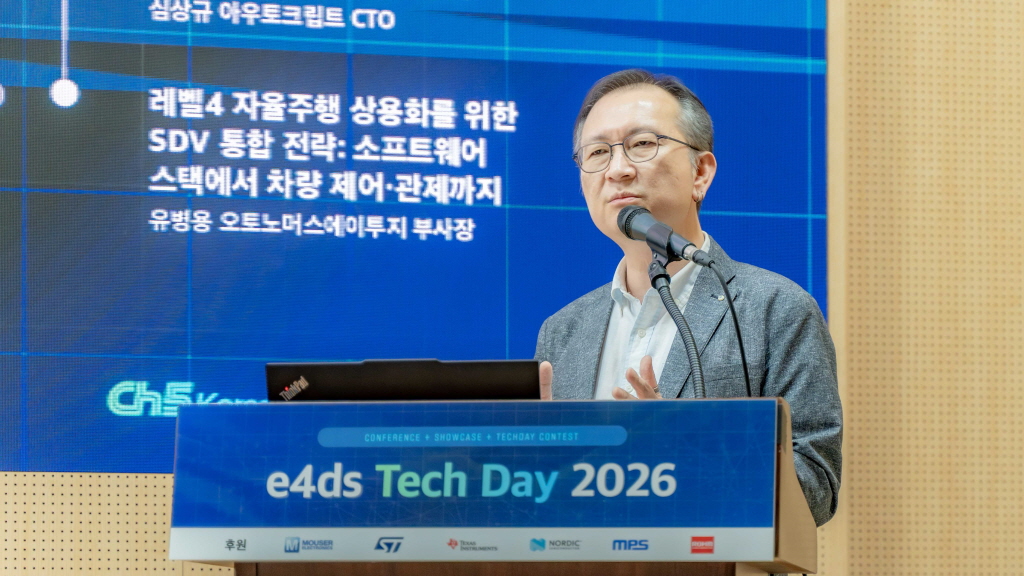
[e4ds Tech Day 2026 ⑨] Sim Sang-gyu, Autocrypt CTO: "In the Physical AI Era, Automotive Security Must Extend Beyond the Vehicle"
At e4ds Tech Day 2026, Sim Sang-gyu, CTO of Autocrypt, explained automotive cybersecurity strategies in the era of Physical AI and SDV (Software-Defined Vehicle). Automobiles are evolving as part of an ecosystem connected to AI, cloud, chargers, IoT, and robots, and he emphasized that the scope of security must expand beyond the vehicle interior to the entire connected environment. In particular, AI model tampering, adversarial attacks, OTA updates, and EV charger hacking were identified as major threats. He explained that response measures require zero trust, AI model integrity protection, intrusion detection, Security by Design and Default, and full lifecycle security management, and that proactive security system establishment beyond regulatory compliance is critical for securing future mobility competitiveness.
2026.10.12by 배종인 기자

Practical HIL Construction Strategy for Automotive and Off-Highway Controller Validation
As vehicle E/E architecture transitions to zonal structures and shifts to software-defined vehicles (SDV), the number of controllers (ECUs) requiring validation and software complexity are surging dramatically. Meanwhile, real vehicle testing cannot provide repeated verification under identical conditions and entails lead time and safety concerns. This white paper explains the principles of HIL (Hardware-in-the-Loop) validation and the structure of the NI platform composed of PXI, SLSC, and VeriStand, and through two actual implementation cases—Camera Record & Replay HIL for In-Cabin Monitoring Controller (ICMU) and Forklift Controller (VCU) HILS—describes how controller-level regression testing becomes possible. Additionally, it explicitly states application boundaries and limitations, such as lack of A2B support.
2026.10.12by 편집부
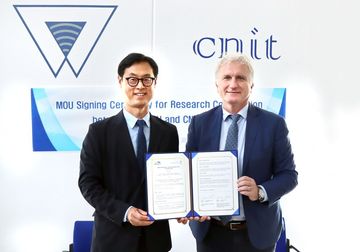
Korea Automotive Research Institute Signs MOU with Italy National Institute for Wireless Communications
The Korea Automotive Research Institute will sign an MOU with Italy's National Institute for Wireless Communications and launch joint research on next-generation mobility technologies based on 6G, V2X, and connected vehicles. The two organizations will conduct research to apply advanced wireless communication technologies to vehicles and discover international joint projects to advance next-generation connected vehicle technology development.
2026.10.12by 배종인 기자











