



Successful Communication with Nuri Rocket Performance Verification Satellite
 Published2022.06.23 08:27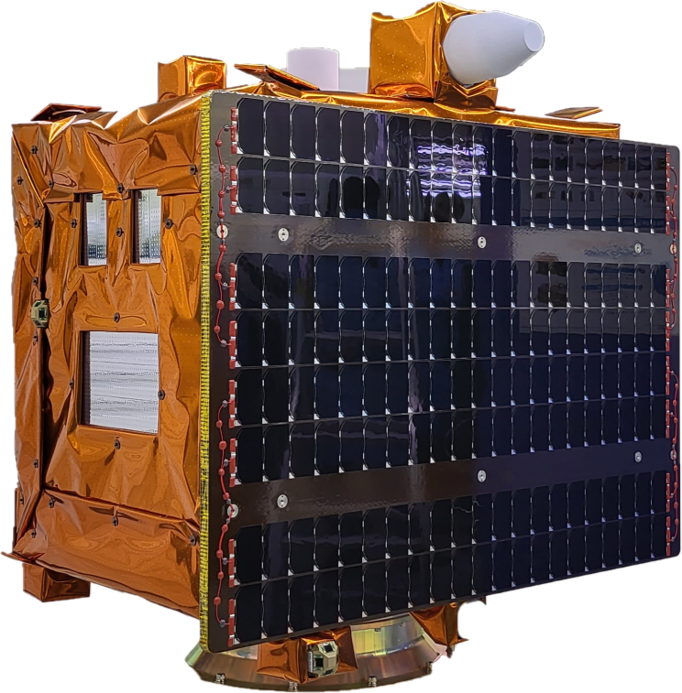
▲성능검증위성 형상
22일 새벽 3시경 양방향 교신 확인
큐브위성 4기 탑재...향후 2년간 임무 수행
한국형발사체 '누리호'가 성능검증위성을 성공적으로 분리 및 지상과 교신에 성공했다.

성능검증위성은 600~800km 사이의 태양동기궤도에서 2년간 탑재체가 실제 우주환경에서 설계된 성능을 잘 발휘하는지 확인한다.
향후 성능검증위성이 발사 이후 자체 메모리에 저장하고 있는 초기 데이터와 GPS 데이터를 고속 전송모드(1Mbps)로 내려 받을 계획이다.
성능검증위성은 앞으로 7일 간 위성의 상태를 계속 점검하며 자세를 안정화시키고, 6월 29일부터 2일 간격으로 국내 대학에서 개발한 큐브위성을 하나씩 사출한다.
Comments
Related news
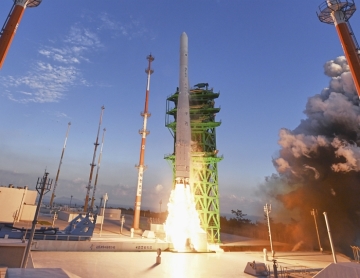
Nuriho Launch Countdown, High-Reliability Semiconductors Are Essential for the Space Age
South Korea's Nuri rocket, a symbol that will usher in the space and aerospace era, is preparing for a re-launch attempt. As the scheduled launch date on the 21st approaches, high-reliability semiconductor devices with precision and durability are essential for equipment to function properly in the harsh space environment.
2022.06.20by 명세환 기자
.jpg)
Hanwha Aerospace Supplies Engines for 'Nuri Launch'... Aims to Lead UAM Powertrain Business
Given the economic ripple effect is estimated at approximately 3 trillion won, there is considerable hope for success. According to industry sources, the Nuri rocket, scheduled for its second launch, involved approximately 300 domestic companies participating in the development process of over 30,000 components.
2022.06.21by 김예지 기자

Intel Unveils Next-Generation 'Core Ultra Series 3' and vPro Platform for Enterprise PCs
Intel has officially unveiled the "Intel Core Ultra Series 3" for next-generation enterprise PCs and the latest vPro platform, addressing a wide range of demands from enterprise notebooks to high-performance workstations.
2026.03.26by 배종인 기자

ROHM Launches ESD Protection Diode Compatible with High-Speed Interfaces of 10Gbps or Higher
Semiconductor specialist ROHM has developed the 'RESDxVx series' of ESD (electrostatic discharge) protection diodes capable of responding to next-generation high-speed data communication environments exceeding 10Gbps, simultaneously enhancing both signal quality maintenance required in high-speed interfaces and IC protection performance.
2026.03.26by 배종인 기자
ST Launches 75V Drive IC Targeting 48V Industrial Motor Driving
ST Microelectronics has unveiled the 'STSPIN9P' series of 75V motor drive ICs tailored for 48V-class industrial drive system design. The new product family is characterized by half-bridge and full-bridge configurations that enable design scalability according to motor type and output conditions. Power supply circuits, protection functions, and current sensing circuits are integrated on-chip to simplify system configuration, and the devices are designed to support applications up to 500W maximum. The company plans to provide reference designs and demo boards to support development and evaluation in industrial automation, robotics, pumps, fans, lighting, and textile machinery.
2026.03.26by 배종인 기자











