



Ministry of Land, Infrastructure and Transport: "Will prioritize commercialization of Level 3 autonomous vehicles within the year"
 Published2022.07.19 10:48
Autonomous driving pilot zones to expand nationwide
Minister Won Hee-ryong of the Ministry of Land, Infrastructure and Transport included mobility innovation in the new government's business plan for expanding new growth engines reported to the President on the 18th.
In this regard, the Ministry of Land, Infrastructure and Transport stated that it is necessary to establish a national core strategy for achieving global leadership and spreading citizen-experienced services in the mobility era, and announced that it will release the 'Mobility Innovation Roadmap' within August.
Through the operation of the Mobility Innovation Committee, launched in June with private sector participation, the government will prepare tasks, and under a structure where the private sector leads and the government supports, major projects in autonomous driving, UAM, and digital logistics appear to be under preparation.
The roadmap includes the content of commercializing Level 4 fully autonomous vehicles by 2027, announced as a new government state affair, and notably includes a section on early visualization of outcomes such as prioritizing the commercialization of Level 3 autonomous vehicles within the year.
The Level 3 autonomous vehicle to be commercialized within the year is a stage of conditional automation where the system performs all driving operations. Starting from Level 3, passengers can freely use their mobile phones and do not need to keep their eyes on the road, with drivers only needing to intervene in dangerous situations—this is the level of autonomous driving.
Level 4 autonomous driving, targeting commercialization in 2027, is a stage of advanced automation where, like Level 3, the system handles all driving. This can be considered a true autonomous driving stage where the system manages driving even in dangerous situations, requiring no driver intervention.
More than a month has passed since the autonomous driving pilot zones were expanded to 14 zones, double the previous number. The roadmap also includes bold content about sweeping away regulations by allowing nationwide implementation.
The Ministry of Land, Infrastructure and Transport announced that it will convert pilot regulation, such as autonomous vehicle test zones, to a negative regulatory system to expand demonstrations from limited areas to nationwide, with only prohibited areas specified separately.
Additionally, approximately 2 expressway sections will be selected where autonomous vehicles can operate freely, and the ministry demonstrated its commitment to achieving commercialization targets through R&D and establishment of regulatory foundations.
Minister Won Hee-ryong of the Ministry of Land, Infrastructure and Transport stated, "In the era of mobility with autonomous vehicles and urban air mobility, we will innovate regulations and support technology development so that corporate innovation and creativity can flourish."
Comments
Related news
GAIA-Festa 2026, Autonomous Driving, AI, and Aerospace Experts Gather…Discussing Global Cooperation in the 'Silicon Intelligence Era'
GAIA-Festa 2026, which will be held in Suwon on October 27, is an industry-academia-research exchange event that explores the present and future of future mobility and AI technology through the global conference D-G2CAM 2026 and the international contest D-AMGC 2026. Domestic and international experts will share the latest research in autonomous driving, 5G/6G mobility, space technology, and data protection fields, while university students will showcase robots and physical AI prototypes that they have independently developed. Additionally, through poster presentations, corporate exhibitions, international cooperation meetings, and signing ceremonies, a platform will be established to connect the research capabilities and industrial needs of the Gyeonggi region with a global cooperation network.
2026.10.13by 배종인 기자

[e4ds Tech Day 2026 ⑨] Sim Sang-gyu, Autocrypt CTO: "In the Physical AI Era, Automotive Security Must Extend Beyond the Vehicle"
At e4ds Tech Day 2026, Sim Sang-gyu, CTO of Autocrypt, explained automotive cybersecurity strategies in the era of Physical AI and SDV (Software-Defined Vehicle). Automobiles are evolving as part of an ecosystem connected to AI, cloud, chargers, IoT, and robots, and he emphasized that the scope of security must expand beyond the vehicle interior to the entire connected environment. In particular, AI model tampering, adversarial attacks, OTA updates, and EV charger hacking were identified as major threats. He explained that response measures require zero trust, AI model integrity protection, intrusion detection, Security by Design and Default, and full lifecycle security management, and that proactive security system establishment beyond regulatory compliance is critical for securing future mobility competitiveness.
2026.10.12by 배종인 기자

Practical HIL Construction Strategy for Automotive and Off-Highway Controller Validation
As vehicle E/E architecture transitions to zonal structures and shifts to software-defined vehicles (SDV), the number of controllers (ECUs) requiring validation and software complexity are surging dramatically. Meanwhile, real vehicle testing cannot provide repeated verification under identical conditions and entails lead time and safety concerns. This white paper explains the principles of HIL (Hardware-in-the-Loop) validation and the structure of the NI platform composed of PXI, SLSC, and VeriStand, and through two actual implementation cases—Camera Record & Replay HIL for In-Cabin Monitoring Controller (ICMU) and Forklift Controller (VCU) HILS—describes how controller-level regression testing becomes possible. Additionally, it explicitly states application boundaries and limitations, such as lack of A2B support.
2026.10.12by 편집부
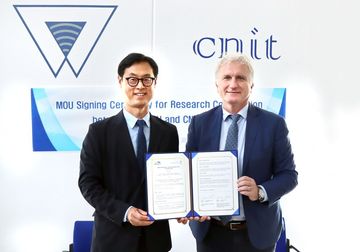
Korea Automotive Research Institute Signs MOU with Italy National Institute for Wireless Communications
The Korea Automotive Research Institute will sign an MOU with Italy's National Institute for Wireless Communications and launch joint research on next-generation mobility technologies based on 6G, V2X, and connected vehicles. The two organizations will conduct research to apply advanced wireless communication technologies to vehicles and discover international joint projects to advance next-generation connected vehicle technology development.
2026.10.12by 배종인 기자
Color Accuracy Issues in Vehicle Interior Ambient Lighting and Intelligent LED Drivers
Vehicle interior ambient lighting is spreading across all price segments, and the level of color accuracy required of lighting designers is rising accordingly. This white paper quantitatively addresses why temperature drift and individual variations of RGB LEDs cannot be corrected by standard constant-current drivers, and explains an intelligent LED driver approach that integrates an MCU, calibration data, and a LIN network interface into the driver. It covers implementation details of the LITIX Interior TLD4020-3ET currently in production, portfolio roadmap, and evaluation/development environments, and clarifies application boundaries including lack of 48V support, lack of RGBi/ISELED support, and absence of direct optical degradation diagnostics.
2026.10.08by 명세환 기자











