



Completion of 'Pyeongtaek Hydrogen Production Base,' the Capital Region's First Hydrogen Supply Hub
 Published2022.07.27 15:24
Up to 50% reduction in transportation costs, application of domestic hydrogen reformers
The Ministry of Trade, Industry and Energy (hereinafter the Ministry) completed construction of the Pyeongtaek Hydrogen Production Base located in the Asan National Industrial Complex in Poseung-eup, Pyeongtaek-si, Gyeonggi-do, and held a completion ceremony on the 27th.
Since 2019, the Ministry of Trade, Industry and Energy has been promoting the construction of small-scale hydrogen production bases in seven regions nationwide that supply hydrogen fuel using city gas near demand centers in order to resolve the regional imbalance in the supply of hydrogen for vehicles produced in petrochemical complexes such as Daesan, Ulsan, and Yeosu.
The completion of the Pyeongtaek hydrogen production facility is the second following the Changwon facility, which has been in operation since the end of 2021, and the first in the metropolitan area.
The Ministry of Trade, Industry and Energy initially invested 5 billion won with the goal of producing 1 ton of hydrogen per day, but later, Pyeongtaek City in Gyeonggi Province and the private sector invested an additional 18.15 billion won in anticipation of increased hydrogen demand in the future, and the facility was completed with a maximum daily hydrogen production capacity of 7 tons.
The supply volume of the 33 hydrogen refueling stations currently in operation in the metropolitan area is 2 tons per day on average, based on the Korea Gas Corporation Hydrogen Distribution Information System, totaling 55 tons per month.
The production capacity of the completed Pyeongtaek hydrogen base, 7 tons, is enough to supply fuel to 430,000 hydrogen vehicles annually, assuming a maximum charging capacity of 6 kg based on Hyundai Motor's Nexo model.
In addition to vehicle fuel, Pyeongtaek City is planning to achieve carbon neutralityIn accordance with the 'Hydrogen Complex District Development Plan,' there are plans to expand the supply of household and industrial hydrogen to the nearby hydrogen pilot city and Pyeongtaek Port in the future.
The Pyeongtaek base is scheduled to begin hydrogen production next month following trial runs, and once operational, it is expected to contribute to lowering hydrogen distribution prices and strengthening the technological competitiveness of the domestic hydrogen industry.
33 hydrogen refueling stations in the metropolitan area are expected to save about 50% of transportation costs by switching their supply sources from remote locations, such as the Daesan Petrochemical Complex, to the Pyeongtaek production base.
Some production processes at the Pyeongtaek base used a domestically produced hydrogen reformer developed by the Korea Institute of Energy Research and commercialized by the domestic company Wonil T&I, which was designated as an innovative prototype by the Public Procurement Service in 2020.
As production track record accumulates in the future, expanded domestic use of the facility and overseas expansion are also expected.
To achieve carbon neutrality, the Ministry of Trade, Industry and Energy plans to complete the establishment of seven currently planned small-scale hydrogen production bases (based on natural gas) this year and additionally support the construction of clean hydrogen production bases equipped with water electrolysis and carbon capture capabilities by 2026.
Park Il-jun, the Second Vice Minister of Trade, Industry and Energy, who attended the groundbreaking ceremony on this day, stated in his congratulatory remarks, “The Pyeongtaek production base will serve as an important foundation leading the transition to the hydrogen economy era in the metropolitan area,” adding, “We plan to promptly implement institutional support, such as introducing a clean hydrogen certification system and opening a hydrogen power generation market, to foster the world’s leading hydrogen industry.”
Comments
Related news
.jpg)
Doosan Fuel Cell, Full-scale Transition to Clean Hydrogen Fuel Cells
Doosan Fuel Cell has embarked on securing cutting-edge technological competitiveness for its transition to clean hydrogen fuel cells.
2022.06.03by 성유창 기자
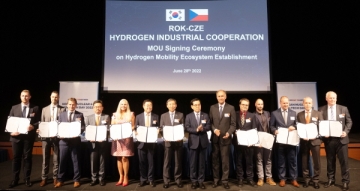
Hydrogen Alliance Promotes Establishment of Czech Hydrogen Ecosystem
Eleven companies and institutions from Korea and the Czech Republic have joined forces to build a hydrogen mobility ecosystem within the Czech Republic.
2022.06.29by 배종인 기자
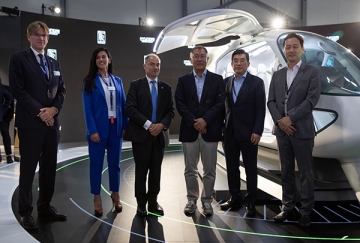
Rolls-Royce and Hyundai Motor Join Hands to Lead Future Mobility (AAM) Market
Rolls-Royce and Hyundai Motor Group announced on the 18th at the Farnborough Air Show in the UK a partnership plan to provide completely electric propulsion systems and hydrogen fuel cell technology to the Advanced Air Mobility (AAM) market.
2022.07.22by 김예지 기자
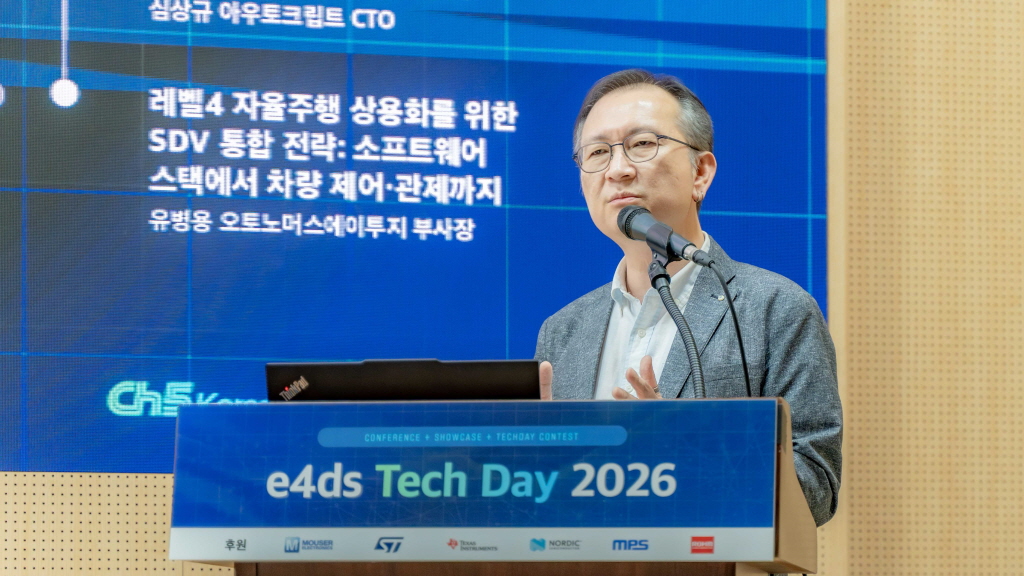
[e4ds Tech Day 2026 ⑨] Sim Sang-gyu, Autocrypt CTO: "In the Physical AI Era, Automotive Security Must Extend Beyond the Vehicle"
At e4ds Tech Day 2026, Sim Sang-gyu, CTO of Autocrypt, explained automotive cybersecurity strategies in the era of Physical AI and SDV (Software-Defined Vehicle). Automobiles are evolving as part of an ecosystem connected to AI, cloud, chargers, IoT, and robots, and he emphasized that the scope of security must expand beyond the vehicle interior to the entire connected environment. In particular, AI model tampering, adversarial attacks, OTA updates, and EV charger hacking were identified as major threats. He explained that response measures require zero trust, AI model integrity protection, intrusion detection, Security by Design and Default, and full lifecycle security management, and that proactive security system establishment beyond regulatory compliance is critical for securing future mobility competitiveness.
2026.10.12by 배종인 기자

Practical HIL Construction Strategy for Automotive and Off-Highway Controller Validation
As vehicle E/E architecture transitions to zonal structures and shifts to software-defined vehicles (SDV), the number of controllers (ECUs) requiring validation and software complexity are surging dramatically. Meanwhile, real vehicle testing cannot provide repeated verification under identical conditions and entails lead time and safety concerns. This white paper explains the principles of HIL (Hardware-in-the-Loop) validation and the structure of the NI platform composed of PXI, SLSC, and VeriStand, and through two actual implementation cases—Camera Record & Replay HIL for In-Cabin Monitoring Controller (ICMU) and Forklift Controller (VCU) HILS—describes how controller-level regression testing becomes possible. Additionally, it explicitly states application boundaries and limitations, such as lack of A2B support.
2026.10.12by 편집부











