


19 regulatory improvements in the hydrogen industry, including self-charging hydrogen vehicles.
 Published2022.08.29 13:47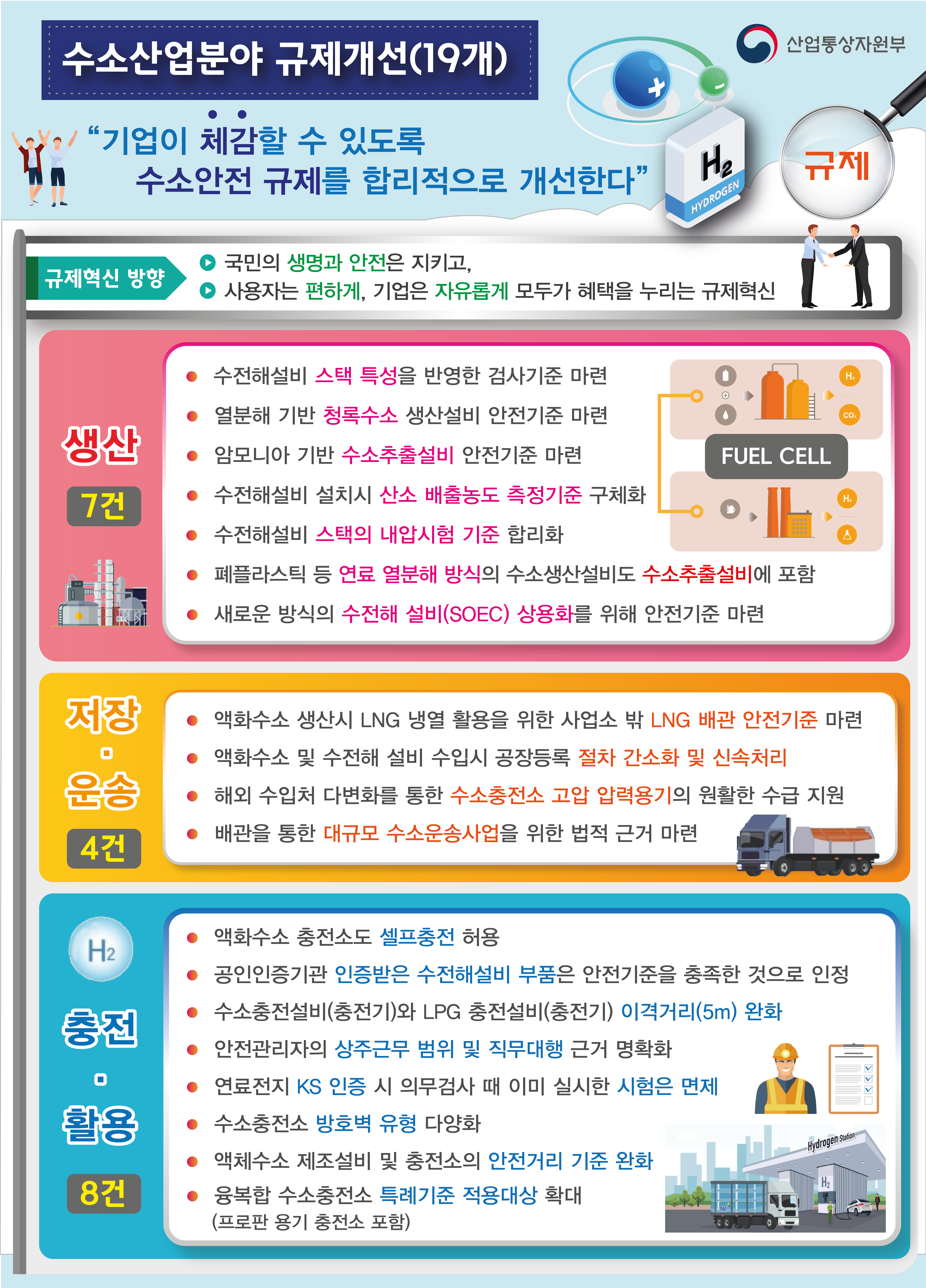
Development of safety devices and charging control for self-charging completed
Establishment of safety standards for thermal decomposition hydrogen production facilities
The Ministry of Trade, Industry and Energy announced on the 29th that it plans to select and improve 19 innovative projects that can be felt by businesses after expert review.
Unlike overseas countries such as the US and Japan, domestic hydrogen charging stations have prohibited drivers from charging themselves. Therefore, there have been consistent calls for the introduction of self-charging to improve the convenience of hydrogen vehicle drivers and ensure the economic feasibility of hydrogen charging stations.
Afterwards, the Ministry of Trade, Industry and Energy completed the development of △self-charging safety management regulations △self-charging safety devices (charger freezing prevention, charging nozzle drop prevention device, etc.) △charging control program after receiving regulatory sandbox approval in December of last year.
Starting August 30th, a self-charging demonstration will begin in earnest at the Incheon Airport (T2) hydrogen charging station operated by Hynet, with participation from the general public.
When self-charging, you can save 1,500 to 2,000 won by applying a discounted price of approximately 300 to 400 won/kg for a single 5kg charge.
The Ministry of Trade, Industry and Energy has received various suggestions related to hydrogen regulations through comprehensive surveys and meetings with hydrogen companies and related organizations since June 2022, and among them, it has selected suggestions for the entire hydrogen safety cycle that can promote corporate activities while ensuring safety. We decided to quickly improve 19 tasks.
The 19 tasks selected include 7 production tasks, 4 storage/transportation tasks, and 8 charging station/utilization tasks.
Regulatory innovations include: △developing inspection standards that take into account the characteristics of electrolysis facilities; △establishing safety standards for hydrogen production facilities using thermal decomposition methods;
Stacks, a key component of electrolysis equipment, were originally subject to burst testing to verify their durability. However, given the significant economic losses to operators in the event of a burst, consideration is being given to developing inspection technology and standards through simulations and other methods instead of burst testing.
Safety standards for pyrolysis-based hydrogen production facilities will also be established. Current law does not include hydrogen production facilities that use pyrolysis of fuels like waste plastics within the scope of hydrogen extraction facilities. However, as part of the improvement plan, pyrolysis-based facilities will be included and safety standards revised to ensure the commercialization of diverse hydrogen production facilities.
In addition, the remaining tasks currently undergoing further review will undergo review by relevant ministries and improvement measures will be finalized by the fourth quarter of this year. A regulatory map will also be provided to provide regulatory information for each hydrogen lifecycle.
The regulatory map is scheduled to be provided in December on the 'Hydrogen Economy Comprehensive Information Portal' operated by H2KOREA.
Park Il-joon, Second Vice Minister of the Ministry of Trade, Industry and Energy, said, “Hydrogen self-charging is a desirable regulatory improvement case that satisfies both hydrogen car drivers and charging station operators in that it improves the convenience of charging for drivers, such as extended operating hours of charging stations and lower hydrogen prices, and enhances the economic feasibility of charging stations, such as reducing operating costs.” He added, “The Ministry of Trade, Industry and Energy will continue to discover regulatory innovation tasks that benefit both users and companies, and actively improve them to revitalize the business environment.”
Comments
Related news
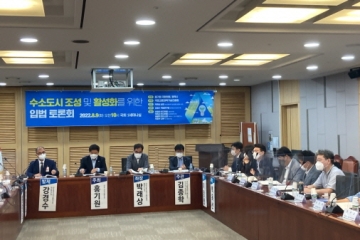
Hydrogen City Act, Key to the 'World's First Hydrogen City'
Experts have presented the opinion that the prompt enactment of the Hydrogen City Act should be pursued to lead carbon neutrality, secure brand positioning, and generate economic innovation effects such as overseas exports.
2022.08.10by 성유창 기자

KIMS Accelerates the Era of Green Hydrogen Production
A domestic research team has successfully developed the nation's first long-lifespan, high-efficiency anion exchange membrane water electrolysis stack technology based on non-precious metals.
2022.08.11by 성유창 기자
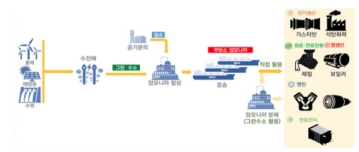
KIMM, “Green Ammonia Promising for the Future”
The Korea Institute of Machinery and Materials has analyzed green ammonia-related technologies as a future promising item across various emerging energy industries, including hydrogen energy transportation.
2022.08.18by 배종인 기자
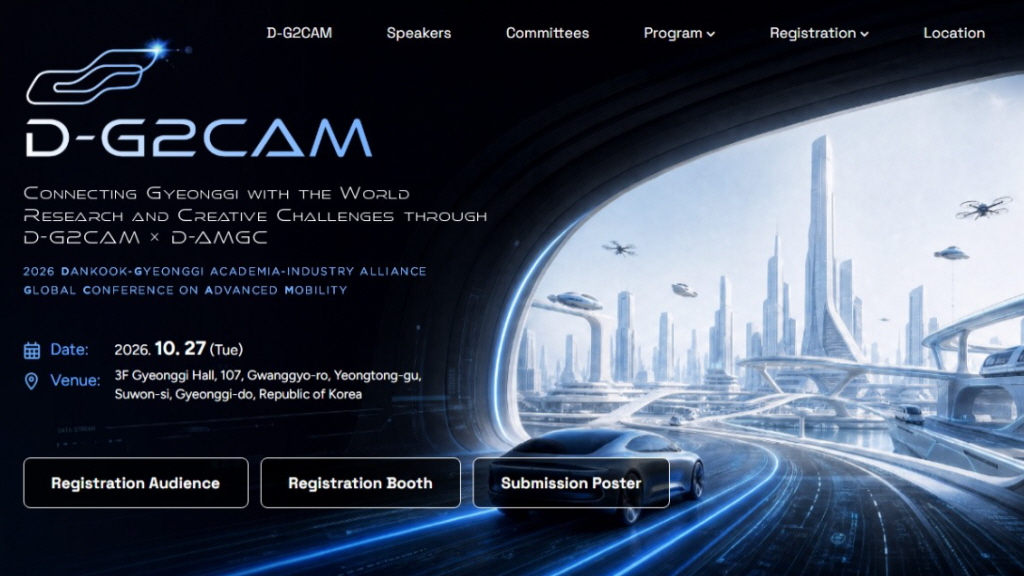
GAIA-Festa 2026, Autonomous Driving, AI, and Aerospace Experts Gather…Discussing Global Cooperation in the 'Silicon Intelligence Era'
GAIA-Festa 2026, which will be held in Suwon on October 27, is an industry-academia-research exchange event that explores the present and future of future mobility and AI technology through the global conference D-G2CAM 2026 and the international contest D-AMGC 2026. Domestic and international experts will share the latest research in autonomous driving, 5G/6G mobility, space technology, and data protection fields, while university students will showcase robots and physical AI prototypes that they have independently developed. Additionally, through poster presentations, corporate exhibitions, international cooperation meetings, and signing ceremonies, a platform will be established to connect the research capabilities and industrial needs of the Gyeonggi region with a global cooperation network.
2026.10.13by 배종인 기자
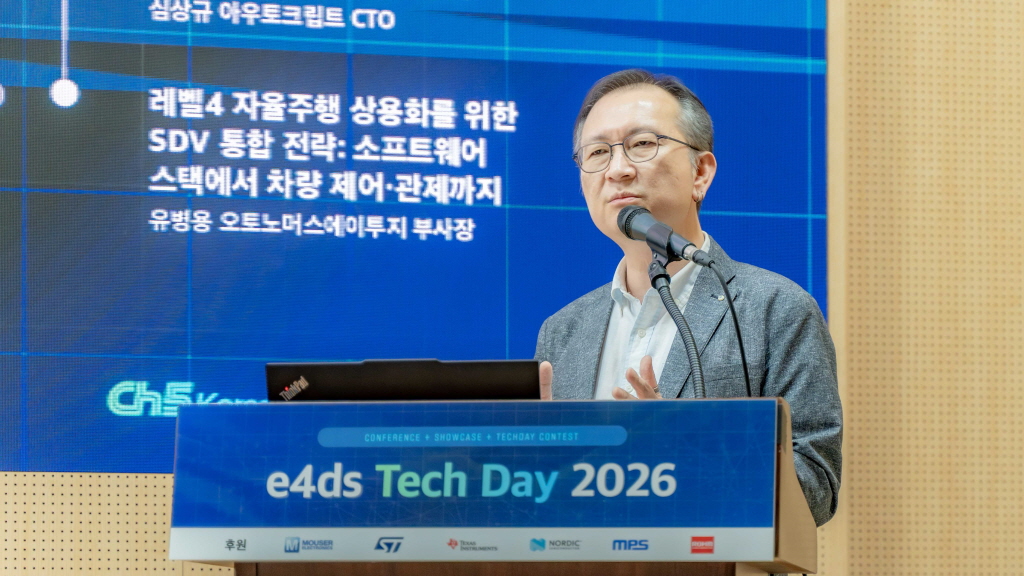
[e4ds Tech Day 2026 ⑨] Sim Sang-gyu, Autocrypt CTO: "In the Physical AI Era, Automotive Security Must Extend Beyond the Vehicle"
At e4ds Tech Day 2026, Sim Sang-gyu, CTO of Autocrypt, explained automotive cybersecurity strategies in the era of Physical AI and SDV (Software-Defined Vehicle). Automobiles are evolving as part of an ecosystem connected to AI, cloud, chargers, IoT, and robots, and he emphasized that the scope of security must expand beyond the vehicle interior to the entire connected environment. In particular, AI model tampering, adversarial attacks, OTA updates, and EV charger hacking were identified as major threats. He explained that response measures require zero trust, AI model integrity protection, intrusion detection, Security by Design and Default, and full lifecycle security management, and that proactive security system establishment beyond regulatory compliance is critical for securing future mobility competitiveness.
2026.10.12by 배종인 기자











