


[UAM Policy Seminar] "Securing the Global UAM Market is Everyone's Homework"
 Published2022.09.16 11:36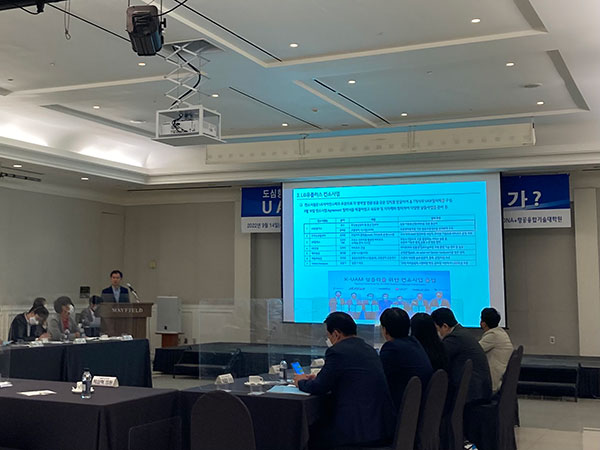
Government, industry, and academia participate in discussions on development plans for global standards.
"Both legislation and technology acquisition are crucial," and "We will build a connected transportation system."
Urban Air Mobility (UAM), an eco-friendly transportation solution that promises to solve future traffic congestion, has emerged as a game changer. At a UAM policy seminar held to address the need for institutional discussion, a consensus was reached that flexible government legislation and collaboration among development stakeholders are important for Korea to lead the UAM ecosystem.
The 'UAM Urban Air Mobility Industry Development Policy Seminar' hosted by Democratic Party of Korea lawmakers Jin Seong-jun, Choi In-ho, Kim Byeong-wook, and Park Sang-hyeok and organized by Korea Aerospace University and DNA+ Graduate School of Aviation Convergence Technology was held at the Mayfield Hotel Orchid Room on the 14th.
Choi Seung-wook, head of the Urban Aviation Policy Team at the Ministry of Land, Infrastructure and Transport, announced in his presentation on the ‘Current Status of Preparations for the Commercialization of Urban Air Transport UAM’ that both policies and technologies must be supported to create a new ecosystem, and that the Ministry of Land, Infrastructure and Transport will form ‘UTK (UAM Team Korea)’ to encourage active participation from all stakeholders.
Team Leader Choi expressed his expectation that Korea will be able to take the lead in next-generation UAM by utilizing hydrogen fuel cells and other technologies, and said that the goal is to identify issues and verify legal systems by 2024, and then launch pilot projects and commercialization starting in urban areas in 2025.
In particular, Team Leader Choi emphasized the importance of building a connected transportation system. It is expected that after commercialization, it will be developed with focus and will be fully operational in 30 years, allowing it to perform the role of a taxi in the future.
The UAM-related laws are divided into the definition of terms, integration of general policy support, and the aviation special law. The gist is that existing aviation laws will not be applied to the demonstration project area as a basic rule, and in areas where it is unavoidably necessary, regulations will be minimized in the colonel's regulations.
■ Jeju Air, Kakao Mobility, and LG Uplus share their respective industry statuses.
In his presentation, Jeju Air UAM Business Promotion Team Leader Park Tae-ha emphasized the importance of operators ahead of UAM commercialization, and emphasized that in the UAM industry, securing social acceptance, along with safety, is crucial for the flexibility of managing time and location.
Director Park said, “UAM operators are ultimately the starting point of the UAM ecosystem, and for the stable installation and successful commercialization of domestic UAM, operators with specialized capabilities, experience, know-how, specialized personnel, and aircraft operation experience are important.”
He also emphasized social acceptance, diverse route networks, flexible legal systems, and government financial support as requirements for UAM success.
Son Ha-un, head of the UAM service team at Kakao Mobility, emphasized the importance of connectivity with ground transportation. He argued that vertiports should be installed throughout the city to secure boarding and alighting space, and that cooperation between industry, academia, and research institutes is important throughout the entire process.
As a MaaS operator, Kakao Mobility expressed confidence in its ability to secure domestic citizens' movement data and optimize payment reservations and other services through the Vertiport platform.
LGU+'s Youngseo Jeon explained the role of the K-UAM project and LGU+'s traffic management system, emphasizing the importance of corridor management, including corridor design and management, approval, and safety.
LGU+ is conducting advanced radio coverage tests related to 5G communications and plans to conduct direct radio measurement experiments at a demonstration complex next spring.
In his presentation, the former director requested smooth approval from local governments for policy support and raised the need for private-led revision of the law regarding aviation joint quality measurement.
Is UAM commercialization possible? Talent development and industry issues need to be addressed.
In his presentation, Professor Lee Geum-jin of Korea Aerospace University argued that industrial development and education are in a mutually cyclical relationship, and that preemptive investment is especially necessary for the introduction of new industries such as UAM.
The professor said, "To meet the steadily increasing demand for aviation and to lead the development of new aviation fields, we need to develop a new talent training model. This requires nurturing not only practical talent in AI, big data, and communications, but also research talent."
Dr. Myung-Hyeon Kim of the Korea Transport Institute addressed overall UAM industry issues, including airframes, safety, and vertiports.
Dr. Kim said that in terms of safety and security, there is ambiguity in identifying the shape of rotary wing/fixed wing aircraft and its connection with the service aspect.He said there were points of discussion related to the simplification of consent.
He also added that it is difficult to establish the concept of an airport/terminal in relation to the vertiport, and that the importance of connected transportation must be raised, and that legislation for specific business plans must proceed along with the technical aspects.
It's still a bit premature to establish the current direction of the UAM industry. However, this policy seminar, attended by relevant stakeholders, should serve as a catalyst for solidifying the understanding that UAM is a novel mode of transportation, requiring joint solutions from relevant industries—aircraft, facilities, platforms, and services. If the government seeks common ground with companies leading the industry ecosystem, it will likely facilitate appropriate financial and policy progress.
Comments
Related news
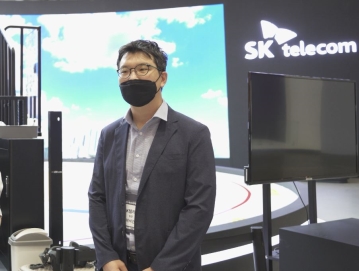
[2022 Busan International Motor Show] SKT UAM Team Leader Lee Seok-geon – “We will lead commercialization by 2025 as an integrated UAM service provider”
UAM (Urban Air Mobility) is an overall transportation system based on eVTOL (electric vertical takeoff and landing aircraft) powered by electricity, and is drawing attention as a next-generation eco-friendly transportation mode. We met with Lee Seok-gun, team leader of SKT's UAM Business Promotion Team, to hear about SKT's vision and aspirations for UAM services aimed at commercialization by 2030.
2022.07.20by 김예지 기자
"National-led research and development is essential to pioneer new UAM markets."
A forum has been established to examine the current state of the domestic UAM industry and discuss policy development and business directions from various perspectives, including development technology, certification, and business models. UAM industry is anticipated as a massive market with potential stemming from linkages across diverse sectors, and experts have reached consensus that national leadership and joint research and development participation from industry, academia, and research institutions are essential for pioneering the new UAM market.
2022.07.27by 김예지 기자
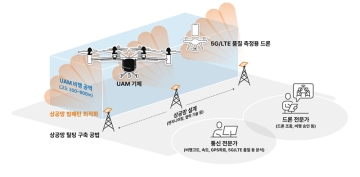
SKT, K-UAM demonstration project 5G commercial network construction
SK Telecom operated a communication quality measurement drone in a trial test related to 5G aerial network near the Goheung National Aviation Testing Center, verifying service quality based on communication altitude and distance.
2022.08.08by 김예지 기자
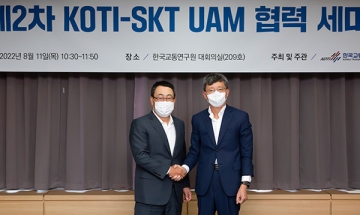
SKT-Korea Transportation Institute Hold UAM Cooperation Seminar
SK Telecom held a seminar with the Korea Transportation Institute on AI and big data-based UAM cooperation on the 11th. SKT and the Transportation Institute have been conducting joint research for UAM commercialization following a cooperation seminar led by representatives from both sides in early this year to lead the UAM industry.
2022.08.16by 김예지 기자
[2022 Unmanned Vehicle Industry Exhibition] MBC: "Terrestrial broadcasting networks will become UAM communication channels."
At the "2022 Urban Air Mobility Tech Day," a side event of the "2022 Unmanned World Congress (UWC)" held at Seoul COEX, Shin Hong-gi, Assistant Manager of MBC's Technology Information Business Division, presented on the topic of "RTK Technology Trends for Unmanned Mobile Platforms and Development of Urban Air Mobility Air Corridors." Assistant Manager Shin argued that RTK technology must be applied to establish commercial services utilizing unmanned mobile platforms, and that terrestrial broadcast networks should be leveraged as the communication medium for UAM to achieve this.
2022.08.19by 김예지 기자











